No Pakistani traveller should be stopped from boarding an international flight on the strength of a phone call or a whispered instruction. That is the core of the Federal Investigation Agency’s newest immigration directive: from now on, an offloading decision has to be written down and recorded digitally, or it does not count.
Standing Order No. 07/2026, a 12-page document issued by FIA Immigration, has taken immediate effect across the country’s airports, seaports and dry ports. It replaces the previous standing order issued in 2005, ending two decades of immigration procedure that left far too much room for informal, undocumented decisions at the immigration counter.
Key Takeaways
- FIA’s Standing Order No. 07/2026 bans immigration officers from offloading passengers on verbal instructions alone; every decision must be documented in the Integrated Border Management System.
- The 12-page directive replaces the 2005 standing order and applies at airports, seaports and dry ports nationwide, with immediate effect.
- Travellers keep the same obligations — valid passport, visa and tickets — but can now ask for the written reason and use the complaint or review process if they are stopped.
What the new order actually says
The directive builds immigration control around three requirements: written decisions, digital record-keeping, and risk-based screening. Every immigration decision, including a decision to stop a passenger from travelling, must be documented under formal procedures and entered into the Integrated Border Management System (IBMS) — the agency’s digital border database.
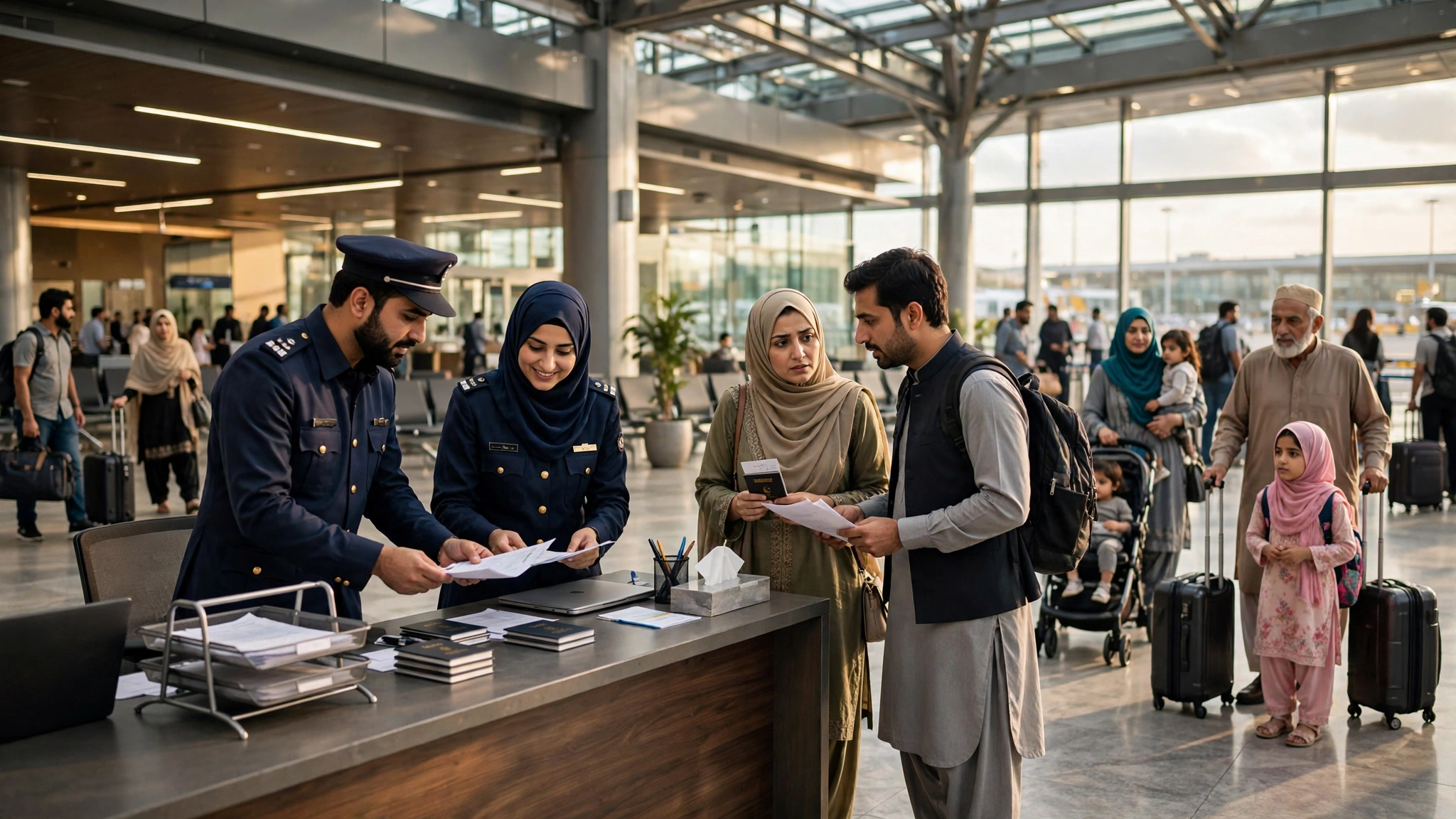
In practical terms, an immigration officer can no longer remove a passenger from a flight purely because somebody senior gave a verbal instruction. The order does not strip the FIA of its screening powers — stopping suspected human trafficking, migrant smuggling, fraudulent documents and other immigration risks remains part of the job. But the power to stop someone must now leave a paper and digital trail.
The directive also supersedes earlier instructions on the general duties of immigration officers wherever the older guidance conflicts with the new procedures.
Why this change arrived now
The timing is no accident. Offloading has been one of the most controversial airport practices in Pakistan for years, and 2026 brought it to a head in the courts.
- In May 2026, the Lahore High Court ruled that citizens holding valid visas and tickets cannot be stopped on vague suspicion, and ordered officers to record their reasons and the passenger’s answers in writing. It declared unlawful the offloading of a man flying to Nigeria to visit his brother, noting the financial loss and distress he suffered.
- That same month, a report to the Senate listed complaints against immigration staff, including an alleged demand for a Rs500,000 bribe at Lahore airport, and said 85 officials had been penalised for misuse of authority.
- In July, a Lahore court described travel abroad as a legal right.
- On September 24, 2026, the Islamabad High Court went further and questioned the FIA’s legal authority to offload passengers at all.
The agency had already taken one step in June with Standing Order 02/2026, which for the first time gave an offloaded passenger a documented right of appeal and review. Standing Order 07/2026 goes further by attacking the root of the complaint: decisions made without documentation, often attributed to verbal orders that could never be traced to anyone.
The wider picture: enforcement and its limits
The new rules land in the middle of the FIA’s largest anti-smuggling push in years. FIA Director General Dr Usman Anwar told the National Assembly’s interior committee in June 2026 that officers took 35,459 passengers off flights in 2024, 39,786 in 2025, and 22,136 in the first months of 2026. Deportations of Pakistanis from other countries fell from 68,877 to 57,560 across the two full years, while deportations involving forged documents dropped from 281 in 2024 to 13 in 2026. The DG also cited the European border agency Frontex, saying irregular migration from Pakistan towards Europe fell 26 percent in 2025 and 64 percent in the first two months of 2026.
But the agency has conceded that part of the problem sits inside its own ranks. Since the Greek boat disaster of 2023, in which hundreds of Pakistanis are believed to have drowned, 132 inquiries have led to 68 major and 36 minor penalties against officials who colluded with smugglers or ignored procedure. In February 2026, three immigration officers were arrested at Islamabad airport for allegedly clearing passengers in return for bribes.
The political establishment has also noticed the human cost. In November 2025, the Ministry of Overseas Pakistanis said the government had taken notice of cases in which workers were allegedly offloaded despite having work visas and protector certificates, and directed the FIA to address such incidents — warning that action would follow if officials were found responsible for unlawful conduct.
The new standing order is best read as the agency’s attempt to hold both lines at once: keep screening against trafficking and smuggling, but make every stop accountable so that arbitrary offloading becomes impossible to hide.
What travellers should do now
The rules are new, but the practical advice for passengers is straightforward:
- Carry everything. A valid passport, visa, ticket, and any supporting documents for your destination and purpose of travel remain your first line of defence.
- Ask for the reason in writing. If an officer stops you from travelling, seek clarification of the decision and the basis for it. Under the new documentation requirements, the reason should exist in the system.
- Know the review route. Since June 2026, an offloaded passenger has a documented right of appeal and review under Standing Order 02/2026. Ask about the applicable procedure on the spot.
- Use the complaint channels. Complaints can be lodged through the FIA’s helpline (1991 or 051-111-345-786) and its online complaint portal. Keep copies of every document you presented and note the counter number, time and names.
One caution matters: the new order does not mean every passenger must be allowed to travel. Screening for human trafficking, forged documents and smuggling continues, and a valid passport and visa do not override separate restrictions such as an Exit Control List order.
What to watch next
The real test of Standing Order 07/2026 will not be in its text but in its enforcement. Written decisions create records — and records make patterns visible. If offloading numbers stay high while written reasons thin out, the reform will have changed little. If, instead, travellers routinely receive written reasons and can appeal them, Pakistan’s airports will have taken a genuine step toward the documented, accountable immigration system the courts have been demanding all year.