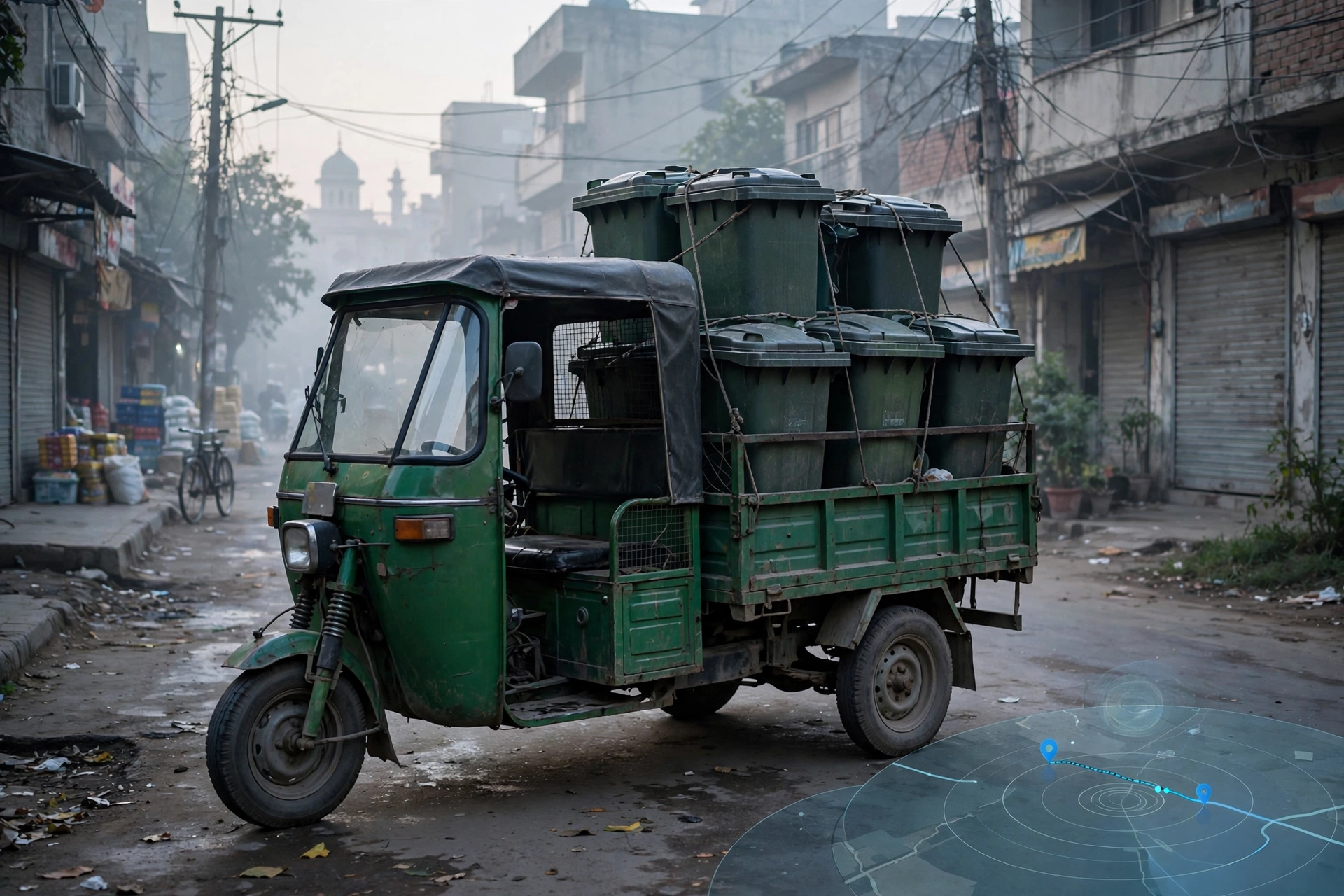
Punjab’s local government has ordered that the movements of loader rickshaws involved in sanitation and waste collection be digitally monitored in every designated beat. The directive came from Local Government Minister Zeeshan Rafiq during a meeting at the Suthra Punjab Authority office, as the province pushes harder on anti-littering inspections and anti-smog measures ahead of the winter smog season.
The announcement applies to the loader rickshaws that move municipal waste through neighbourhoods — not to privately owned loader rickshaws used for commercial goods transport. The goal, officials said, is to let authorities track sanitation operations and keep an eye on the vehicles that carry waste from temporary collection points to designated dumping sites.
Key Takeaways
- Punjab’s Local Government Minister Zeeshan Rafiq has directed that loader rickshaws involved in sanitation work be digitally monitored in every designated beat.
- The move is part of a wider anti-littering and anti-smog push that includes geospatial mapping of Union Councils and mechanical sweeping during smog season.
- Implementation details — technology, timeline and coverage — have not yet been disclosed by the provincial government.
What exactly was announced
The meeting and the directive
The directions were issued during a meeting chaired by Zeeshan Rafiq at the Suthra Punjab Authority office. Secretary Local Government Zaid bin Maqsood and Suthra Punjab Authority Director General Umar Javed attended in person, while commissioners and managing directors from Multan, Gujranwala, Dera Ghazi Khan and Faisalabad joined through video link — a sign that the government wants the policy rolled out across major districts rather than just Lahore.
During the briefing, officials presented updates on waste collection points, waste enclosures and the ongoing geospatial mapping of Union Councils across the province. The minister then directed that loader rickshaw movements be digitally monitored in each designated beat, so field staff and supervisors can verify whether sanitation vehicles are actually following their assigned routes and schedules.
The “beat” system
Punjab’s sanitation operations are organised into beats — assigned zones within Union Councils for which specific vehicles and staff are responsible. By attaching digital monitoring to each beat, the province can check, beat by beat, whether waste is being picked up on time and transferred to dumping sites without delay.
Field Monitoring Officers have separately been told to remain present in their assigned Union Councils and enforce the Environment Department’s anti-smog instructions, adding a human layer of oversight on top of the digital one.
Why the government is doing this now
The digital monitoring order sits inside a broader crackdown on littering and seasonal smog. Rafiq’s directives included:
- Intensified anti-littering inspections across tehsils
- Prompt transfer of waste from temporary collection points to designated dumping sites
- Reporting of crop-burning incidents to the relevant assistant commissioner
- Use of mechanical sweepers instead of manual road cleaning during the smog season
The timing matters. October marks the approach of Punjab’s winter smog season, when Lahore and other cities routinely see air quality deteriorate sharply. Uncollected garbage, dust from manual sweeping and crop-residue burning all feed the problem. By tightening oversight of the waste-collection fleet, the government is trying to remove at least one controllable contributor — rubbish left rotting in the open.
How digital monitoring of sanitation fleets works
The province has not yet disclosed what technology it will use, but the concept is already familiar in Pakistan. Lahore Waste Management Company (LWMC), for instance, runs an indigenously built Android-based digital monitoring system that tracks vehicle routes, speed limits, trips and waste weight in real time, backed by a control room with video-wall technology. Its GPS-linked attendance system uploads time- and location-stamped pictures of on-duty staff to a central monitoring server.
A similar setup for loader rickshaws would likely mean:
- GPS devices or app-based tracking on each sanitation vehicle
- Route-compliance checks against the assigned beat
- Digital logs of trips and dumping-site deliveries
- Central dashboards for district managers to spot gaps in coverage
The reported geospatial mapping of Union Councils would give the province the digital maps needed to define and police those beats precisely.
What it means for residents
If implemented as announced, the system could make a visible difference at street level:
- Fewer missed pickups: Supervisors would be able to see in near real time whether a beat’s vehicle completed its round.
- Faster dumping-site transfers: Digital trip logs make it harder for waste to sit at temporary collection points or get dumped at unapproved spots.
- Accountability down the chain: With vehicle movements recorded, responsibility for a dirty neighbourhood can be traced instead of passed around.
- Cleaner smog-season roads: Mechanical sweeping plus monitored collection targets the dust and debris that worsen winter air quality.
What is still unclear
Readers should keep one important fact in view: what has been reported so far is a ministerial directive, not a completed rollout. The government has not publicly disclosed:
- Which tracking technology will be installed and by whom
- A timeline for when monitoring goes live, and in which districts first
- Whether the system will cover all sanitation loader rickshaws province-wide or begin as a pilot
- What the programme will cost
Past experience with similar announcements in Pakistan suggests the gap between a directive and on-ground implementation can be significant. The real test will be whether district-level waste companies actually equip their vehicles and publish — or at least internally act on — the monitoring data.
The bigger picture
The loader-rickshaw monitoring order fits a wider digital governance trend in Punjab, where the provincial government is increasingly reaching for technology to manage municipal and transport operations — from LWMC’s fleet-tracking systems to the Punjab Safe Cities Authority’s QR-based panic button network for public transport launched under the Digital Punjab vision.
For now, the headline is simple: Punjab wants every sanitation loader rickshaw on a digital leash, beat by beat, as part of its fight against litter and smog. Whether that leash is real or rhetorical will become clear in the coming weeks, when residents can judge the policy the way that matters most — by how clean their streets look.