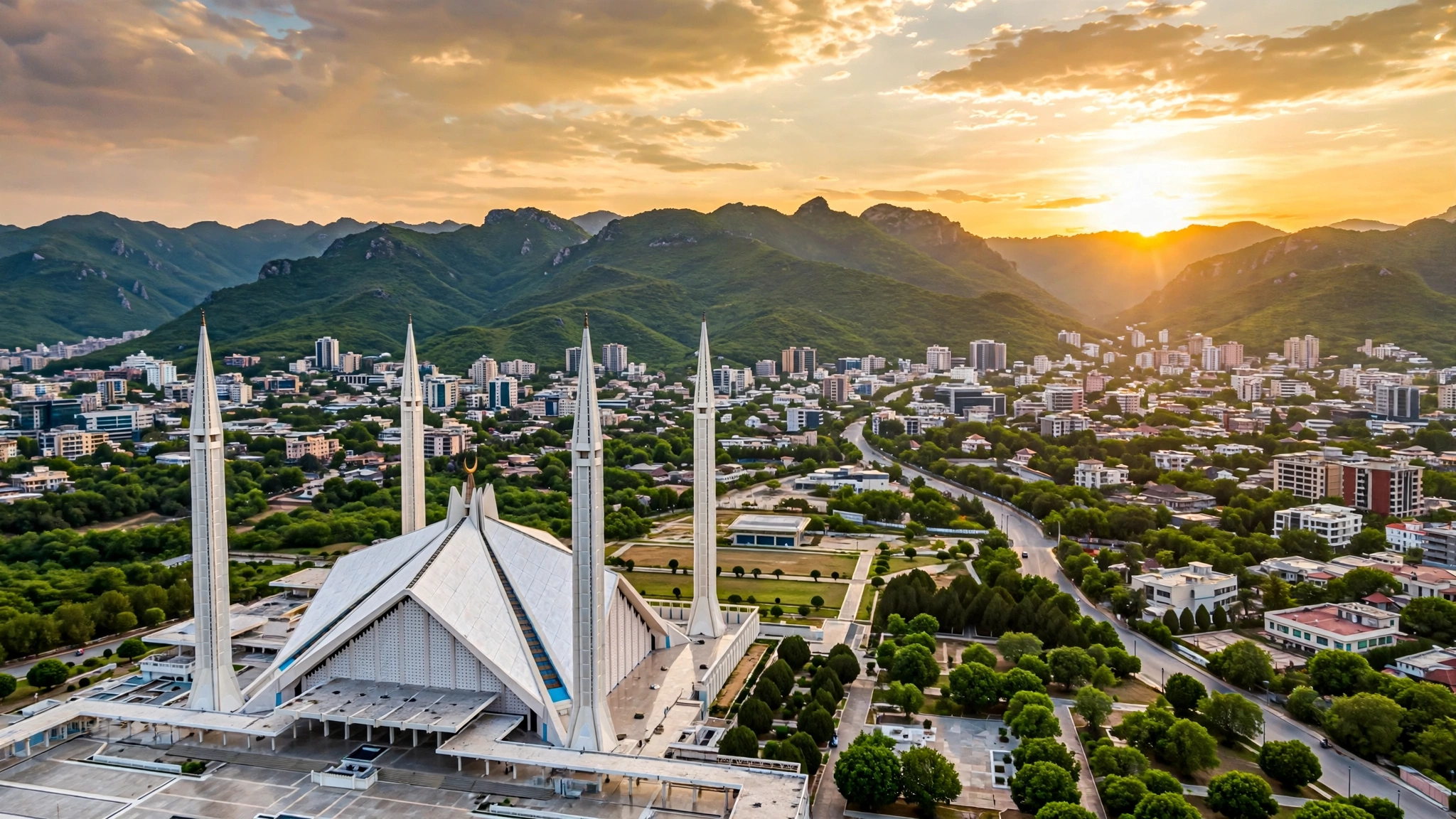
Yes — on one widely followed global ranking, Islamabad really does outrank three of the world’s most famous cities. Numbeo’s Quality of Life Index by City 2026 Mid-Year places Pakistan’s capital at 140.7, ahead of Paris (138.8), New York (137.3) and London (135.8). The result has travelled fast on Pakistani social media — and sparked plenty of scepticism too.
So is Islamabad genuinely a better place to live than the world’s richest capitals? The answer is more interesting than the headline. Here is what the index actually measures, where Islamabad wins, and where the ranking’s limits lie.
Key Takeaways
- Numbeo’s 2026 Mid-Year Quality of Life Index scores Islamabad 140.7 — above Paris (138.8), New York (137.3) and London (135.8).
- The index heavily rewards low cost of living, safety and low pollution — Islamabad beats all three megacities on each.
- The ranking is crowdsourced, not official, and a different index (Oxford Economics) tells a different story — so treat it as a data point, not a verdict.
The numbers behind the headline
Numbeo’s mid-year 2026 table lists Islamabad at rank 202 of more than 270 cities, seven places above Paris, twelve above New York and fifteen above London. (These are absolute positions — The Hague tops the global table at 221.5, so no one is claiming Islamabad is the best city on earth.)
| City | Rank | Quality of Life Index |
|---|---|---|
| Islamabad, Pakistan | 202 | 140.7 |
| Paris, France | 209 | 138.8 |
| New York, United States | 214 | 137.3 |
| London, United Kingdom | 217 | 135.8 |
Numbeo’s current rolling 2026 table, which updates continuously, shows the same picture: Islamabad sits at 139.7, still ahead of New York at 135.7. In other words, this is not a one-off glitch in a single snapshot.
Why Islamabad scores so well
Numbeo’s index is built from eight inputs: purchasing power, safety, health care, cost of living, property price to income, traffic commute time, pollution and climate. Cities are rewarded for high purchasing power, safety, health care and climate — and penalised for high costs, long commutes, expensive housing and pollution.
Looked at this way, Islamabad’s advantage becomes clear. The capital’s reported component scores tell the story:
- Cost of living: Islamabad 25.3 vs New York 100.0, London 88.2, Paris 78.6
- Safety: Islamabad 69.2 vs London 44.7, Paris 42.1, New York 49.2
- Pollution: Islamabad 41.5 vs London 57.6, Paris 63.0, New York 58.1
- Climate: Islamabad 76.9 vs London 88.3 and Paris 88.4 (London and Paris edge it here)
Cheap living, perceived safety and moderate pollution are doing the heavy lifting. Islamabad Police reported a 27 percent drop in property crime in 2026 compared with 2025, and the capital has appeared on earlier Numbeo safety tables well ahead of European and American cities — a trend picked up by Pakistani outlets earlier this year.
What the ranking does not measure
Before anyone declares victory over the West, some honest caveats are in order.
First, the data is crowdsourced. Numbeo’s figures come from surveys filled in by visitors to its website, not from government statistics or scientific measurement. That makes them useful as a snapshot of perception — and vulnerable to uneven or unrepresentative samples.
Second, the formula rewards affordability. A city’s score climbs when living is cheap. Islamabad’s purchasing power index — roughly, what local salaries buy — is just 43.7, against 105.0 for London and 105.5 for New York. The index is telling you that Islamabad is a comfortable place to live on a local income, not that the average resident is wealthier than a Londoner.
Third, other indexes disagree. Oxford Economics’ 2026 Global Cities Index, published around the same period, names New York the world’s top city overall — and its own “Quality of Life” category places Paris 10th and New York 86th. Different inputs, different winner.
Fourth, people are sceptical. As India’s Firstpost noted in its coverage this week, social media users have joked that Islamabad “paid” for the ranking, with others questioning how a crowdsourced survey could place it above New York. The scepticism is understandable — and worth taking seriously rather than dismissing.
What it means for Pakistan
Whatever its flaws, the ranking is a genuine soft-power asset for Pakistan — and a striking contrast within the country itself. On the same Numbeo mid-year table, Lahore scores just 98.4 and Karachi 76.1, roughly half of Islamabad’s number. Pollution is a big part of that gap: Karachi’s pollution index stands near 89 against Islamabad’s 41.5.
The ranking puts hard numbers behind an old dinner-table argument: Islamabad really does offer a calmer urban life than most of the world’s megacities. Islamabad Police say the capital secured 83rd place on the latest Numbeo global safety index this year — the kind of stat that travels well abroad.
The practical takeaway is less about bragging rights and more about momentum. Rankings like this shape how expats, investors and tourists see Pakistan. If the capital can sustain the safety gains and keep its cost-of-living advantage, Islamabad has a real pitch as South Asia’s most livable capital — a claim backed, for now, by the numbers.
How to read city rankings
If you want to keep headlines like this in perspective, a few rules of thumb help:
- Check the source. Crowdsourced perception (Numbeo) and modelled economics (Oxford Economics, Mercer) answer different questions.
- Read the formula. Indexes that reward cheap living will always favour developing-world cities; ones that reward income and infrastructure will favour rich ones.
- Compare like with like. Islamabad’s lead over Paris on this index does not mean the average Islamabad resident lives better than the average Parisian — it means a different basket of factors favours Islamabad.
- Watch the trend, not one table. Islamabad has been climbing on Numbeo’s safety and quality-of-life tables for several years. That trend is more meaningful than any single snapshot.
Bottom line
The headline is real, not invented: on Numbeo’s 2026 Quality of Life Index, Islamabad genuinely ranks above London, Paris and New York — driven by affordability, perceived safety and moderate pollution. It is also a narrow, crowdsourced measure that flatters cheap cities and is contradicted by other indexes.
Celebrate it for what it is: a rare piece of positive global data about Pakistan’s capital — and a reminder that the best city to live in depends entirely on what you are measuring.