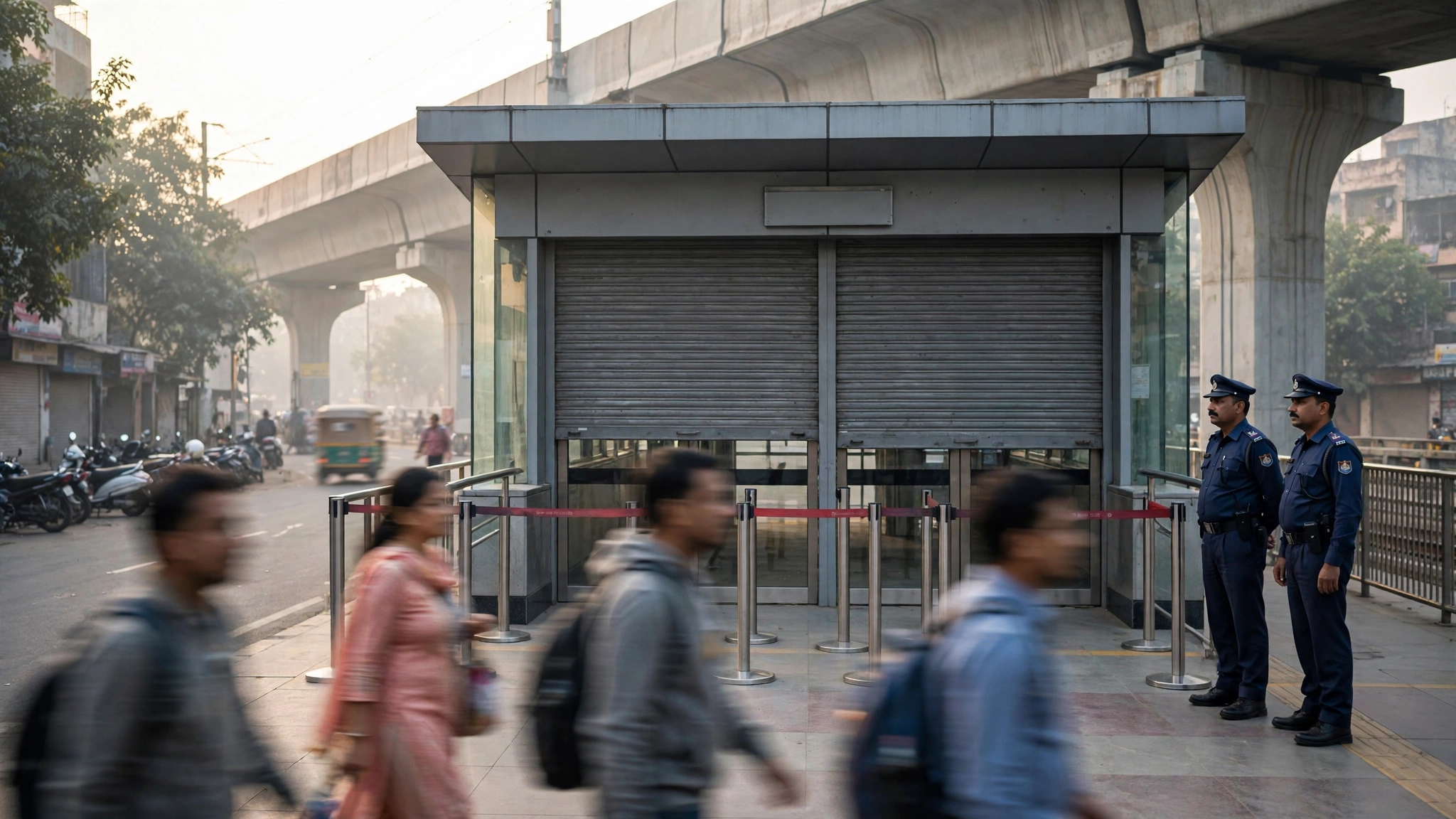
India’s capital has done something Pakistani commuters will recognise instantly: shut down parts of the metro to manage protests. On October 12, 2026, the Delhi Metro Rail Corporation closed entry and exit gates at six central stations — Patel Chowk, Janpath, Rajiv Chowk, Mandi House, Central Secretariat, and Barakhamba Road — from 6am to 4pm for “security reasons,” as opposition parties and protest groups planned marches through the city. It is the same security-first reflex that regularly pulls Pakistan’s Metro Bus services off the road.
Key Takeaways
- Delhi Metro closed six central stations on October 12, 2026, for ‘security reasons’ during protest marches — two days after shutting 45 stations on October 10.
- Pakistan uses the same playbook: the Rawalpindi–Islamabad Metro Bus is currently suspended during the tri-nation cricket series, and Punjab halted metro and Speedo buses on the 9th and 10th of Muharram.
- India’s Supreme Court has now ordered that security measures cannot amount to a blanket ban on public transport — a precedent Pakistani commuters could only wish for.
What happened in Delhi
The closures are part of a tense month in the Indian capital. A youth-led protest movement — calling itself the “Cockroach” movement, as reported by Reuters and local press — has been holding near-daily demonstrations demanding the resignation of Chief Election Commissioner Gyanesh Kumar over a controversial revision of voter rolls that critics say removed more than 130 million names from the lists. Opposition parties joined the cause, with Congress leader Rahul Gandhi announcing a march to the Supreme Court.
The timeline of the station shutdowns
- October 2: Several stations around Jantar Mantar were closed as activists announced a protest against the election chief.
- October 10: Ahead of the weekend’s planned demonstration, Delhi Metro announced closures of 57 stations — later revised to 45 — from 9pm on October 9 until 6pm on October 10. Railways also cancelled mail and express trains at New Delhi and Nizamuddin stations.
- October 11: India’s Supreme Court stepped in. A special bench issued five directives, ordering that metro and railway services run normally, that internet services stay up, that people be allowed free movement, and that peaceful, unarmed protesters not be detained outside the process of law. The court made it explicit: security measures cannot amount to a complete prohibition on public transport for millions of ordinary residents.
- October 12: A day after that order, Delhi Metro still closed six central stations from 6am to 4pm, saying interchange facilities would remain available and the situation would be reviewed by security agencies. Police also imposed traffic restrictions on more than 20 stretches of road.
The October 12 shutdown forced Monday-morning commuters — thousands of office workers, students, and shopkeepers — to walk long distances around barricaded central Delhi or scramble for alternatives.
Pakistan wrote this playbook first
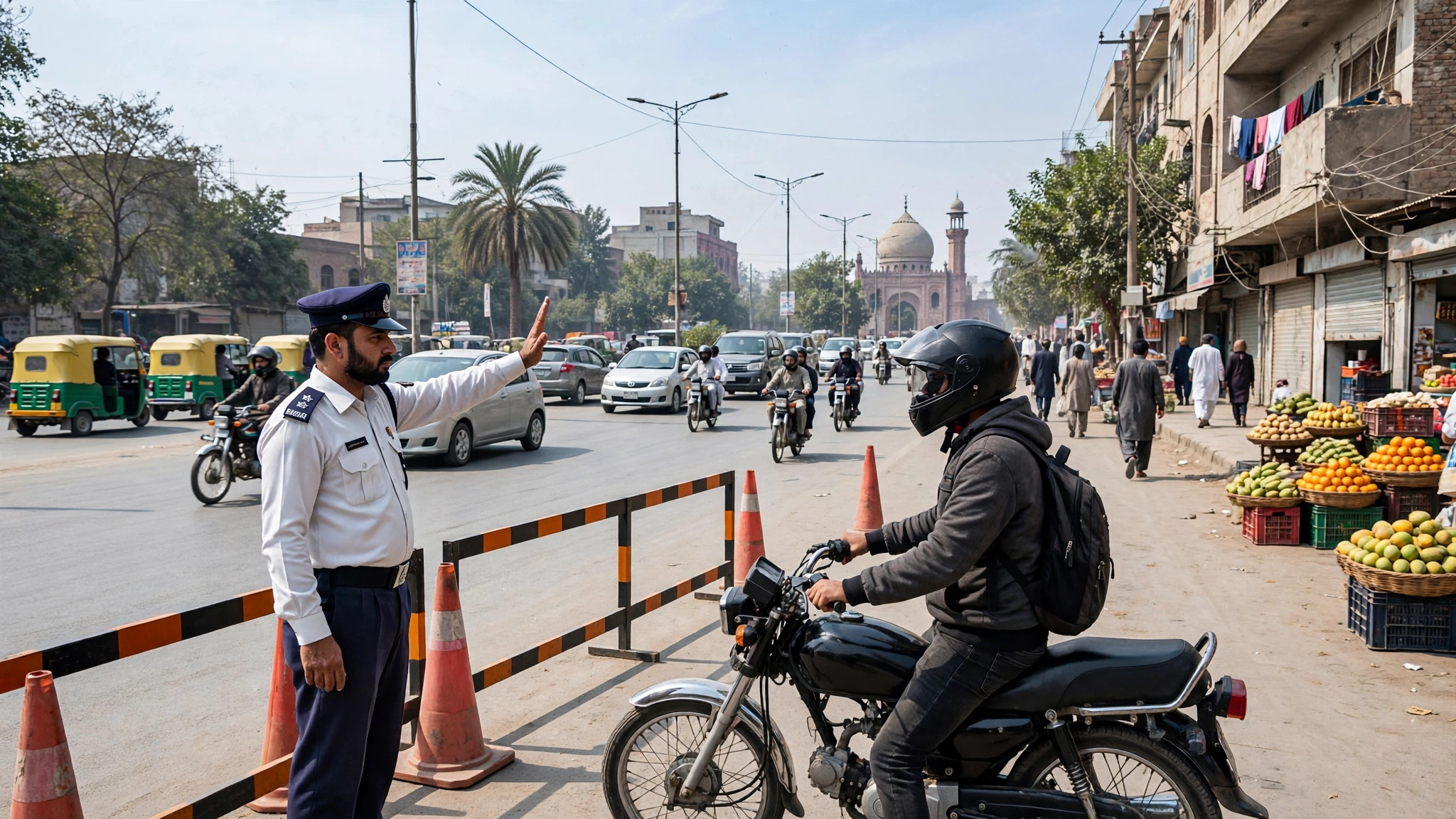
If that sounds familiar to Pakistani readers, it should. Suspending mass transit at the first sign of trouble is standard operating procedure on this side of the border, too.
Rawalpindi–Islamabad: buses parked for cricket
Right now, the Metro Bus service between Saddar and Pak Secretariat in the twin cities is suspended during the movement of teams for the tri-nation ODI series — featuring Pakistan, Sri Lanka, and Zimbabwe — being played at Rawalpindi Cricket Stadium. Three stations, Khatm-e-Nabuwwat, IJP, and Sixth Road, are also shut during match days. The decision came on the district administration’s directives, and Islamabad Traffic Police has issued advisories around the Sri Lankan team’s movements on Srinagar Highway. Roads stay open; the buses do not.
Muharram: two days of silent roads
Back in June 2026, the Punjab Mass Transit Authority suspended Metro Bus, electric bus, and Speedo bus services across Lahore, Multan, and Rawalpindi on the 9th and 10th of Muharram, citing security arrangements. For two days, hundreds of thousands of daily riders were on their own.
The protest-era shutdowns
Pakistan has also closed both the Islamabad Metro Bus and Lahore’s Orange Line train at times of political unrest, with officials describing the move as a purely precautionary safety measure and promising services would resume once the situation stabilised.
Same cities, same commuter pain
| Delhi, India (Oct 2026) | Twin cities, Pakistan (Oct 2026) | |
|---|---|---|
| What closed | 6 central metro stations on Oct 12; 45 on Oct 10 | Metro Bus (Saddar–Pak Secretariat) plus 3 stations during the cricket series |
| Stated reason | Security during protests | Security during cricket team movements |
| Who decided | Delhi Metro Rail Corporation on police/security advice | District administration directives |
| Commuters affected | Thousands stranded in central Delhi | Daily riders in Rawalpindi and Islamabad |
| Court involvement | Supreme Court ordered normal services | No judicial intervention reported |
The pattern is identical in both countries: when the state anticipates a crowd — whether protesters, mourners, or cricket teams — public transport is the first thing switched off and the last switched back on. The burden lands on students, office workers, and daily-wage earners who have no car to fall back on.
The one big difference: India’s Supreme Court pushed back
This is where the two stories diverge. After India’s Supreme Court ordered on October 11 that metro and rail services must operate normally and that blanket restrictions on public transport were unacceptable, the October 12 closures were at least limited in scope — six stations, interchange facilities kept open, with a public commitment to review.
In Pakistan, no court has intervened when the Metro Bus is suspended for Muharram, cricket series, or protest seasons. The Punjab Mass Transit Authority announces the closure, citizens complain on social media about expensive taxis and missed classes, and the service quietly returns days later with no judicial scrutiny of whether the shutdown was proportionate.
For Pakistani commuters, the question worth asking is simple: if India’s top court can tell its authorities that public transport cannot be treated as a disposable security valve, why is there no equivalent check here? Transit systems exist to move people — and the people who need them most are the ones who suffer every time the shutters come down.
Conclusion
Delhi’s metro closures this month show that the “shut it down for security” reflex is not uniquely Pakistani — it is a regional habit. But the Supreme Court’s intervention in India has drawn a line that Pakistan has not yet drawn: that security measures cannot mean millions of commuters lose their only affordable way to work, school, and home. Until Pakistan’s authorities face the same standard, every protest call, religious observance, and cricket series will keep pushing the country’s bus riders onto costlier, riskier alternatives.