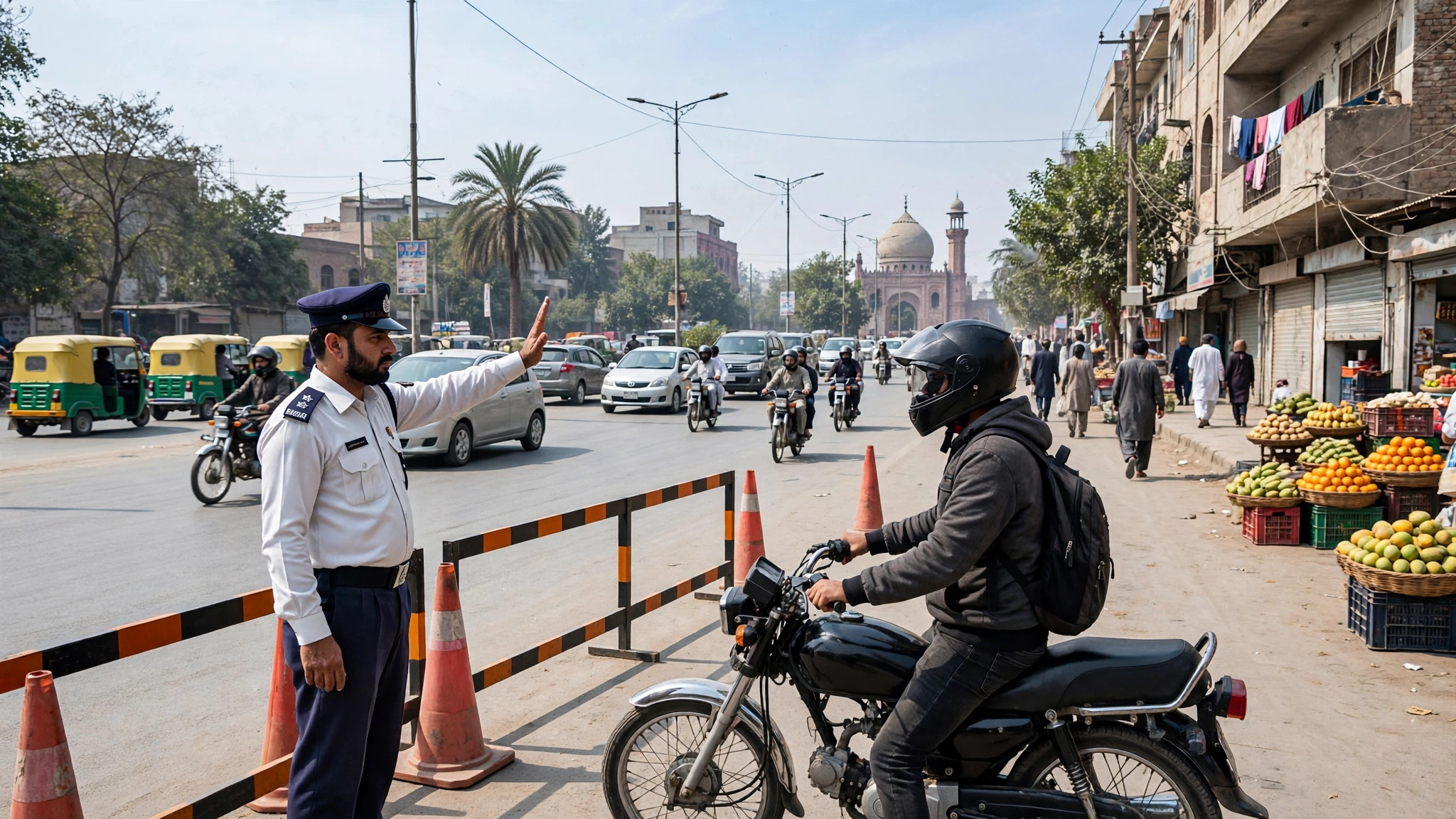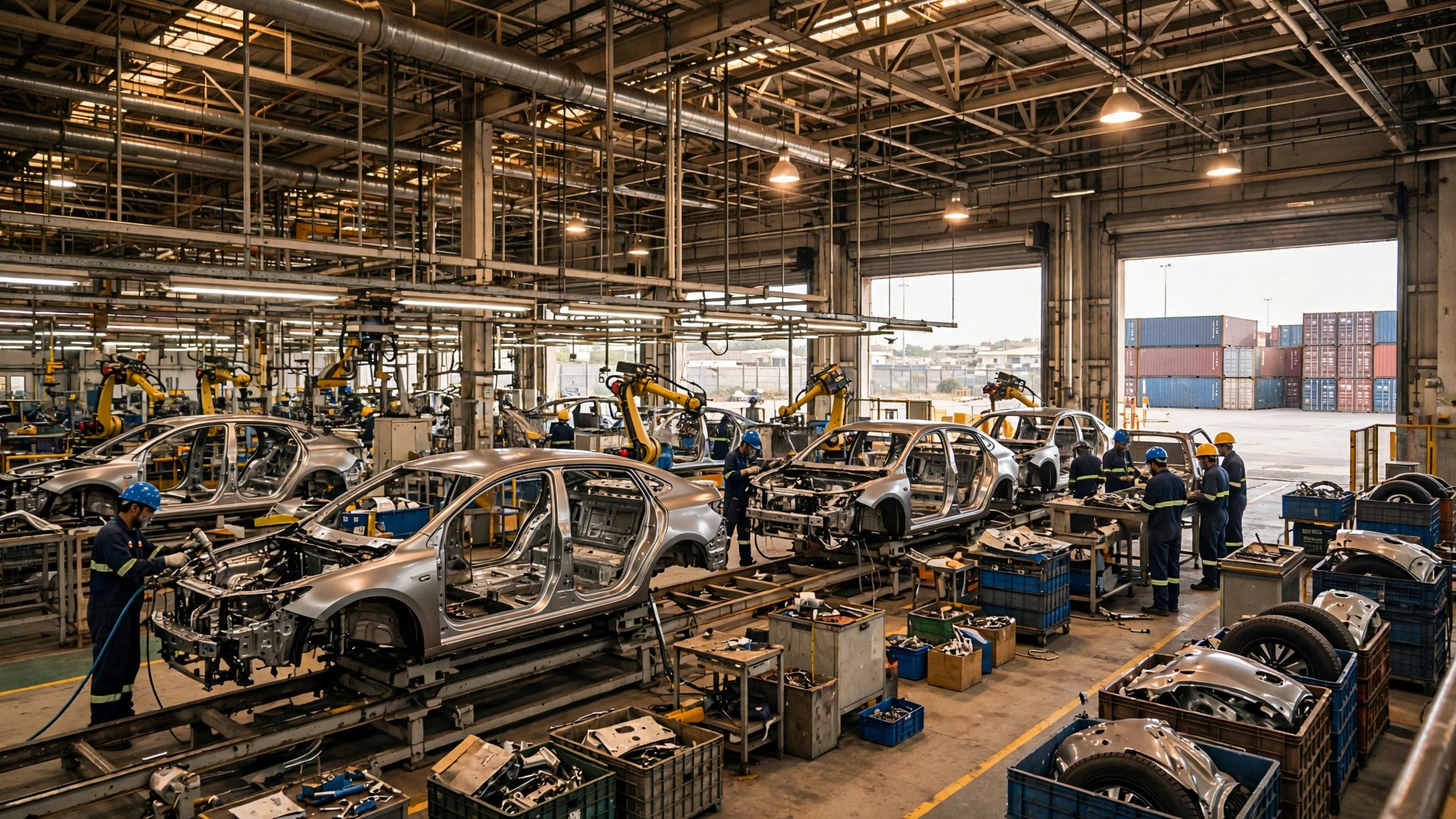
Pakistan’s auto parts manufacturers have issued their strongest warning yet against the government’s liberalised used-vehicle import regime. In a formal objection to a September 30, 2026 notification by the Engineering Development Board (EDB), the Pakistan Association of Automotive Parts and Accessories Manufacturers (PAAPAM) says the new rules threaten 300,000 direct jobs and 1.5 million indirect jobs across the industry.
The association, which represents more than 1,200 Tier-I and Tier-II manufacturers, has asked the federal government to reconsider the notification. PAAPAM Chairman Abdul Rehman Aizaz addressed the letter to Adviser to the Prime Minister on Industries and Production Haroon Akhtar Khan, with a copy sent to Prime Minister Shehbaz Sharif.
Key Takeaways
- PAAPAM has formally objected to the EDB’s September 30, 2026 notification, which lets any business entity commercially import used vehicles without an EDB licence.
- The association says 300,000 direct and 1.5 million indirect jobs are at stake, and has written to Adviser Haroon Akhtar Khan, with a copy sent to PM Shehbaz Sharif.
- Commercial used-vehicle imports jumped from 48 units in May to 2,276 in September 2026, prompting calls to suspend the new rules until stakeholders are consulted.
What the September 30 notification actually changes
Under the new framework, any business entity can commercially import used vehicles without first obtaining an EDB licence. The September 30 notification — which replaces an earlier EDB framework from September 2025 — strips away several requirements that previously applied to commercial importers:
- Minimum capital requirement removed: importing companies no longer need to meet a minimum capital threshold.
- SECP registration no longer required: tax-registered individuals and firms can now import vehicles commercially without being registered with the Securities and Exchange Commission of Pakistan.
- After-sales and spare-parts obligations dropped: the old rules required importers to maintain adequate after-sales service and spare-parts availability; those safeguards are gone.
- Inspections moved: pre-shipment and post-shipment inspection responsibilities shift from the EDB to the Pakistan Standards and Quality Control Authority (PSQCA).
PAAPAM argues that removing these guardrails compromises consumer safety and leaves buyers of imported used vehicles without guaranteed service or spare-parts support. It also warns that the looser regime undermines local manufacturing at a moment when the sector is already under pressure.
The numbers behind the alarm
The industry’s concern is not hypothetical — the data shows a sharp climb in commercial used-vehicle imports in recent months. Ministry of Commerce figures, cited by industry bodies, show:
| Month (2026) | Commercial used vehicles imported |
|---|---|
| May | 48 |
| June | 843 |
| July | 1,938 |
| August | 1,445 |
| September | 2,276 |
September’s figure is roughly 47 times May’s. PAAPAM’s chairman has estimated that the September imports alone displaced about Rs. 3.4 billion worth of local parts production, based on the fact that locally assembled vehicles carry up to 60% local content by value — roughly Rs. 1.5 million per vehicle in domestic parts.
The Pakistan Automotive Manufacturers Association (PAMA), representing vehicle assemblers, has sounded a parallel alarm. In a letter dated October 6, 2026, PAMA’s Director General warned that domestic manufacturers and their suppliers could lose more than Rs. 50 billion if used-car imports return to the levels seen in FY 2025-26. PAMA has asked the government to suspend the September 30 notification until assemblers and other stakeholders are consulted.
PAMA also points to what it calls an uneven playing field: commercially imported used vehicles enjoy depreciation-based cost advantages of up to 36%, while local manufacturers must fund plant investments, technology, employment, quality systems, taxation and regulatory compliance. Locally imported cars, it argues, enter the market without carrying comparable obligations.
Beyond the notification: tariff fears
PAAPAM’s objection goes further than the import rules. The association has also flagged proposed changes under the National Tariff Policy (NTP) 2025-30 and related tariff proposals, which it says could flatten the existing cascading duty structure that currently rewards local value addition.
Under a cascading structure, duties are lowest on raw materials and highest on completely built units, creating an incentive for assemblers to source from domestic vendors. PAAPAM argues that flattening duties on all CKD parts to the same rate as raw materials would remove that incentive and expose local suppliers to direct competition with imported components. The association has also noted the 20-25% reduction in duties on completely built units announced in the 2026-27 budget, which has further lowered the cost of imported vehicles.
The timing compounds the anxiety: Pakistan’s new Auto Policy is still being finalised, and the sector is already navigating policy uncertainty around the auto framework and broader tariff reforms.
The other side of the argument
Commercial importers and car dealers dispute the industry’s framing. The All Pakistan Car Dealers and Importers Association has maintained that used vehicles are imported legally and bring much-needed competition to Pakistan’s automobile market, which has long been dominated by a handful of assemblers. Its chairman has noted that imported vehicles undergo pre-shipment inspections by accredited agencies — particularly in Japan, the source of most used cars entering Pakistan — and has welcomed the regulatory easing, predicting that Gift Scheme and commercial imports will grow further.
There is also a consumer angle that neither side ignores. Used imported cars have historically offered Pakistani buyers alternatives — often better-equipped vehicles — at prices the local market struggles to match. Whether the trade-off between consumer choice and industrial protection is being struck correctly is the central policy question.
The government appears to be paying attention. A recent meeting chaired by Prime Minister Shehbaz Sharif reviewed the surge in used-vehicle imports under both commercial and Gift Scheme channels, and decided to fold used-vehicle import regulations into the forthcoming new Auto Policy.
What happens next
Two formal industry demands are now on the table. PAMA wants the September 30 notification reviewed and suspended until consultations are held with automakers and stakeholders. PAAPAM wants the government to reconsider the notification outright and honour what it describes as earlier commitments to protect local manufacturers, employment and economic stability.
The EDB had not publicly responded to either request at the time of writing. With 2,276 used vehicles entering the country in September alone — and importers signalling that volumes could rise further — the trajectory is moving against the industry’s wishes. The government’s decision to handle used-car regulation within the new Auto Policy means the next few months will determine whether Pakistan’s auto parts ecosystem, which PAAPAM says supports some 1.8 million livelihoods, gets the protection it is demanding — or has to compete on the importers’ terms.