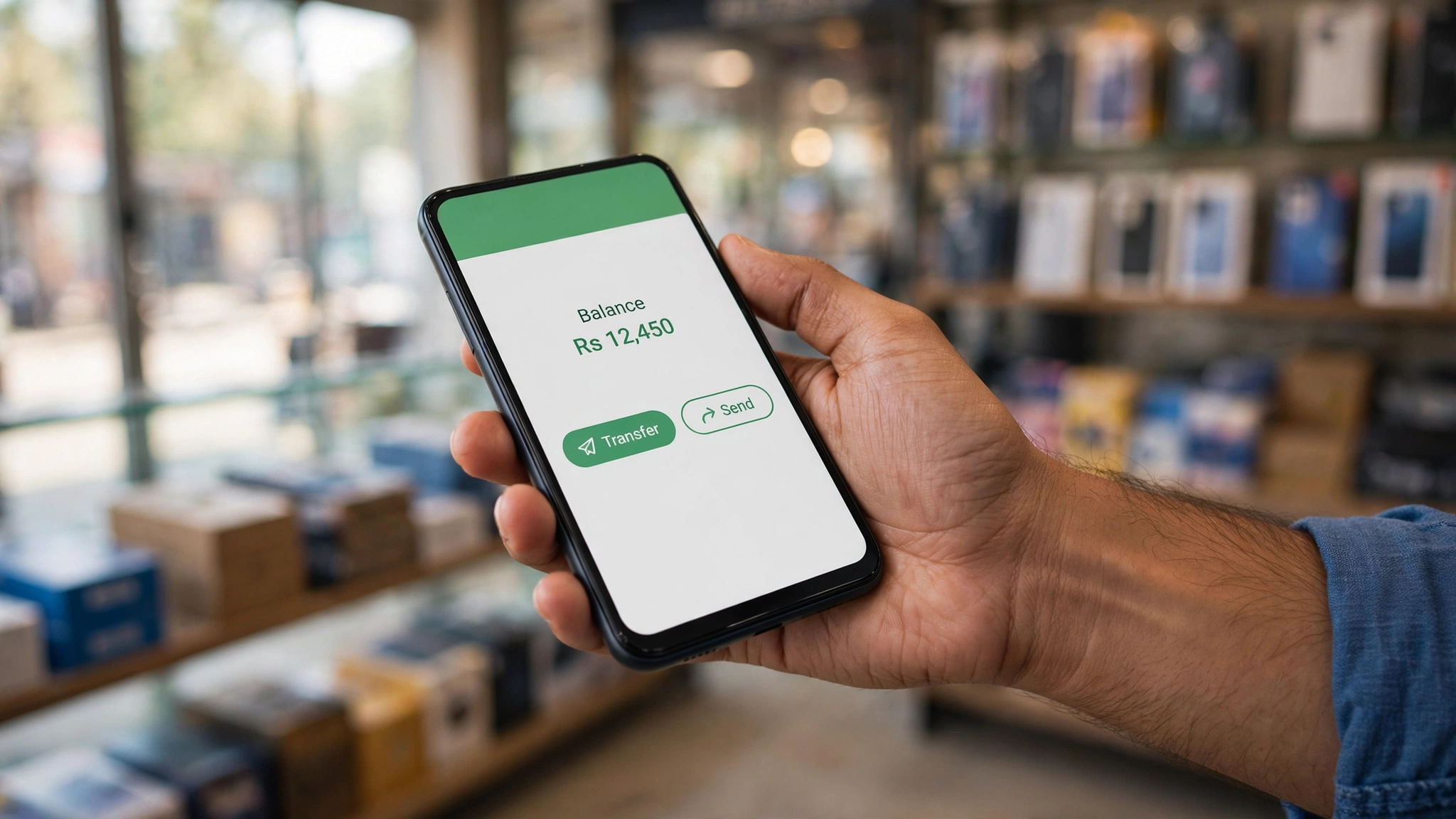
The next time you unbox a new Infinix, TECNO or itel phone in Pakistan, a digital bank may already be waiting on the home screen. easypaisa digital bank and Chinese handset giant Transsion have signed a strategic partnership to pre-install the easypaisa app on more than five million new smartphones sold in the country — a move that turns affordable handsets into instant banking channels for millions of unbanked Pakistanis.
The agreement was formally signed in Islamabad on September 24, 2026, by Farhan Hassan, Chief Digital Officer at easypaisa digital bank, and Michael Wang, Vice President of Global Partnerships at Transsion, in the presence of senior representatives from both companies.
Key Takeaways
- The easypaisa app will come pre-installed on more than 5 million new Infinix, TECNO and itel smartphones sold in Pakistan.
- The deal, signed in Islamabad on September 24, 2026, targets unbanked first-time smartphone buyers with savings, payments and lending tools available at device setup.
- Both firms cite 71.6% 3G/4G device penetration as the opportunity — connectivity is outpacing formal banking access.
What the Partnership Actually Does
Strip away the press-release language and the mechanics are simple: instead of asking a first-time smartphone buyer to find, download and trust a banking app later, the easypaisa app will already be on the phone at activation. Users get immediate access to digital banking services — savings accounts, payments, lending tools and remittance services — from the moment they set up the device.
Both companies are explicit about why. For millions of Pakistanis buying their first smartphone through Transsion’s affordable brands, the download step is a real barrier — limited digital literacy, data costs, and app-store friction all conspire against adoption. Removing that step converts a phone purchase into a banking onboarding without a separate marketing push.
For easypaisa, the logic is equally clear: higher app penetration and customer acquisition at essentially zero acquisition cost per user. For Transsion, it adds a tangible value proposition to budget devices — the phone doesn’t just connect you, it banks you.
Why Transsion’s Brands Are the Right Vehicle
The three brands covered by the deal — Infinix, TECNO and itel — are Transsion’s full Pakistan portfolio, and they matter precisely because of who buys them. These are the entry-level and mid-range devices sold in the country’s smaller cities and rural markets, where the unbanked population is concentrated and where branchless banking has always had its biggest growth opportunity.
According to the companies, 3G and 4G device penetration in Pakistan has reached roughly 71.6 percent. That number frames the entire strategy: mobile connectivity is now far ahead of formal banking access, and the gap between the two is exactly what this partnership is designed to close.
| Detail | Confirmed Information |
|---|---|
| Announced | September 24, 2026, Islamabad |
| Signed by | Farhan Hassan (easypaisa digital bank); Michael Wang (Transsion) |
| Devices covered | 5 million+ new smartphones |
| Transsion brands | Infinix, TECNO, itel |
| 3G/4G device penetration | ~71.6% (per company statements) |
| easypaisa user base | 60 million+ registered users |
The Bigger Picture: easypaisa’s Distribution Strategy
This is not an isolated deal. It lands alongside a wider easypaisa push to widen its digital-banking footprint through partner ecosystems — including a global remittance partnership announced in late 2025. The pattern is consistent: rather than building reach from scratch, easypaisa is embedding itself into channels people already use — a smartphone brand here, a remittance corridor there.
The strategy makes sense in Pakistan’s context. With more than 60 million registered users, easypaisa is already the country’s dominant digital financial services brand, and Pakistan’s first digital bank. But tens of millions remain outside the formal financial system. Reaching them through bank branches is slow and expensive; reaching them through the phone in their pocket is not.
How this fits Pakistan’s digital push
- Hardware distribution as a banking channel: Transsion’s retail and dealer network becomes, in effect, a branch network for onboarding.
- Zero-download access at first setup: Savings, payments and lending tools are present before the user even knows to look for them.
- First-time internet users targeted: The deal is explicitly aimed at people getting mobile internet access for the first time — the hardest segment to onboard through conventional digital marketing.
Questions the Announcement Doesn’t Answer
A deal this significant leaves several important questions open, and buyers and observers should keep them in mind:
- Rollout timeline: Neither company has given a public target date for full nationwide implementation across all three brands.
- Handset models: It is not yet clear which specific models and price tiers will carry the pre-installed app.
- Uninstallability: There is no public word on whether the pre-installed app can be removed — a detail that will matter to privacy-conscious buyers.
- Data-sharing terms: No information has been released on what, if any, user data flows between the handset maker and the bank. Device makers bundling financial apps by default have drawn regulatory scrutiny in other markets, so this is worth watching in Pakistan too.
What It Means for Pakistani Consumers
For most buyers, the practical impact is straightforward and positive: one less barrier between owning a smartphone and using formal financial services. A user in a small town who buys a budget itel or TECNO phone will find a banking app ready to go, with onboarding flows designed for the Pakistani market and support for Urdu-language interfaces that easypaisa has built over its years of operation.
The caveat is one of informed consent. Pre-installed software is only genuinely empowering if users understand what is on their phone, what it does, and how their data is handled. Both companies would do well to be transparent on these points as the rollout begins — the financial-inclusion case is strong, but it rests on trust.
Conclusion
The easypaisa–Transsion partnership is one of the clearest signals yet that Pakistan’s fintech and handset industries see smartphone-app integration as the next practical route to closing the country’s financial-inclusion gap. The ingredients are all there: five million devices, three mass-market brands, a digital bank with 60 million users, and a connectivity rate of 71.6 percent that keeps climbing.
If the execution matches the ambition — and if the open questions on privacy and user control are answered honestly — this could become a template for how emerging markets turn the smartphone into a bank branch. The phone was already the most powerful financial tool most Pakistanis own. Now it will come with the bank pre-loaded.