A young Australian driver who struck and killed a Pakistani international student — caught on CCTV kneeling in the middle of an Adelaide road, appearing to pray — has been sentenced, but will not spend a day in prison.
Ashton Jacob Friend, 20, of Banksia Park, pleaded guilty to causing death by careless use of a motor vehicle and to leaving the scene of an accident after causing death. South Australia’s District Court sentenced him to one year, three months and 29 days in prison, with a non-parole period of eight months — then suspended the entire term. He must stay on a two-year good-behaviour bond and is banned from driving for a decade.
The sentence has reignited debate in Australia and Pakistan about road safety, young drivers, and the unexplained circumstances that put Samia Malik on that road in the first place.
Key Takeaways
- Samia Malik, 20, was kneeling on an Adelaide road for nearly four minutes before a car struck her; CCTV showed her hands in what appeared to be a praying motion.
- Driver Ashton Jacob Friend, 20, pleaded guilty to causing death by careless driving and leaving the scene — he said he thought he had hit a kangaroo.
- The court handed him a suspended prison term of 1 year, 3 months and 29 days, a two-year good-behaviour bond and a 10-year driving ban; no jail time will be served unless the suspension is revoked.
What happened on North East Road
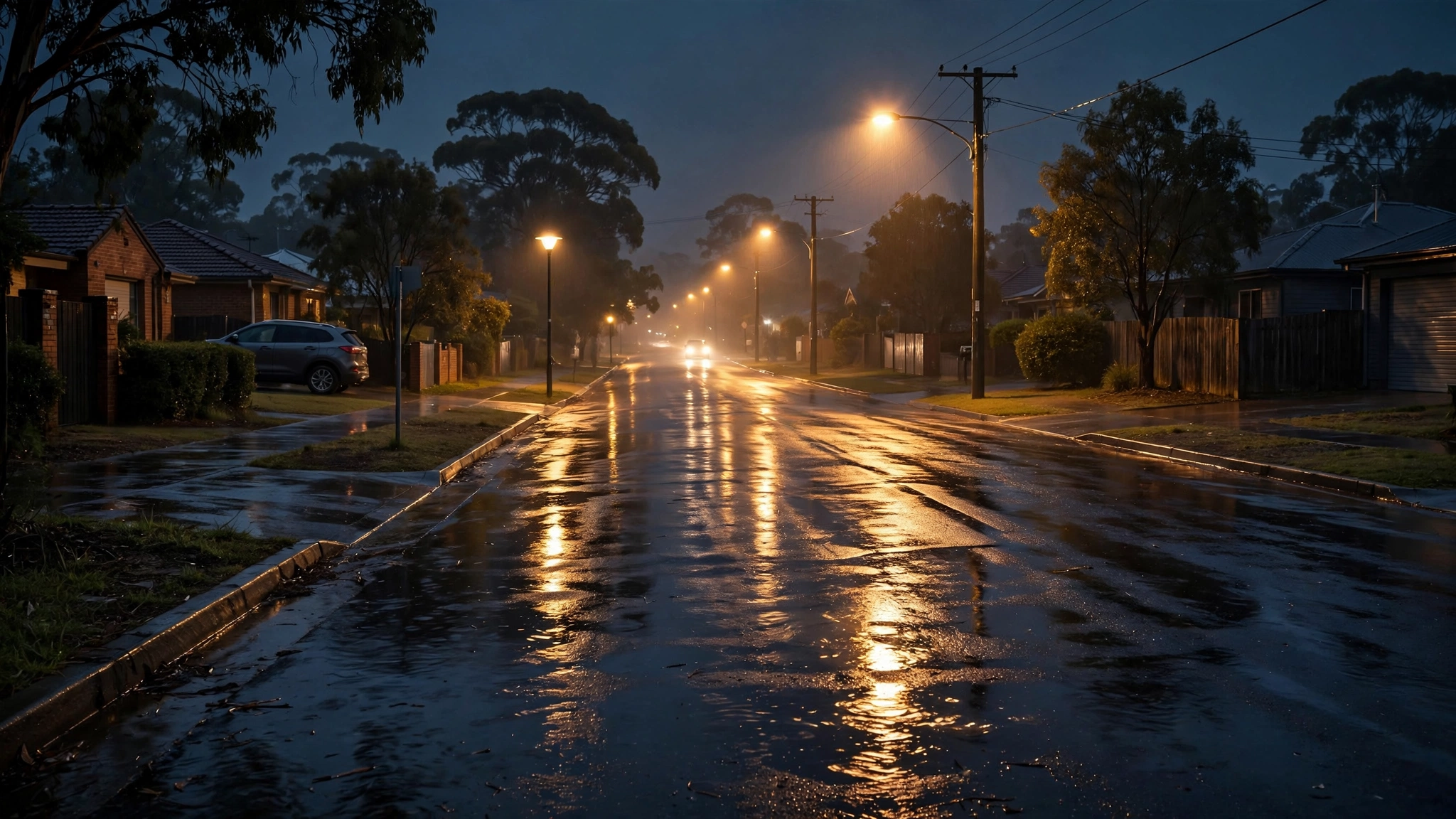
Samia Malik, a 20-year-old Pakistani student studying in Australia, was on North East Road in Hillcrest, in Adelaide’s north-eastern suburbs, at about 11pm on May 6, 2025.
Witnesses and surveillance cameras showed her kneeling in the middle of the road for nearly four minutes. Judge Anne Barnett told the court that CCTV footage showed Malik’s hands in what looked like a praying motion in the moments before she was hit. Despite a full investigation, the court was never given an explanation for why she was on the road that night.
That unanswered question hangs over the entire case. What was a young international student doing, kneeling on a dark road at nearly midnight? Her family, her university community, and the Pakistani diaspora in Adelaide are left with grief and speculation — but no answers.
The driver’s account: “I thought I hit a kangaroo”
Friend was driving home from his girlfriend’s house when he struck Malik. Through his defence barrister, Jane Abbey KC, he told the court he had not seen her — he heard a noise beneath his vehicle and believed he had hit an animal, one of Australia’s most common road hazards.
The defence noted the car sustained relatively little damage, consistent with hitting a small animal rather than a person. But Friend had been checking his rear-view mirror in the seconds before impact — looking away from the road ahead when it mattered most.
The judge told Friend he had roughly 2.25 seconds from the moment his headlights would have detected Malik until impact. A reconstruction expert said he may have been able to avoid the collision or slow down in that window — but it was an extremely tight margin.
Critically, the court heard that Friend was not affected by alcohol or drugs and was driving under the speed limit. This was not a case of drink-driving or reckless speeding — it was, in the court’s finding, carelessness: a failure to pay proper attention to the road ahead.
Why he didn’t stop — and how police found him
Friend kept driving. His lawyers said he realised what had happened only after seeing news coverage of Malik’s death — coverage that reportedly left him in a “state of paralysis,” unable to confront what he had done. Police identified and arrested him about a week later.
At sentencing, Friend apologised to Malik’s family, saying he could only imagine their pain and that he would have to live with the consequences for the rest of his life.
The sentence, explained
Friend pleaded guilty to two offences: causing death by careless use of a motor vehicle, and leaving the scene of an accident after causing death. Here is what he received:
| Outcome | Detail |
|---|---|
| Prison term | 1 year, 3 months and 29 days (suspended — not served unless the bond is breached) |
| Non-parole period | 8 months |
| Good-behaviour bond | 2 years, $500 |
| Driving ban | 10 years |
The court suspended the prison term because of Friend’s young age, his guilty plea, his genuine remorse, his prospects for rehabilitation, and the circumstances of the offence.
Malik’s sister, Qudisya Malik, told the court that her family continued to struggle with the death — and that every major family milestone reminded them of the young woman who was no longer there.
What this means for Pakistani students in Australia
Australia is one of the most popular study destinations for Pakistani students, and tragedies like this one send ripples through the community — back home as well as among the diaspora.
- Road safety abroad is not optional. Pedestrian safety rules differ by country, and late-night visibility in suburban areas can be far worse than newcomers expect.
- Hit-and-run laws are strict. Even when the driver believed he had hit an animal, failing to stop was treated as a serious separate offence. “I didn’t realise” is not a full defence in Australia.
- Suspended sentences confuse grieving families. The outcome may feel like no punishment at all to a family that has lost a daughter. But under Australian law, a suspended sentence is still a conviction with real conditions: one breach of the bond, and the prison term comes back into effect.
The question nobody can answer
Nobody knows why Samia Malik was kneeling on North East Road at 11pm, praying, for four minutes. The court heard no explanation, and her family offered none publicly. There has been speculation — some of it cruel and unfounded — but no confirmed account.
What remains certain is this: a 20-year-old student travelled thousands of kilometres from Pakistan to build a better future, and her life ended on an unfamiliar road in circumstances nobody has explained. Her killer pleaded guilty and walked out of court free. And her family must live with both the loss and the mystery.
For the Pakistani students now heading to Australia for their studies, her story is a painful reminder that staying safe abroad begins with the basics: be visible, stay off the road, and tell someone where you are — especially at night.