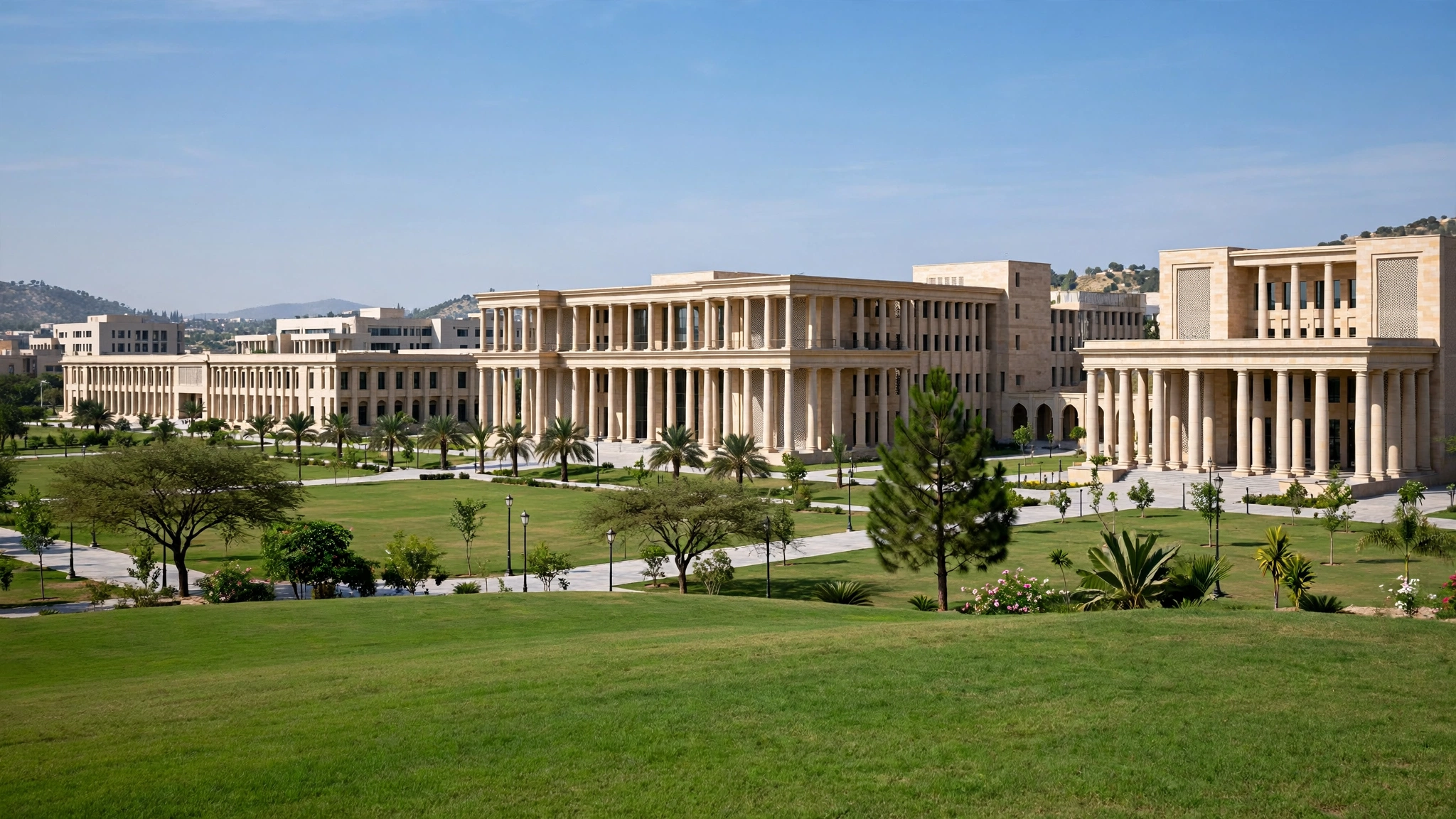
Yes — but only for the period before the 2023 amendment. The Lahore High Court has ruled that the Lahore University of Management Sciences (LUMS) was entitled to exemption from cantonment property tax before a 2023 change in the law, rejecting the argument that simply charging tuition fees makes an educational institution a commercial, profit-making operation. The ruling, reported over the weekend, limits LUMS’s exemption to the pre-amendment period — the tax position after 2023 is a different legal question.
Key Takeaways
- The LHC ruled LUMS was entitled to cantonment property tax exemption for the period before the 2023 amendment to the Cantonments Act.
- The court held that charging tuition fees alone does not prove an educational institution is operating for profit.
- The 2023 amendment narrowed the exemption to buildings ‘from which no income is derived’ — changing the position going forward.
The ruling at a glance
Here is what is known from press reports of the judgment:
| Detail | What reports say |
|---|---|
| Court | Lahore High Court (LHC) |
| Institution | LUMS, Lahore |
| Tax in dispute | Cantonment property tax (levied on annual rental value of property in cantonment areas) |
| Period covered | Tax demands relating to the period *before* the 2023 amendment to the Cantonments Act |
| Core finding | Charging tuition fees alone does not necessarily prove commercial, profit-making use of educational property |
The reports describe the ruling as applying to tax demands from before the legislative amendment — meaning it resolves the historical dispute rather than granting LUMS a blanket exemption for all time.
Why tuition fees don’t automatically mean “commercial use”
The central legal question was whether LUMS’s campus buildings could qualify for the educational-purpose exemption when the university charges tuition fees — and not small ones. The cantonment authorities’ position, as reflected in their tax demands, was that fee-charging amounted to commercial use.
The court rejected that equivalence. According to press accounts of the judgment, the LHC held that the mere fact that an institution collects tuition fees does not, by itself, establish that its property is being put to a commercial or profit-making use. In other words, running an educational institution on a fee-paying model is not the same as running a business.
This distinction matters well beyond LUMS. Most private universities and colleges in Pakistan charge tuition — if fee-charging alone were enough to strip them of educational-use status, virtually no private campus would ever qualify for such exemptions. The court’s reasoning draws a line between institutions that generate income to sustain educational activity and those operating primarily for profit.
The 2023 amendment that changed the rules
The ruling’s limited scope comes from a 2023 legislative change to the Cantonments Act, 1924. The amendment reworked Section 99(2) of the Act, which governs what cantonment boards may exempt from property tax.
Under the amended provision, a board may exempt “buildings used for educational purposes which are open to public and from which no income is derived.” The key addition is the “no income is derived” condition — a stricter test than what came before.
That single clause is why the LHC ruling stops at the amendment’s date. Before 2023, the exemption language was broader, and LUMS’s fee-based model could still qualify as educational use. After the amendment, an institution that derives income from its buildings faces a much harder argument. The judgment settles the pre-2023 tax demands; it does not decide how the amended law applies going forward.
Background: LUMS and the long tax-exemption debate
This is not the first time LUMS’s tax status has made news. In 2020, the university’s approval as a non-profit organisation (NPO) under the Income Tax Ordinance drew scrutiny, with critics questioning how a fee-charging university could hold non-profit status. LUMS’s defenders noted that NPO approval under Section 100C of the Income Tax Ordinance is granted for a specified period and reviewed periodically — it is not a permanent, unconditional shield.
The numbers involved are significant. An FBR statement of tax expenditures placed before Parliament estimated LUMS’s tax exemption at Rs270 million for fiscal year 2019–20 alone. That figure — part of a wider Rs1.15 trillion in estimated tax exemptions and concessions across the economy that year — shows why the university’s tax treatment attracts both supporters and critics.
The cantonment property tax dispute is a separate front from income tax, but it raises the same underlying question: where is the line between a not-for-profit educational institution and a commercial enterprise?
A contrasting case: the private medical college petitions
The LHC’s sympathy for LUMS’s position becomes more interesting when set against a very different recent outcome. In a separate case reported earlier this month, the Lahore High Court dismissed two petitions by a private medical college and hospital seeking exemption from property tax — and imposed a Rs1 million fine for delaying tactics in paying lawful dues.
In that case, the court observed that the medical college and hospital were carrying out commercial activities, had used delaying tactics to avoid payment, and could not use constitutional jurisdiction to evade lawful tax liability. The contrast is instructive: courts are willing to examine each institution on its facts. Educational character alone is not a magic word — what the property is actually used for matters.
What this means for other institutions
For other educational institutions facing cantonment tax demands, the LUMS ruling offers both encouragement and caution:
- Encouragement: Fee-charging is not, on its own, proof of commercial use. Institutions can argue that tuition sustains educational activity rather than generating private profit.
- Caution: The reasoning applies to the pre-2023 legal regime. After the amendment’s “no income derived” condition, fee-charging institutions have a tougher exemption test to meet.
- Evidence matters: The medical college case shows courts penalise institutions that cannot demonstrate genuine non-commercial educational use — or that simply delay payment.
Cantonment property tax is levied at 15 per cent of a property’s annual rental value, so for a large campus the stakes are substantial. Institutions operating in cantonment areas — from universities to schools — will be watching closely to see whether the cantonment boards appeal the ruling or issue fresh demands under the amended law.
Conclusion
The Lahore High Court’s ruling is a win for LUMS, but a carefully bounded one. It affirms an important principle — that charging tuition does not by itself turn a university into a commercial enterprise — while stopping short of deciding anything about the post-2023 regime. The real test for LUMS and other fee-charging institutions will come when the amended Section 99(2), with its “no income derived” condition, is applied to fresh tax demands. That battle has not been fought yet.