US President Donald Trump has made an unusually candid admission about his own political operation: he says he has done “a very bad job” of explaining his administration’s record to American voters. The remarks, delivered just weeks before the November 3 midterm elections, mark a rare moment of self-criticism from a president famous for never admitting fault.
Key Takeaways
- Trump admitted he has done a ‘very bad job’ of explaining how well the country is doing under his leadership.
- The admission comes three weeks before the November 3 midterms, with polls showing Republicans losing ground to Democrats.
- High gasoline prices and the Iran war have pushed consumer confidence to a near 12.5-year low, denting the president’s approval.
What Exactly Did Trump Admit?
Speaking to a supportive crowd at a Hispanic Heritage Month event at the White House, Trump said he had failed to communicate what he believes is a strong record. “I’ve done a very bad job of explaining how good the country is doing,” he said, insisting that “the country’s doing better than it has ever done.”
He did not stop there. Hours later, while announcing an Alaska LNG project in the Oval Office, he broadened the criticism to the entire administration. “The only thing we don’t have is good public relations,” he said. “We don’t seem to be able to get the word across.”
The next day, on a campaign swing through Texas and Oklahoma, he repeated the theme once more: “We’re not getting the word out.” Describing the situation in blunt terms, he added that the administration was “doing an extremely poor job of promotion, and an extremely great job of running the country.”
In short, the president’s admission has two parts: his policies are working, he claims, but neither he nor his team has managed to convince voters of that.
Why Is He Saying This Now?
The timing is no accident. With the November 3 midterms just weeks away, Republicans are fighting to keep control of the US Congress, and the polls look grim for the president’s party.
A Reuters/Ipsos poll found Trump’s approval rating at 32%, matching a record low, while registered voters preferred Democrats over Republicans 44% to 37% on the question of which party they would support in the midterms. Among independents — the voters who often decide American elections — Democrats led 37% to 21%.
Trump acknowledged the historical pattern working against him, noting that the party in power usually loses congressional seats in the first election after a presidential election. “We have to turn this around,” he told his supporters.
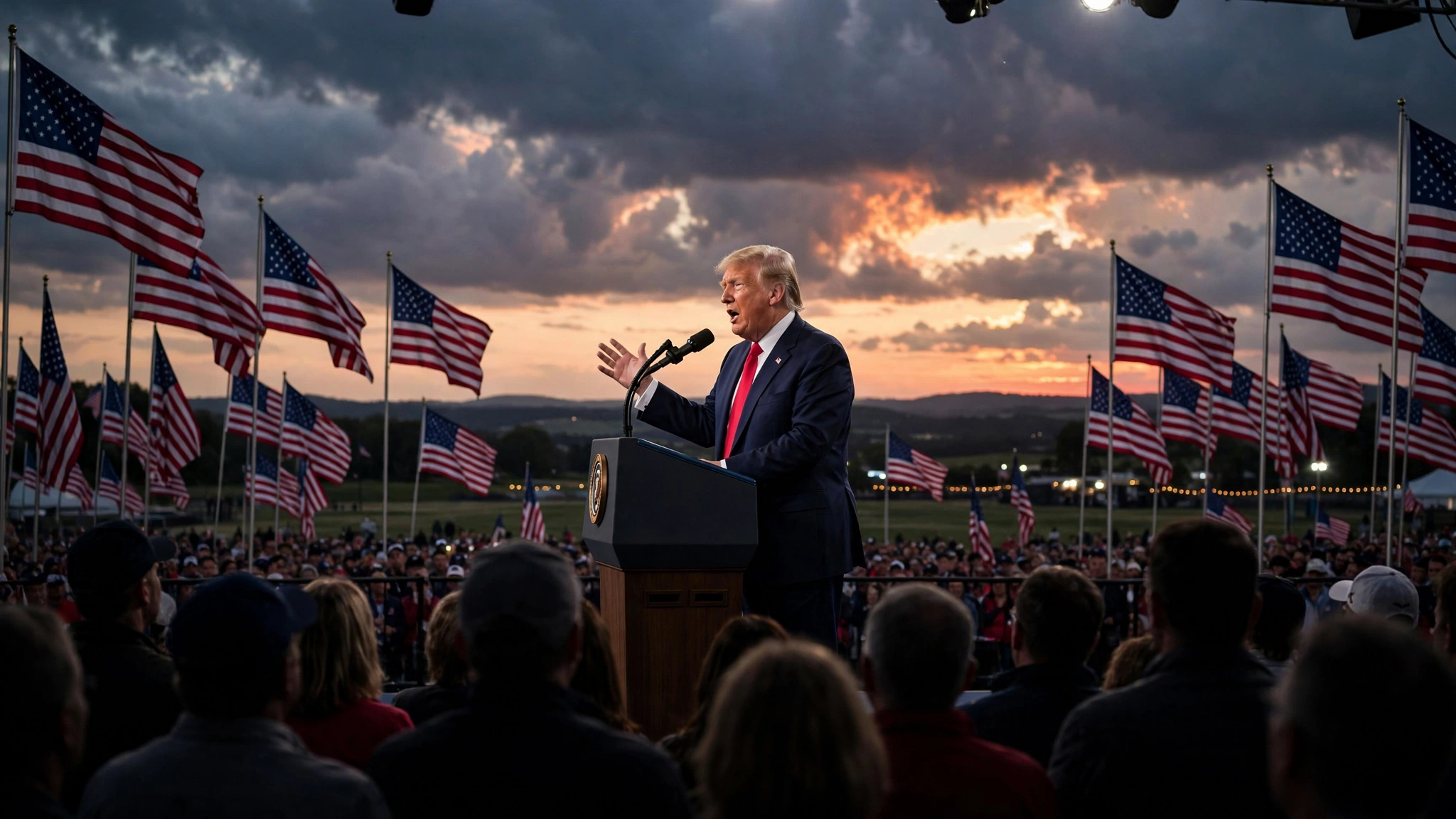
To do that, he has launched what he called “literally a 32-day tour” of campaign rallies across the country, visiting states including Texas, Ohio, Oklahoma, Alabama, Alaska, and Arizona. Many of these are normally safe Republican territory where candidates are now facing unexpectedly tough races.
The Economic Backdrop Behind the Admission
Trump’s messaging problem is, at least in part, an economic problem. American voters are increasingly giving him low marks on his management of the economy, which has been hit by two major forces: his global tariff policies and an ongoing war with Iran that has sent energy prices soaring.
The numbers tell a difficult story for the White House:
- Consumer confidence plunged to a near 12.5-year low in September, according to the Conference Board, with households expecting business and labor market conditions to deteriorate.
- Gasoline prices remain high — the single issue most visible to voters in their daily lives, and the one Trump’s Republican candidates are asked about most on the campaign trail.
- Home prices have kept climbing even as mortgage rates add strain to family budgets.
Against this backdrop, the president’s claim that “the country’s doing better than it has ever done” clashes with what most Americans feel when they fill up their cars or pay their bills. That gap between the White House message and the lived experience of voters is what Trump now says he has failed to close.
Even Allies Say It’s More Than Messaging
Some Republican strategists argue that Trump is diagnosing the wrong disease. Former Republican National Committee communications director Doug Heye told the Washington Examiner that the party faces both a messaging problem and a policy one, pointing to high prices driven partly by the Iran conflict.
Former White House communications director Stephanie Grisham, who served in Trump’s first administration, was blunter still, saying the president always blames his communications team when voters sour on him: “It is always someone else’s fault.”
Polls and prediction markets currently indicate that the Republicans are likely to lose unified control of Congress for the final two years of Trump’s term — a result that would open the door to congressional investigations into his administration.
What This Means for Pakistan
At first glance, an American president’s campaign complaints may seem like distant political theater. But the forces driving Trump’s bad poll numbers reach directly into Pakistan’s economy.
Oil prices. The war with Iran and rising global energy prices — the same factors hurting Trump politically — flow through to Pakistan’s petrol pumps. Pakistan is a net importer of petroleum, so when Middle East tensions push crude prices up, the country’s import bill swells and domestic fuel prices follow. Pakistani consumers and businesses are paying more for the very same global energy shock that is sinking Trump’s approval at home.
Trade and tariffs. Trump’s global tariff policies have roiled international trade, and Pakistan is exposed. The United States is the single largest destination for Pakistani exports, led by textiles — the backbone of the country’s export earnings. Any shift in US tariff policy directly affects Pakistani exporters and the millions of jobs tied to them.
Investment and aid flows. A US administration consumed by a war, midterm political battles, and economic anxiety at home is less likely to prioritize economic partnerships abroad. For Pakistan, which is working to attract foreign investment and stabilize its economy, Washington’s inward turn is a headwind worth watching.
Bottom Line
Donald Trump’s admission is striking not because it is gracious, but because it is tactical. He is not conceding that his policies failed — he is insisting they succeeded while admitting he failed to sell them. With three weeks until the midterms, polls at record lows, and voters feeling the pinch of high gas prices, the president is betting that 32 days of rallies can close the gap between his record and the public’s perception of it.
Whether American voters buy the message this time will decide not just the fate of Congress, but the final two years of Trump’s presidency — and the global economy, including Pakistan’s, will feel the consequences either way.