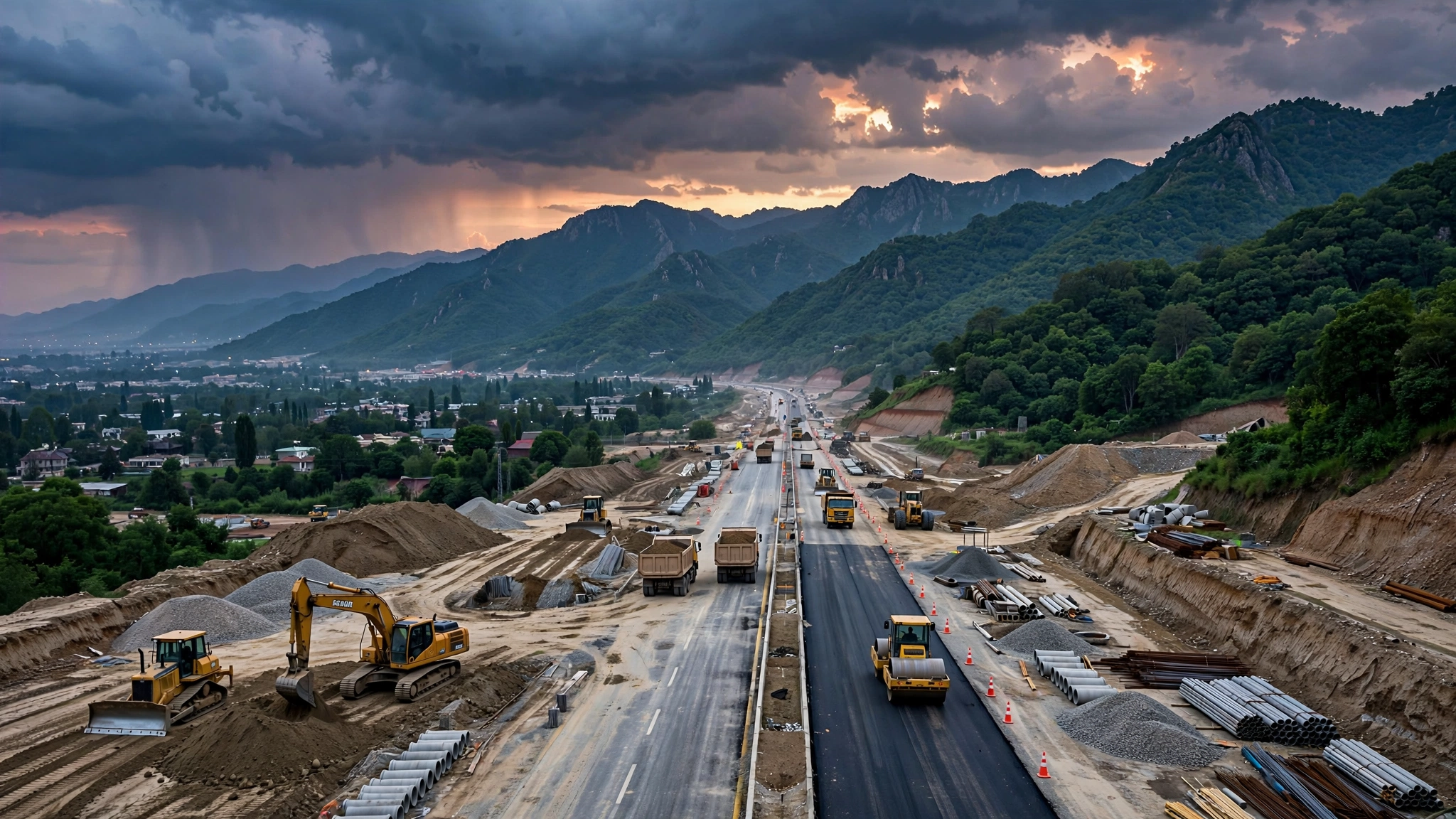
Islamabad’s long-stalled 11th Avenue project is back on the table — this time with a phased construction plan and a firm cost approval. The Capital Development Authority (CDA) has decided to build the Rs. 24.5 billion north-south corridor in two phases, starting with the busiest 3.5-kilometre stretch between the E-11 interchange and Srinagar Highway.
The decision was taken in a recent CDA meeting, and officials are now working through pre-tendering with the aim of getting formal construction started within roughly two months.
Key Takeaways
- CDA’s Development Working Party approved a Rs24.5 billion PC-I for Islamabad’s 11th Avenue — a 7.5 km road from Margalla Avenue to IJP Road with 17 bridges and overpasses.
- Phase 1 prioritises 3.5 km from the E-11 interchange to Srinagar Highway, including a new interchange, at an estimated Rs11-12 billion.
- Pre-tendering is underway and CDA officials hope construction begins within two months; the project had stalled since its June 2023 foundation stone.
The Full Project: Rs. 24.5 Billion, 7.5 Kilometres
The bigger picture is a major new road for the federal capital. The CDA Development Working Party approved a PC-I worth Rs. 24.5 billion on September 24, 2026, for the complete 11th Avenue corridor. The planned road runs approximately 7.5 kilometres from Margalla Avenue to IJP Road, creating a continuous north-south route through the capital.
The design specifications are ambitious:
- Length: ~7.5 km (Margalla Avenue to IJP Road)
- Lanes: Three in each direction
- Structures: Around 17 bridges and overpasses
- Target timeline: One year from the start of construction
The corridor passes between sectors I-10/I-11, G-10/G-11 and F-10/F-11. The section extending north toward D-12 has already been developed under the name Iran Avenue. The same CDA working party meeting also approved approximately Rs. 951 million for three sports arenas in F-8, D-12/1 and G-11/3.
Phase 1: E-11 to Srinagar Highway First
Rather than building everything at once, the CDA will prioritise the section it considers most urgent: roughly 3.5 kilometres from the E-11 interchange to Srinagar Highway. Crucially, this phase also includes an interchange on Srinagar Highway itself.
The logic is traffic distribution. Completing this section will establish a direct connection between Srinagar Highway and Margalla Avenue, giving motorists an alternative route and taking pressure off both corridors during peak hours. Officials believe it is the single stretch that delivers the most relief the fastest.
A CDA engineering official estimated the first phase — including its interchange — at around Rs. 11 billion to Rs. 12 billion, though he stressed this was preliminary while detailed calculations are still underway.
| Phase 1 | Full Project | |
|---|---|---|
| Stretch | E-11 interchange → Srinagar Highway | Margalla Avenue → IJP Road |
| Length | ~3.5 km | ~7.5 km |
| Key structure | Srinagar Highway interchange | ~17 bridges/overpasses |
| Estimated cost | Rs. 11–12 billion | Rs. 24.5 billion (approved PC-I) |
A Project That Stalled Before
The 11th Avenue is not new. Prime Minister Shehbaz Sharif laid its foundation stone in June 2023 during his previous tenure — but physical construction never proceeded. Three years on, the project is being restarted with the two-phase strategy, a finalized cost approval and a consultancy already procured earlier in 2026 for detailed engineering design and construction supervision.
That history is worth keeping in mind. Motorists should treat the current schedule — construction starting within two months, completion within a year — as the planning target rather than a guaranteed opening date.
Why Two Phases?
The phased approach is as much financial as it is practical. A single Rs. 24.5 billion build would demand a massive upfront commitment, while splitting the project lets the CDA put the most traffic-critical section into service first — and demonstrate progress — before funding the remainder. It also mirrors how large urban road projects increasingly get executed in Pakistan: finish the segment that hurts most, then extend.
What It Means for Islamabad Commuters
Once Phase 1 is complete, Srinagar Highway will connect directly with Margalla Avenue through the new corridor. For residents of the northern sectors — E-11, D-12 and the F and G sectors — it promises a genuine alternative during rush hours, when the existing arteries around Margalla Town, Faisal Mosque and the E-11 junction routinely clog.
Property markets in adjacent sectors such as I-10, I-11, G-10, G-11, F-10, F-11, E-11 and D-12 tend to respond to new corridor projects, though the real impact will depend on when the earthmovers actually arrive, how the interchanges are designed, and how many access points the new road gets.
The Road Ahead
The CDA is clearly in infrastructure mode: alongside the 11th Avenue, the authority has been pushing ahead with other capital projects including the T-Chowk flyover on the Islamabad Expressway and the Shaheen Chowk underpass. Whether the 11th Avenue finally breaks ground this winter — three years after its foundation stone — will be the real test of the new two-phase plan.
Approval and Design Details
The CDA Development Working Party approved the Rs. 24.5 billion PC-I for the project on September 24, 2026. The full 7.5-kilometre corridor will carry three lanes in each direction and run between sectors I-10/I-11, G-10/G-11 and F-10/F-11, with around 17 bridges and overpasses along the route. The stretch towards D-12 has already been developed as Iran Avenue, leaving the Margalla Avenue to IJP Road section as the main remaining build.