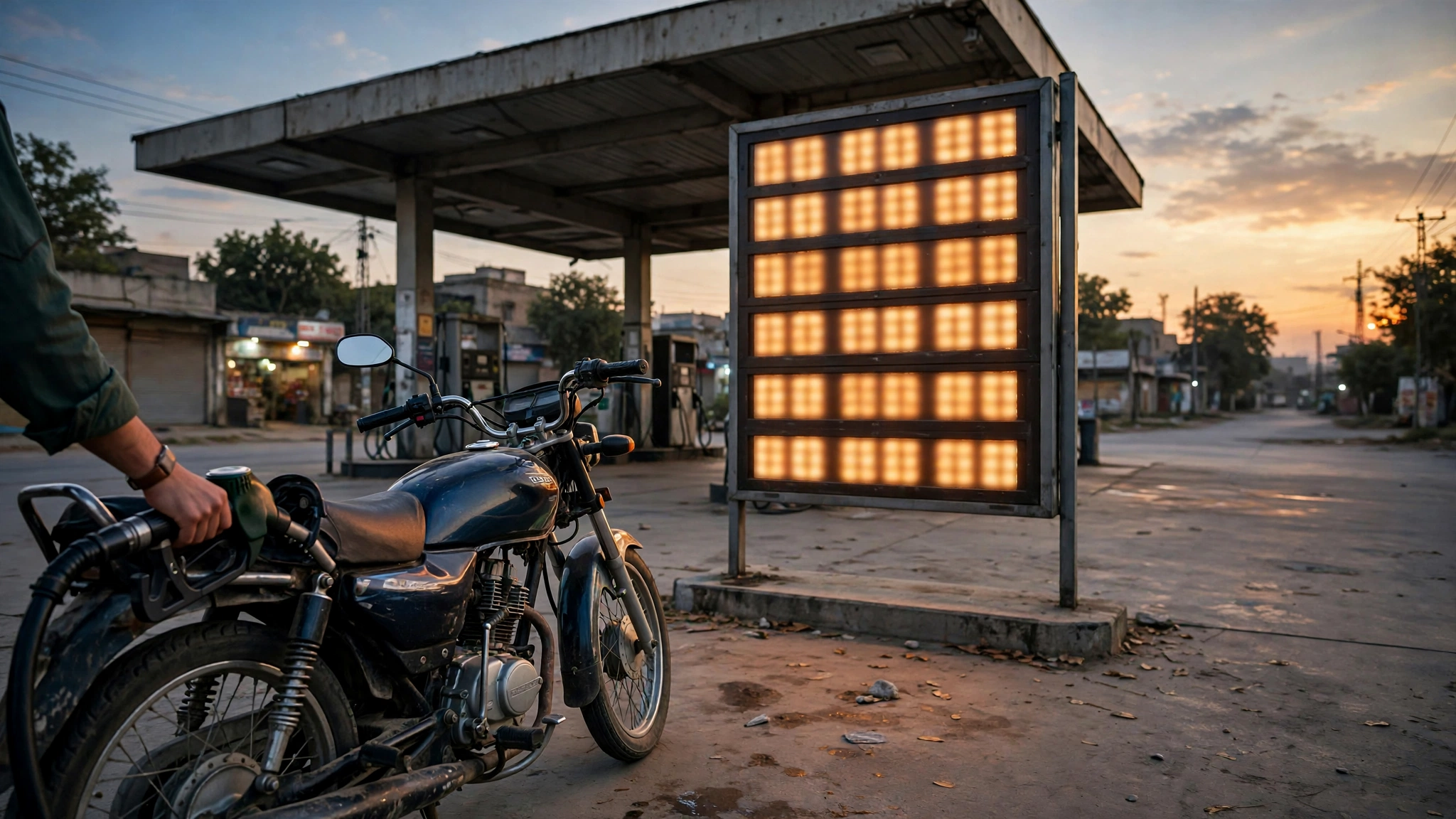
A decade ago, the idea of Rs1,000-per-litre petrol would have sounded absurd. It does not anymore. Petrol touched Rs458.41 per litre on April 3, 2026, and despite repeated cuts since, it stands near Rs395 today — up Rs145 per litre since mid-July alone. Two structural forces keep dragging the price upward, and neither is going away.
Key Takeaways
- Petrol peaked at Rs458.41/litre in April 2026 and stands near Rs395 today — with two structural drivers pushing prices ever upward.
- Reason 1: Pakistan imports its fuel, so every Middle East shock and rupee slide lands directly at the pump.
- Reason 2: The government collected Rs1.34 trillion in petroleum levies — and its FY27 target is Rs1.676 trillion, locking taxes into every litre.
Where We Stand Right Now
The federal government revised fuel prices again on October 13, 2026: petrol down Rs2.98 to Rs395.32 per litre, diesel up 61 paisa to Rs396.85. But zoom out and the trend is unmistakable. Since daily price adjustments began on July 21, petrol prices have been raised 35 times and reduced just 22 times. Diesel has seen 34 increases against 23 cuts. The week of October 5–9 alone pushed petrol up Rs5.54 per litre, briefly touching Rs398.96 — just Rs1.04 below Rs400.
The journey this year has been violent: petrol started rising from Rs266 in the first week of March, hit Rs458.41 on April 3, and has been whipsawing ever since. What is driving it? Two things — and both are bigger than any single government.
Reason 1: Pakistan Imports Its Fuel — So Every Shock Lands at the Pump
Pakistan does not control the price of oil; it buys it from the world market in US dollars. That means every geopolitical jolt and every rupee slide translates mechanically into a higher pump price.
The 2026 price surge began with a war. When the US-Iran conflict broke out on February 28, Pakistan’s fuel trajectory bent sharply upward. Petrol climbed from Rs266 in early March to Rs458.41 by April 3 — a 72% jump in weeks. High-speed diesel was even more extreme, peaking at Rs520.35. International crude movements, Middle East tensions, shipping and insurance premiums on imports all feed directly into the domestic pricing formula, which OGRA computes from Platts benchmarks, premiums and import-related costs on a daily basis.
Then comes the rupee. Oil is traded in dollars; Pakistan pays for it in rupees. Every time the rupee depreciates, the same barrel costs more rupees — even if the world price has not moved at all. Former economic adviser to the finance ministry Dr Ashfaque Hasan Khan warned precisely of this: further rupee depreciation would raise the cost of imported oil and could push fuel prices higher still.
That is the arithmetic of Rs1,000. It does not require one catastrophic event. It requires the two things that have defined Pakistan’s 2026: Middle East instability keeping crude elevated, and a currency that keeps sliding. Layer a 30% rupee fall on top of a $120-plus barrel — both well within the range of recent history — and triple-digit pump prices stop being fantasy.
Reason 2: The Government Treats Fuel as a Tax Machine
The second driver lives entirely inside Pakistan’s borders: the taxes loaded onto every litre. Import costs set the floor; government levies and duties set how high the ceiling sits.
The numbers are staggering. Official figures show petroleum levy collections of approximately Rs1.205 trillion between July 2025 and March 2026, rising to around Rs1.342 trillion through April. For fiscal year 2026-27, the government has set a collection target of Rs1.676 trillion — nearly Rs1.7 trillion to be extracted from fuel consumers in a single year.
That target has a direct consequence: international oil price declines do not automatically deliver equivalent savings to Pakistani consumers. The retail price stacks import costs, petroleum levies, customs duties and other charges — so when world prices fall, the government has fiscal room to keep the levy high and pocket the difference rather than pass relief to motorists. This is why Pakistan’s pump prices feel like a one-way ratchet: up with every global shock, barely down when shocks fade.
IMF-linked reform programmes reinforce the pattern. Reducing fuel subsidies and keeping fuel pricing market-based are standard conditions — which means governments cannot simply absorb price shocks even when they want to, and they face constant fiscal pressure to keep the levy flowing.
The Road to Rs1,000
Put the two reasons together and the path becomes clear. Reason 1 sets the global cost of the litre; Reason 2 determines how much of it the state takes. Neither force is under Pakistan’s control in the way citizens hope:
- The import trap: As long as Pakistan imports its refined fuel needs in dollars, Middle East conflicts and rupee weakness will keep pushing pump prices up — and both have defined 2026.
- The tax trap: As long as the budget depends on Rs1.676 trillion in petroleum levy collections, meaningful price relief is fiscally off-limits, whatever happens in the world market.
Rs1,000 per litre is not a prediction — nobody can time the rupee or the next regional crisis. But it is no longer a fantasy either. Petrol has already done half the journey in a single year. Unless Pakistan either finds new fuel revenues outside petroleum products or stabilises its currency and regional energy supplies, the only question is how long the other half takes.
What Ordinary Pakistanis Can Do
In the meantime, the economics of fuel are reshaping daily life. Commuters are switching to carpools and public transport; two-wheelers are being swapped for electric bikes where possible; and interest in hybrids and plug-in hybrids — cars that use far less petrol per kilometre — is surging. The fuel bill is no longer just a budget line. For a growing number of Pakistani families, it is becoming the budget line that decides everything else.