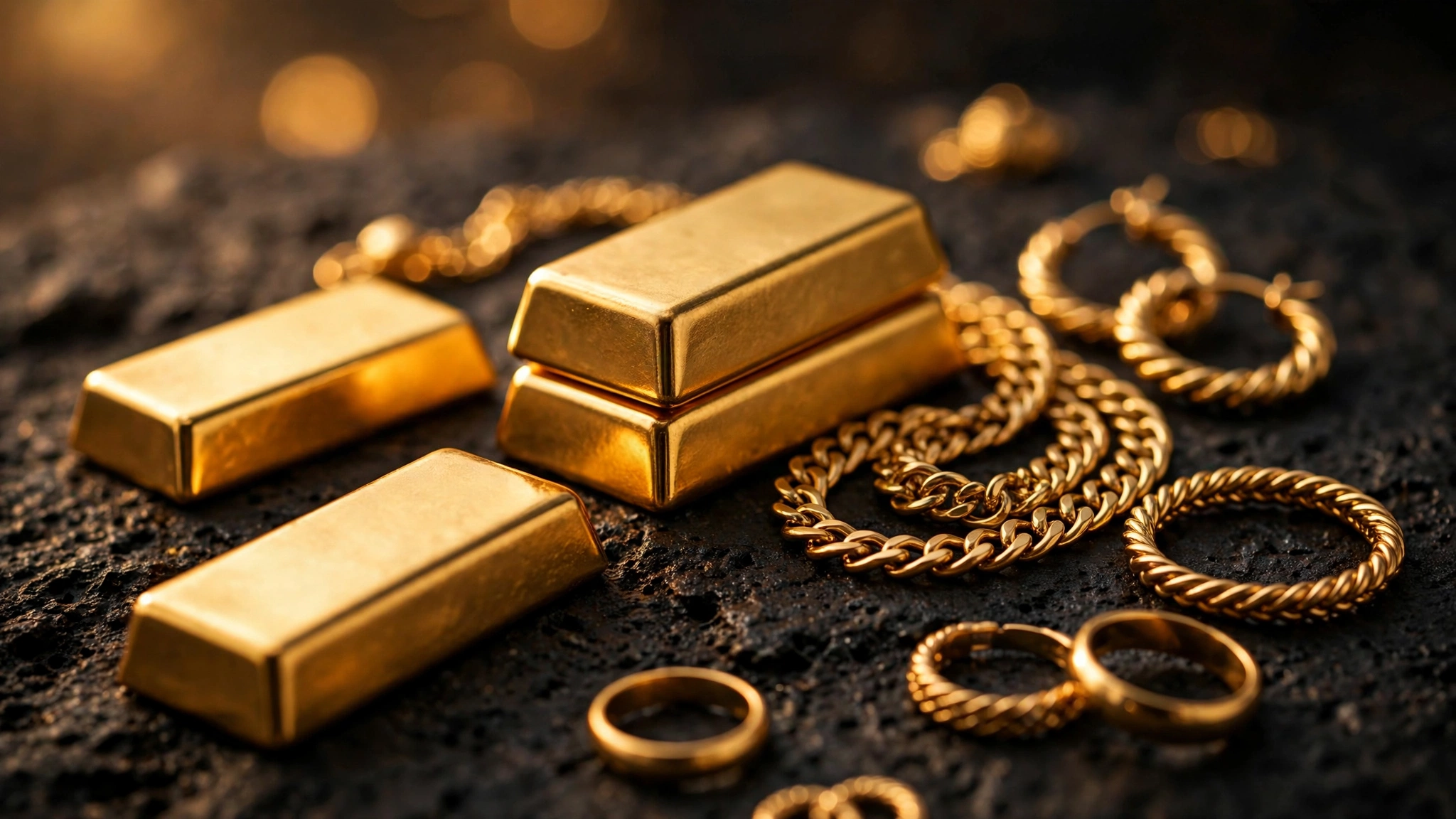
Walk into any sarafa market in Karachi, Lahore, or Islamabad and ask for the rate, and the answer tells the story: gold in Pakistan opened Tuesday, October 13, 2026, at Rs439,936 per tola for 24-karat gold. A single tola — barely 11.7 grams — costs more than many Pakistanis earn in several months.
Yes, prices dipped Rs2,100 on Monday. But don’t mistake a quieter week for cheap gold. The metal remains structurally expensive, and the forces keeping it there aren’t going away anytime soon. Here’s what’s actually going on.
Key Takeaways
- Gold trades around Rs439,936 per tola in Pakistan, still far above levels most families budget for.
- International gold is near $4,165 an ounce — about 25% below its January 2026 record, not rising steadily.
- A strong US dollar, high interest rates, and constant central-bank buying are the forces keeping prices elevated.
Where gold stands right now
The international picture first. Spot gold was trading around $4,165 an ounce on October 12, after giving back early-week gains as the US dollar firmed. That is a staggering figure by any historical standard — yet it is roughly 25% below the record the metal set on January 28-29, 2026, when the LBMA PM fix reached about $5,405 and intraday prices touched nearly $5,590, according to figures tracked by the World Gold Council.
In Pakistan, the All Pakistan Gems and Jewellers Sarafa Association (APGJSA) put Monday’s rate at Rs439,936 per tola (24-karat) and Rs377,174 per 10 grams. For context, gold started September near Rs466,136 per tola — so the market has already shaved off about Rs26,000 in six weeks. Silver, meanwhile, sits near Rs6,532 per tola domestically.
| Gold measure | Level (mid-October 2026) | Distance from peak |
|---|---|---|
| International spot (per oz) | ~$4,165 | ~25% below Jan 2026 record |
| Pakistan 24K per tola | Rs439,936 | ~Rs26,000 below early-Sept rate |
| Pakistan 24K per 10 grams | Rs377,174 | Tracking tola rate |
| Silver per tola (Pakistan) | Rs6,532 | Roughly half its January high |
So gold is off its highs — but “off its highs” still means historically extreme prices. That tension is what buyers feel every day.
Why gold refuses to get cheap
Gold doesn’t trade in a vacuum. Four forces are holding prices up, and understanding them explains why your jewellery budget keeps breaking.
1. Central banks are still buying — aggressively
The single biggest structural buyer of gold this decade isn’t investors or wedding shoppers: it’s central banks. China’s central bank extended its buying streak to a 23rd straight month in September 2026, purchasing 740,000 ounces in a single month — its largest addition since November 2024. Central banks worldwide have been stockpiling gold to diversify away from dollar-heavy reserves, and that steady institutional bid puts a floor under prices even when sentiment turns.
2. The dollar and interest rates keep biting — but not enough to crash it
Gold’s enemies right now are obvious on any rates screen. The US dollar index has climbed to around 102.4, its strongest in 18 months. The 10-year US Treasury yield touched 5.35%, a 24-year high, with real (inflation-adjusted) yields near 3%. Gold pays no interest, so every tick higher in yields makes bonds more attractive by comparison.
Yet here’s the thing: even with yields at multi-decade highs and the dollar surging, gold is only 25% off its record instead of collapsing. That resilience tells you underlying demand — from central banks, from Asia, from safe-haven buyers — is absorbing enormous selling pressure.
3. Geopolitics keeps the safe-haven bid alive
With Middle East tensions flaring — including reported tanker attacks in the Strait of Hormuz and talk of renewed US-Iran confrontation — investors continue to treat gold as insurance. Uncertainty is gold’s oldest marketing campaign, and the campaign is running at full volume.
4. The rupee amplifies everything for Pakistanis
Pakistan’s gold rate is a translation of the international price through the rupee. When the rupee weakens against the dollar, gold gets more expensive in rupees even if the global price is flat. Add import duties and jewellers’ making charges on top, and the shop rate runs noticeably above the raw per-tola figure. That’s why even a flat international market can feel like a price hike at your local jeweller.
The volatility trap: don’t read too much into one day’s rate
October has been a choppy month. Gold rose Rs5,900 in a single session on October 9, gained Rs1,100 on October 10, then fell Rs2,100 on October 12. These daily swings — Rs1,000 to Rs6,000 a tola — are normal now. A single-day drop is not a buying signal, and a single-day spike is not a crisis. Anyone quoting “the rate” as if it’s one fixed number is missing the point: gold moves several thousand rupees within a week, routinely.
What should Pakistani buyers actually do?
Honest advice, not investment gospel:
- For weddings and jewellery: plan your budget around a *range*, not yesterday’s rate. If gold at Rs440,000 per tola stretches the budget, decide your ceiling before you walk into the shop — and remember making charges and margins sit on top of the quoted metal rate.
- For investors: gold is up only about 1-3% over the past 12 months after its January surge. It has been a flat-to-down asset for most of 2026. Some analysts are watching the $4,000-per-ounce level as a possible next leg down — that is a *technical projection*, not a forecast, so treat it as one scenario, not a certainty.
- For sellers: prices remain historically elevated. If you’re holding old jewellery, you’re still looking at one of the strongest exit prices in history — even off the record.
The bottom line
Gold isn’t getting cheap — it’s getting volatile. The record highs of January 2026 may or may not return, but the combination of relentless central-bank buying, geopolitical risk, and a soft rupee means Pakistanis are likely to keep seeing per-tola rates in the Rs430,000–470,000 band for the foreseeable future.
The metal’s long-term story — flat mine production, steady institutional demand, currency hedging — hasn’t changed. What changed is the price of entry. And at nearly Rs440,000 a tola, that entry fee keeps getting harder to ignore.