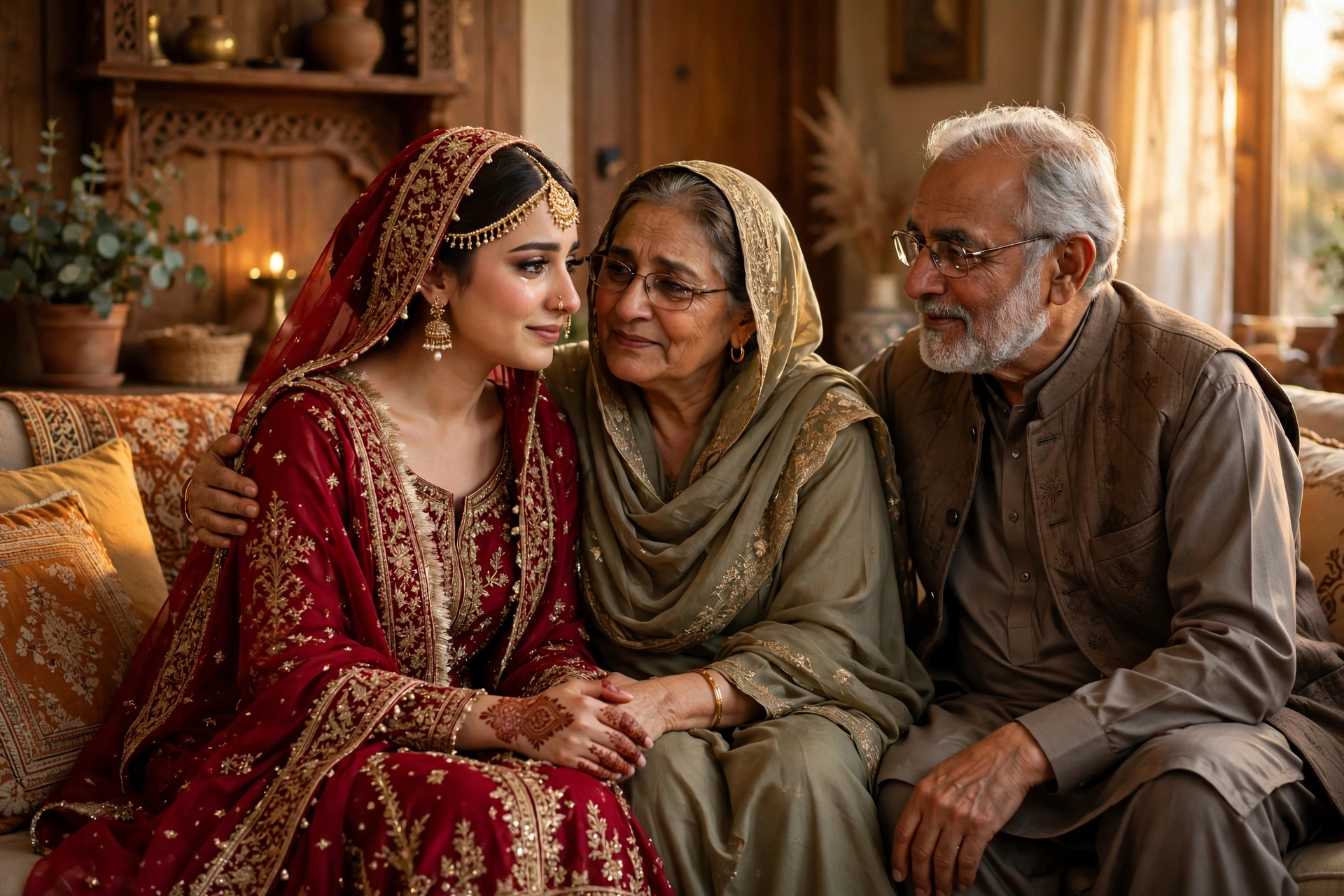
This wedding season, Master MoltyFoam is asking Pakistani families an uncomfortable question: when your daughter gets married, does she gain a new home — or lose the one she grew up in? The brand’s 2026 wedding film, “Rishtey Zindagi Bhar Kay” (Bonds That Last Forever), starring Mahira Khan, delivers one clear answer: a daughter should never have to question where she belongs. No matter how life changes, her parents’ home must always remain hers.
Key Takeaways
- Master MoltyFoam’s 2026 wedding film ‘Rishtey Zindagi Bhar Kay’, starring Mahira Khan, argues that marriage should never cost a daughter her place in her parents’ home.
- The film challenges the old belief that a married daughter becomes ‘parayi’ — and reminds families that belonging is unconditional.
- The campaign continues the brand’s Mashaadi tradition of using wedding-season advertising to spotlight issues affecting women.
What the Film Actually Says
The film opens on the emotional terrain every Pakistani family knows well — the days around a daughter’s wedding, when joy and grief sit side by side. Through a heartfelt exchange between two sisters, the story traces how a father’s love and values continue to guide his family even after he is gone.
The official description of the film puts the campaign’s promise plainly: this wedding season, Master MoltyFoam celebrates “a promise every daughter deserves to carry with her: that no matter how life changes, she will always have a home to call her own.”
It is a small sentence with a large shadow. Behind it lies a reality millions of Pakistani women live with: the moment after the ruksati, a daughter is quietly reclassified. She becomes a guest in the house she once owned.
The “Parayi” Problem
In Pakistan, the vocabulary around marriage does heavy cultural work. After the wedding, a daughter is often called parayi — someone who now belongs elsewhere. Her visits to her parents’ home are framed as trips, her presence as something that needs announcing, sometimes even requesting.
Many married women will tell you they feel awkward turning up at their parents’ house unannounced. Some ask permission before coming over. Some are told — gently, by mothers-in-law or even their own parents — that too-frequent visits are not proper. The love does not disappear, but the terms change: belonging becomes conditional on being invited.
This is the thinking MoltyFoam’s campaign takes on. As the brand’s own framing puts it, a daughter should never need permission or an invitation to return to her own home. A wedding should celebrate the beginning of a new life, not the loss of an existing one. She should gain another home through marriage — never lose the one that raised her.
Why this message lands now
Pakistan’s wedding season runs through the winter months, when thousands of families are preparing shadis right now. The pressure around a daughter’s marriage in this country rarely stops at emotions: dowry expectations, the cost of the event, and the unspoken rule that her married life should make her family proud all pile on at once. Against that backdrop, a film that tells families to hold their daughters closer — not looser — after marriage is not just sentimental. It is corrective.
The Details: Who Made It
The film is a Mashion and Master MoltyFoam presentation, produced as MASHAADI 2026 — “a Mad Hatter original” directed by Nadeem Baig, one of Pakistan’s most established filmmakers. The credits list:
- Starring: Mahira Khan, Ameema Saleem, Parveen Soomro, Hira Tayyab
- Concept and screenplay: Mustafain Bokhary
- Dialogues: Mahira Khan
- Produced by: Mustafain Bokhary, Anushay Talha Khan
Mahira Khan’s involvement matters beyond star power. She has used her platform repeatedly to raise awareness about issues affecting women and children, so her presence here is not decoration — it is continuity with a public stance she has taken before.
Why a Mattress Brand Is Saying This
This is not MoltyFoam’s first wedding-season message with social weight. The brand’s annual Mashaadi films with Mashion have built a pattern: using the year’s biggest wedding moment to say something about women’s lives that most ads avoid.
In 2022, for example, the MoltyFoam–Mashion collaboration released a film celebrating courage against domestic violence — showing Mahira Khan’s character refusing to marry on the wedding day itself after facing abuse, and her family standing behind her as a unit. Coverage of that campaign noted that more than 1 in 4 ever-married women in Pakistan had experienced physical violence since age 15, per the Pakistan Demographic and Health Survey — a reminder that what happens to daughters after the shaadi is not always safe, let alone joyful.
This year’s campaign is quieter but cuts just as deep. Not every daughter faces violence. But far more face the slow, socially accepted erosion of belonging: the jokes about “ab to tum parayi ho,” the expectation that her parents’ home is now someone else’s house.
What Families Can Actually Do
A film can start the conversation; the change has to happen at the dinner table. For families taking this message seriously, a few practical shifts matter more than grand gestures:
- Say it out loud. Tell your married daughter — in words, not just assumptions — that your home is her home, always.
- Drop the permission culture. An unannounced visit from a daughter is not a burden; treating it as one teaches her she is a guest.
- Check the language. “Parayi,” “tumhare ghar” (your husband’s house) said with finality, casual jokes about whose house it is now — words teach children where they stand.
- Include her in family decisions. Belonging is not just about a spare room; it is about remaining a full member of the family, not an honorary one.
- Back her when it matters. If her in-laws restrict her visits or her contact with family, that is not tradition — that is control.
A Wedding Is a Beginning, Not a Goodbye
Marriage adds to a daughter’s life. It was never supposed to subtract from it. The best thing about MoltyFoam’s “Rishtey Zindagi Bhar Kay” is that it does not attack tradition — it reminds us what tradition was meant to protect: the bond that lasts a lifetime.
A daughter should gain another home through marriage. She should never lose the one that raised her. And she should never, at any age, have to ask where she belongs.