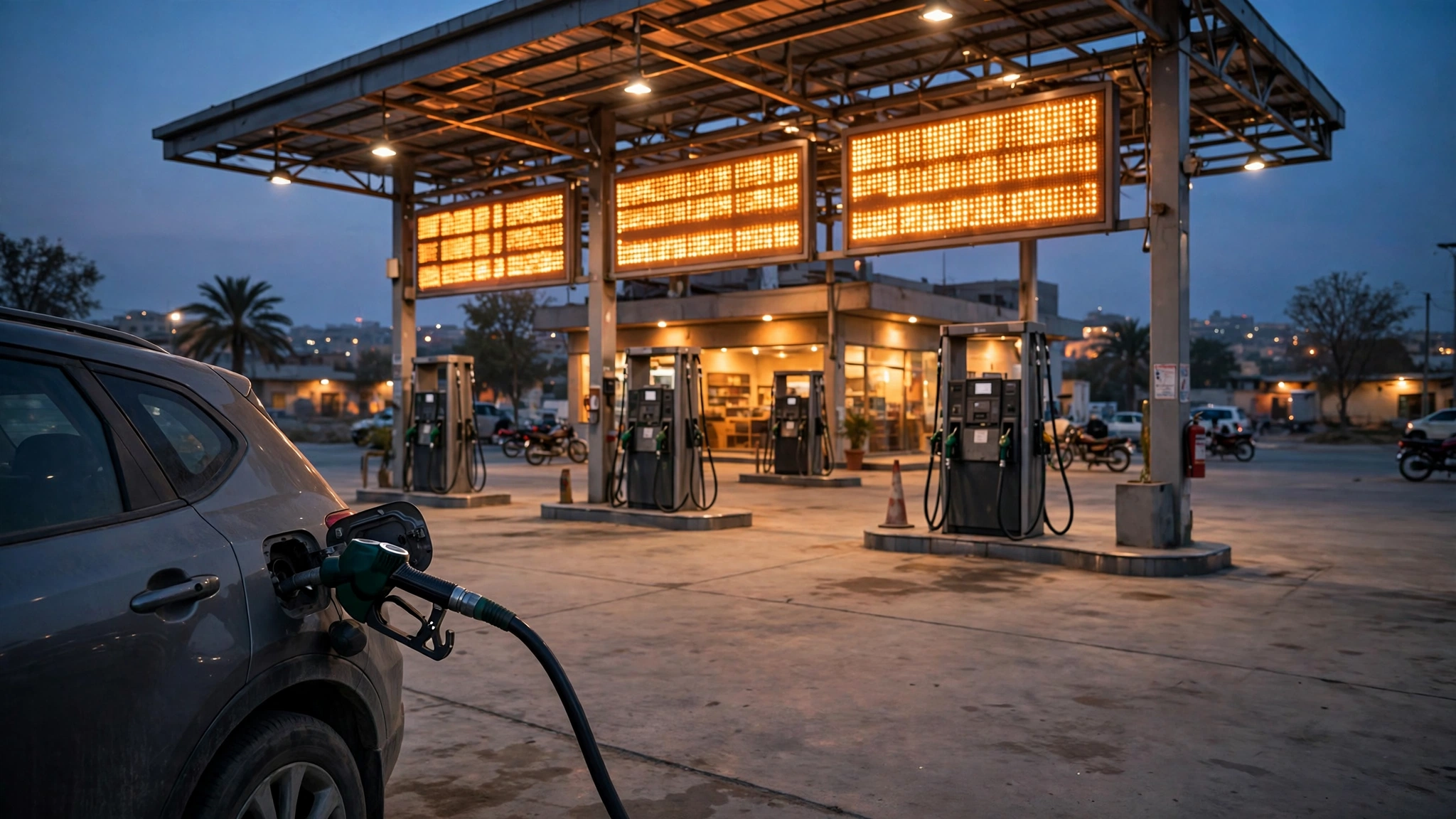
Petrol is cheaper today. The federal government has cut the ex-depot price of petrol by Rs2.93 per litre, bringing it down to Rs395.37, effective Tuesday, October 13, 2026. It is the largest single reduction in weeks and the second consecutive cut, coming days after a 66-paisa reduction that applied to October 10–12. Over the two revisions, petrol has fallen by about Rs3.59 a litre from its recent peak near Rs399.
High-speed diesel (HSD) went the other way. Diesel rose by 61 paisas to Rs396.85 per litre, meaning petrol and diesel have split in opposite directions for the second time in a row. The revisions come through Pakistan’s daily fuel pricing mechanism, under which the Oil and Gas Regulatory Authority (OGRA) publishes fresh ex-depot rates based on movements in international petroleum prices.
Key Takeaways
- Petrol cut by Rs2.93 per litre to Rs395.37, effective October 13, 2026.
- Diesel moved the other way, rising 61 paisas to Rs396.85 per litre.
- Rates are ex-depot under the daily pricing mechanism based on a seven-day rolling average of international prices.
What changed on October 13
The Petroleum Division notification announced two adjustments that take effect from October 13:
| Fuel | Old price (Rs/litre) | New price (Rs/litre) | Change |
|---|---|---|---|
| Petrol (motor spirit) | 398.30 | 395.37 | −2.93 |
| High-speed diesel | 396.24 | 396.85 | +0.61 |
Both are ex-depot prices — the wholesale rates at which fuel leaves the depots. What you pay at the pump will be higher once dealer and distributor margins are added. Note that the daily mechanism works on weekdays; prices notified on Fridays stay unchanged over the weekend.
How petrol got here: a September of almost constant rises
The October cuts land after a September in which petrol mostly climbed. The daily record tells the story:
- Early September: petrol sat around Rs342–350 per litre, having eased in late August.
- September 7–22: a sharp climb — from Rs345.87 to Rs358.77 in a day, then steadily upward to a Rs4.61 spike that took petrol to Rs393.75 on September 22.
- Late September: a brief pullback — petrol slipped to Rs387.54 on September 30 after small daily cuts.
- Early October: the relief didn’t last. Petrol climbed again to Rs390.66 on October 2, Rs392.76 on October 3, and up to Rs398.96 by October 8.
- October 10–12: a 66-paisa cut brought it to Rs398.30 — token relief, less than one rupee on a litre nearing Rs400.
- October 13: the Rs2.93 cut to Rs395.37 — the first genuinely noticeable reduction since the late-September pullback, and the biggest single-day relief in weeks.
In short: after climbing nearly Rs57 a litre from the start of September to early October, petrol has now fallen for two reviews in a row. The current rate of Rs395.37 is roughly Rs6.60 below petrol’s recent October peak, though still about Rs53 higher than where it stood at the start of September.
Why the two fuels are moving in opposite directions
Under Pakistan’s daily pricing framework, petrol and diesel are priced on separate international tracks. The mechanism, approved by the federal cabinet and announced by Petroleum Minister Ali Pervaiz Malik in July 2026, works like this:
- OGRA calculates daily ex-depot prices using a seven-working-day rolling average of international refined-product prices (Platts benchmarks, premiums, and associated costs).
- OGRA can notify the rates directly, without prior approval from the prime minister or the federal government.
- Rates announced on Fridays apply through the weekend; the petroleum levy cannot exceed the cabinet-approved limit, and any change in the levy needs Finance Division approval.
Because petrol (motor spirit) and high-speed diesel have different international price movements, they can — and lately often do — move in opposite directions. That split is what we are seeing now: petrol easing while diesel edges up.
The global backdrop
The volatility traces back to tensions in the Middle East. After a regional conflict that began in late February 2026 disrupted energy markets, Pakistan first shifted from fortnightly to weekly price reviews, and then to the daily pricing system in July. The idea behind daily pricing is transparency and speed — international price movements reach consumers faster, in both directions. The October 13 cut is arguably the first time in weeks that mechanism has delivered meaningful relief to petrol users rather than fresh increases.
What it means for your wallet
For motorists and bikers
Petrol is the fuel most Pakistani households buy directly — motorcycles, rickshaws, and cars. A Rs2.93 cut per litre adds up:
- 20 litres (a typical motorcycle/carb monthly top-up): saving of Rs58.60 versus the previous rate.
- 50 litres (a car fill-up): saving of Rs146.50.
- Combined with the earlier 66-paisa cut, the two revisions save about Rs179 on a 50-litre purchase compared to the Rs398.96 rate.
It is real relief, but keep perspective: at Rs395.37, petrol remains near Rs400 and far above its August levels.
For transporters, farmers, and businesses
Diesel is the workhorse fuel — trucks, buses, goods transport, tractors, and tube wells. Its 61-paisa rise is small per litre, but diesel costs flow into freight rates and, eventually, food prices. Businesses and farmers get no relief from this revision. Diesel at Rs396.85 is edging back up after having fallen sharply from above Rs420 in mid-September.
For inflation watchers
Fuel prices feed directly into inflation through transport costs. A petrol cut helps contain the headline CPI impact for households, but the diesel increase partially offsets that. With prices now revising daily, the inflation picture can swing week to week rather than settling for a fortnight.
What to watch next
Three things matter in the coming days:
- The next daily review. Prices can change again at the next notification — the October 13 rate is not a lock-in. Weekend rates hold steady, but weekdays move daily.
- International crude and refined-product prices. The seven-day rolling average means today’s relief reflects international movements from the past week. If global prices rebound, the cut could reverse.
- The diesel trajectory. Diesel has now risen for two consecutive reviews (Rs1.13 in total). If it keeps climbing, the petrol relief will feel hollow for businesses and, ultimately, consumers paying higher transport and food costs.
The bottom line
For the first time in weeks, the petrol price story in Pakistan is genuinely good news for ordinary consumers: Rs2.93 off, the second consecutive cut, and the biggest single reduction since the late-September pullback. Diesel users, though, face yet another increase. The daily pricing mechanism is doing exactly what it was designed to do — passing international movements through quickly, up or down. This week, petrol drivers finally caught the “down” side of it.