Finance Minister Muhammad Aurangzeb has delivered one of the bluntest critiques yet of the global climate finance system, warning that the world is collecting pledges it cannot cash and building funds it cannot open. Speaking at the 17th V20 Ministerial Dialogue in Bangkok on October 12, he urged governments and international institutions to stop treating announcements as achievements — because the money vulnerable countries were promised is still not reaching them.
The message landed at an awkward moment for the climate finance industry. The V20 — a grouping of finance ministers from economies most exposed to climate risk — exists precisely to turn climate ambition into investable projects. Aurangzeb, whose country has paid one of the heaviest prices for climate inaction, told the room that talk without delivery was no longer defensible.
Key Takeaways
- Finance Minister Muhammad Aurangzeb warned at the V20 dialogue in Bangkok that climate finance pledges are worthless without delivery, citing the Loss and Damage Fund as a cautionary tale.
- Of the $822 million pledged to the Loss and Damage Fund, only about half has actually arrived — and not a single dollar had been disbursed as of September 2026.
- Pakistan needs an estimated $348 billion in climate finance by 2030, but current inflows cover less than 20 percent of that gap.
The Fund That Exists on Paper
At the centre of the finance minister’s criticism stood the Loss and Damage Fund, the facility created at COP27 in 2022 to compensate developing countries for climate devastation they did not cause. Nearly four years on, it has become the example his argument was built around: initiatives that are launched with fanfare and then left stranded in bureaucracy.
The numbers behind the fund explain his frustration. As of March 2026, 27 countries had pledged about $822 million to the fund — but only roughly half of that had actually been paid in. In July 2026 the fund made $342 million available in its first funding round. Yet as of September 2026, according to analysis by Carbon Brief, not a single dollar had been distributed to any climate-affected country.
Meanwhile demand has exploded far beyond the fund’s means. Between December 2025 and July 2026, developing countries submitted 176 applications requesting more than $2.8 billion in assistance — over triple what was ever pledged. In June 2026, the fund’s board considered four funding requests. None was approved.
Why the Money Moves So Slowly
The delays are not accidental. The fund is hosted by the World Bank, and its approval processes run through the same multilateral machinery that developing countries have long complained is too slow for emergencies. Analysts have noted that institutional timelines — accreditation, approval and disbursement through international agencies — can stretch well beyond the fund’s own startup windows, making rapid response to disasters practically impossible.
Pakistan knows this pattern intimately. After the devastating 2022 floods, the finance minister noted at a United Nations climate event last month, some international support that had been pledged remained unutilised — not because the need disappeared, but because the systems for moving it were never built.
Pakistan’s $348 Billion Problem
The scale of the gap makes the dysfunction a genuine economic threat. Pakistan’s own climate finance needs are estimated at $348 billion by 2030, with about $152 billion of that needed for adaptation alone. Current inflows, one senior official said recently, cover less than 20 percent of that gap.
That shortfall bites in two ways. First, when money does come, it arrives disproportionately as loans rather than grants — which means climate adaptation adds to the debt burden of a country already under an IMF programme. Second, the cumbersome approval procedures of funds like the Green Climate Fund mean grants can take years to materialise, as officials at the federal climate change ministry have complained.
Aurangzeb has repeatedly argued that climate resilience must begin at home — with domestic macroeconomic stability, fiscal buffers and credible adaptation frameworks — and that international support should complement, not substitute for, national effort. It is a disciplined position from a finance ministry trying to keep the economy steady under pressure. But it is also, unmistakably, a signal that Pakistan can no longer afford to treat foreign climate finance as a reliable part of its planning.
What Pakistan Is Doing Instead
Rather than waiting on funds that may never arrive, Islamabad has been building its own financing architecture:
- The Climate Prosperity Plan, developed with V20 support, is designed to convert national climate goals into a pipeline of bankable projects that investors can actually fund.
- Pakistan’s inaugural green Panda bond — a yuan-denominated instrument issued in China’s domestic market — has opened a new channel for mobilising green investment through capital markets.
- Diversified financing through the World Bank, the Asian Development Bank and the IMF’s Resilience and Sustainability Facility is being combined with private-sector partnerships to support relief, adaptation and reconstruction.
At the Bangkok dialogue, Aurangzeb also accepted the chairmanship of the Governing Council of the Borrowers’ Platform on behalf of Pakistan — a role under which he has committed the group to practical implementation and measurable results rather than collective bargaining.
The Bigger Warning
In New York last month, at both a UN-hosted climate finance dialogue and a World Economic Forum session, he raised the same concerns: slow operationalisation of the Loss and Damage Fund and cumbersome Green Climate Fund procedures.
What is striking about the Bangkok intervention is its directness. Citing a flagship global fund as an example of initiatives “remaining unimplemented” is not the usual diplomatic language — it is a public diagnosis. And the diagnosis is that the climate finance system has an accountability problem: donors are graded on what they announce, not on what they deliver.
That mismatch has real consequences for countries like Pakistan. Nepal’s experience is instructive: after catastrophic floods and a glacial collapse that killed more than 1,400 people and knocked out a tenth of its hydropower capacity, Kathmandu asked the Loss and Damage Fund for about $20 million in rapid response funding — a fraction of the estimated $4-5 billion reconstruction bill. The request revealed a system struggling to move money quickly even in a clear emergency.
The Bottom Line
Aurangzeb’s message from Bangkok was not that climate finance is unimportant — quite the opposite. His point was that a system built on unfulfilled pledges and stalled funds actively harms the countries depending on it, because it lets the world feel it has acted while nothing changes on the ground.
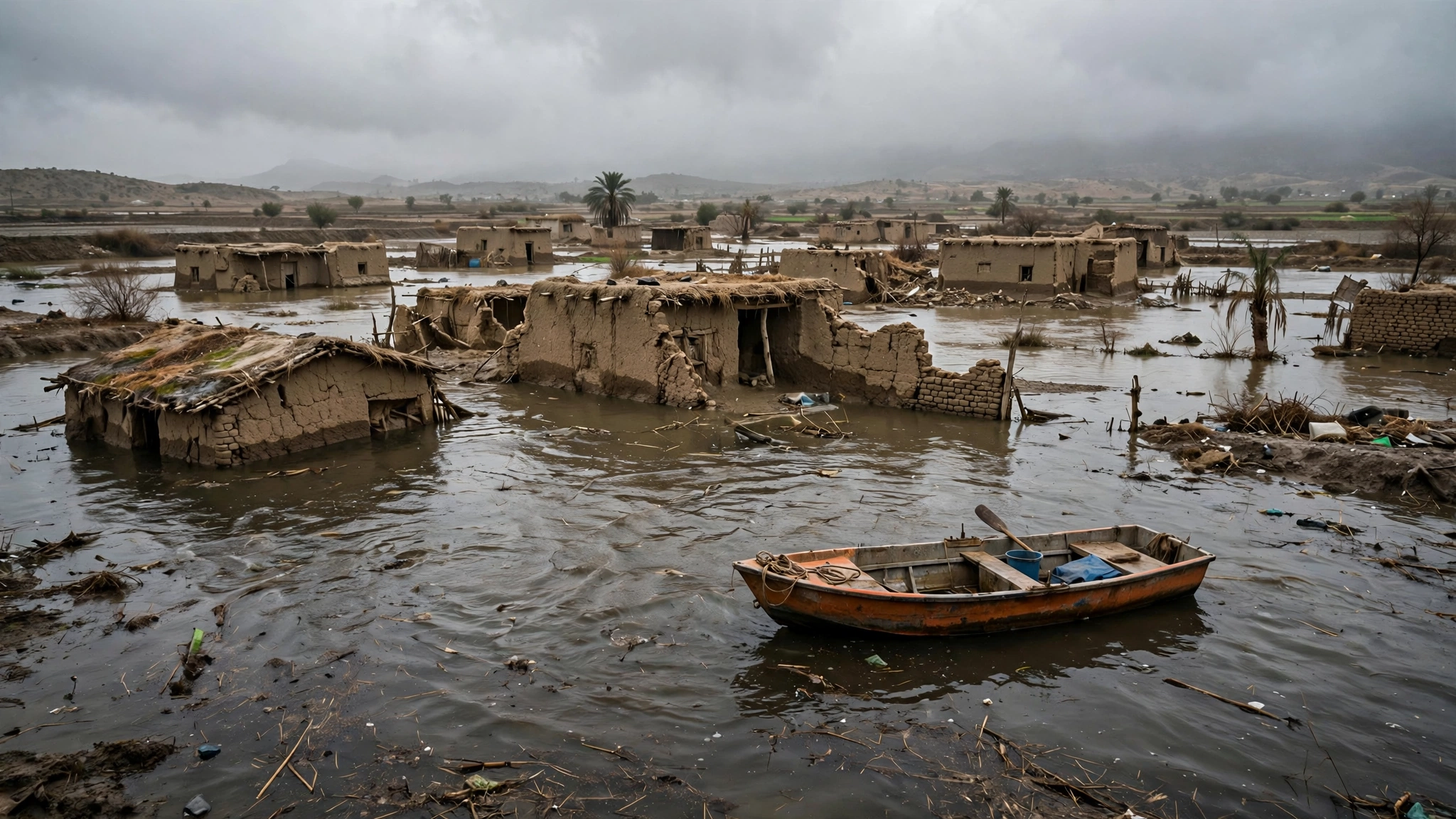
For Pakistan, the implication is clear: keep demanding reform of international climate funds — simpler accreditation, faster disbursement, real accountability — but build domestic and market-based financing in parallel, because the next flood will not wait for a board meeting. The dark reality the finance minister exposed is not a conspiracy; it is something more ordinary and more damaging. The money is promised, the press releases are published, and the villages stay underwater.