Short answer: A report published in mid-October 2026 says NADRA has clarified that the last digit of your CNIC does not determine your gender. That would overturn one of the most widely repeated beliefs in Pakistan — that odd final digits mean male and even final digits mean female. But there is an important caveat: at the time of writing, this clarification has been reported by a single outlet, and no official NADRA press release or major newspaper has independently confirmed it. Until NADRA confirms it through its own channels, treat the new claim as unverified.
Key Takeaways
- A mid-October 2026 report says NADRA clarified that the last CNIC digit does not determine gender — but no official NADRA statement or second outlet has independently confirmed this.
- For years, published reports described the convention as odd last digits for men and even digits for women; NADRA sources were cited for this in 2017.
- A CNIC’s 13 digits also encode your registered district and family number — and 36 security features protect the card itself.
The clarification, as reported
According to a news report from City Magazine’s Pakistan section, NADRA recently addressed a misconception circulating on social media — including Facebook posts and Wikipedia — that CNICs ending in odd numbers belong to men. The report says the authority has clarified that the final digit does not identify a citizen’s gender.
If accurate, this would be a notable shift. For years, Pakistani families, teachers, and even banks have treated the “odd is male, even is female” reading as established fact. It has been repeated in WhatsApp forwards, classroom explanations, and online “how to read your CNIC” guides for well over a decade.
The complication is verification. A search across major Pakistani news outlets shows no corroborating coverage of such a clarification, and NADRA’s own website and press section carry no matching statement. NADRA has a history of fighting exactly this kind of confusion: in August 2026, it publicly warned citizens against misleading information spreading on social media and urged people to rely only on its official sources for anything about its services.
The rule most Pakistanis grew up believing
To understand why the new claim is surprising, it helps to see how the 13-digit CNIC number is structured. The widely published breakdown runs like this:
| Part of the number | Digits | What it encodes |
|---|---|---|
| First five | XXXXX | Province, division, district, tehsil and union council of registration |
| Middle seven | XXXXXXX | Family number, linking you to your family tree in NADRA’s database |
| Last one | X | Gender digit under the old convention |
Under the long-standing convention, an odd final digit — 1, 3, 5, 7 or 9 — was said to indicate a male cardholder, while an even digit — 2, 4, 6 or 8 — indicated a female cardholder.
This was not just internet folklore. In a 2017 report, The Express Tribune described the same convention while citing sources inside NADRA, adding that the authority assigned CNIC numbers to transgender citizens according to the gender they identified with — even digits for those identifying as women, odd digits for those identifying as men. Independent investigative reporting on Pakistan’s biometric ID system has likewise described the final digit as indicating assigned gender.
If NADRA is genuinely walking back the gender-digit explanation, it would be revising a detail its own sources once affirmed — which is exactly why independent confirmation matters before the new version is repeated as fact.
Why the two claims don’t line up — and how to check
There are a few plausible explanations for the contradiction:
- The convention was never official. It may have started as an informal observation about how NADRA’s numbering system happens to work, which then hardened into “fact” through repetition.
- Policy changed. NADRA’s systems have been modernised repeatedly, most recently with sweeping biometric and registration rule updates announced in 2025. Numbering practices could have changed with them.
- The report itself may be inaccurate. A single outlet without a named NADRA spokesperson or press release reference is thin sourcing.
Rather than picking a side, the practical move is to go to the source. NADRA maintains several official channels for questions like this: its helpline at 051-111-786-100, the 1777 short code from mobile phones, SMS services on 8400, and the PakID mobile app. If the clarification is real, it should appear — or be confirmable — through one of these.
A quick verification checklist
- Check nadra.gov.pk’s press and notifications section for an official statement.
- Look for the claim on NADRA’s verified social media accounts, which the authority has previously used to flag misinformation.
- Call the helpline (1777 from mobile) and ask directly about the last-digit rule.
- Treat any screenshot, forwarded message or Wikipedia edit as a lead, not as evidence.
What the last digit means for you in practice
Whatever the official position turns out to be, a few things remain solidly true and worth knowing:
- Your gender is stored in NADRA’s database, not derived from your number. Banks, telecom operators and government services verify you against NADRA’s central records — around 180 million citizens’ data sits in its Islamabad Data Warehouse. Nobody credible decides your identity by eyeballing your card’s final digit.
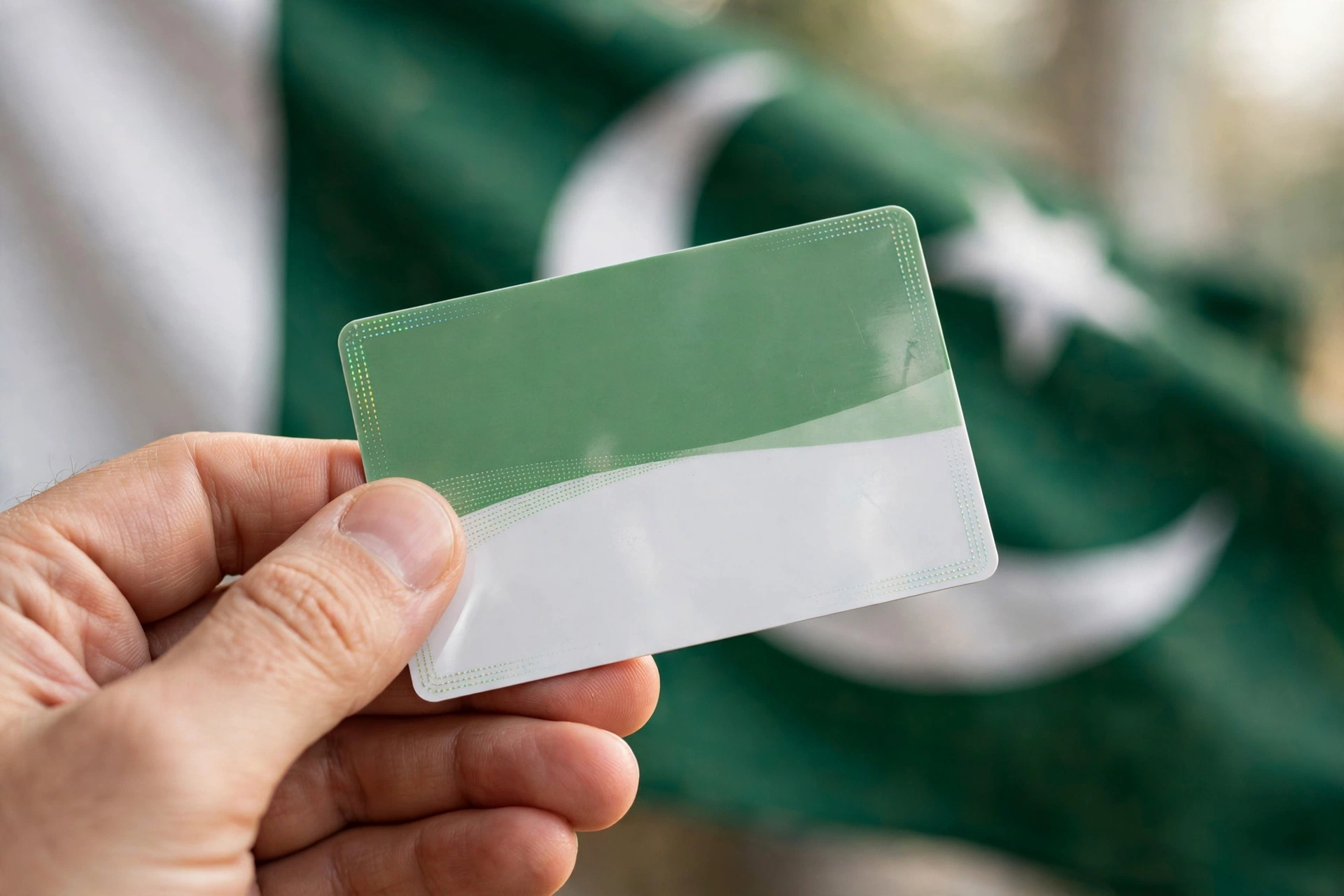
- The card itself is heavily secured. Investigative reporting on the Smart CNIC describes 36 security features, including microtext, holograms, guilloche patterns and rainbow printing, with your biometrics stored on an embedded chip. The number on the front is the least secure part of the card.
- Third-gender citizens have a defined path. Since 2011, Pakistan’s courts and NADRA have recognised self-identified gender for CNIC issuance, with later accommodations — including the gender “X” classification — for the khwaja sirah community. Any blanket statement about the last digit should be read with this complexity in mind.
- Never share your full CNIC number publicly. However the digits work, the number is the key to your identity record. The same NADRA advisories that warn against social media misinformation also warn against posting personal details online.
Conclusion
The belief that your CNIC’s last digit reveals your gender has been repeated so often that most Pakistanis treat it as settled science — and established journalism from 2017 described NADRA sources saying exactly that. Now, a fresh October 2026 report says NADRA has debunked the idea. Both claims cannot be taken at face value simultaneously: one is historical and sourced, the other is new and, so far, single-sourced.
The honest position: we know the old convention, and we know a recent report says NADRA now disputes it — but official confirmation is still missing. Check NADRA’s own channels before updating your beliefs, and be wary of anyone presenting either version as unquestionable truth. In an era of viral screenshots, the most useful habit is also the simplest: verify before you forward.