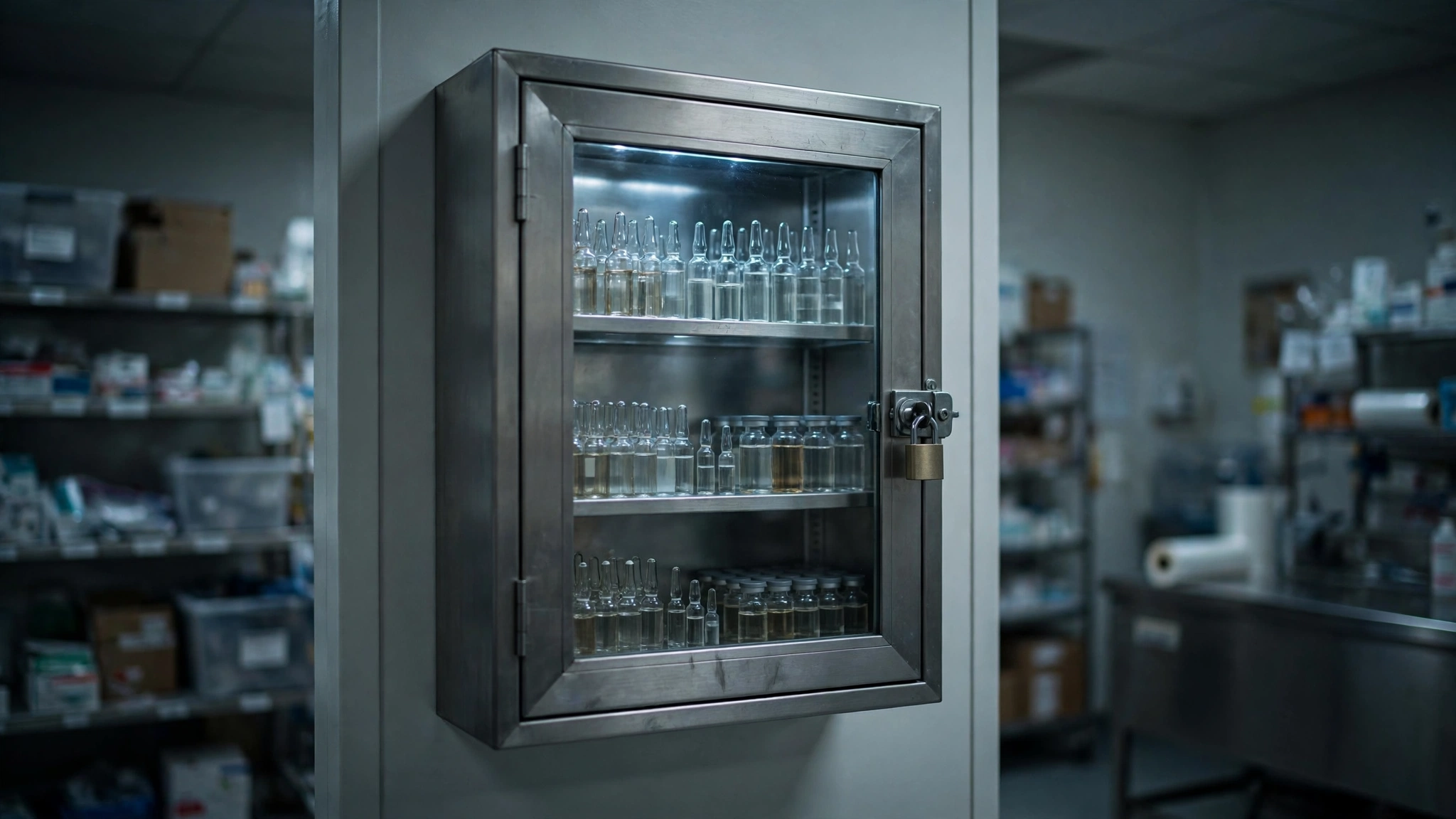
Yes, it really happened. More than 3,000 morphine ampoules — injections used to relieve severe, often unbearable pain — expired without being used at the National Institute of Cardiovascular Diseases (NICVD) in Karachi, one of Sindh’s largest government cardiac hospitals. The story broke on October 12, 2026, and it raises sharp questions about how a public hospital let more than half of its morphine stock go to waste.
Key Takeaways
- 3,191 of 6,000 morphine ampoules at Karachi’s NICVD expired unused — roughly 53% of the hospital’s stock.
- NICVD admits the expiry but says the supplier will replace the stock free of charge after legal inspections, denying any Rs8 million-plus loss.
- The wastage comes as Pakistani patients, including children with cancer, continue to struggle to access morphine for severe pain.
What the Documents Show
The details come from an internal hospital letter that has since surfaced publicly. According to documents obtained by the press, on December 24, 2025, hospital pharmacist Talha Mehboob Khan wrote to the Assistant Manager of Pharmacy Services, Saima Saleem, with an urgent warning: 3,191 morphine ampoules stored in the hospital’s narcotics cabinet were due to expire on December 30, 2025 — just six days later.
The letter also laid out the usage record for the stock:
| Detail | Figure |
|---|---|
| Morphine ampoules received (Oct 2023 – Nov 2025) | 6,000 |
| Ampoules actually used over the period | 2,809 |
| Ampoules left unused days before expiry | 3,191 |
| Share of stock wasted | ~53% |
| Expiry date | December 30, 2025 |
| Issue first reported publicly | October 12, 2026 |
In other words, out of 6,000 injections allocated to the hospital over roughly two years, only 2,809 were administered to patients. The rest — more than half — sat locked in a narcotics cabinet until their expiry date passed.
What Is Morphine Used For?
Morphine is one of the most powerful pain-relief medicines in use worldwide. It is prescribed for severe pain, particularly in children and adults with cancer, whose disease can cause extreme suffering. It is also used when clinically appropriate for severe pain after major trauma, and in palliative care it can relieve distressing breathlessness in some patients.
Because morphine is a controlled narcotic with potential for misuse, it is not handled like an ordinary medicine. In Pakistan, its procurement, supply, storage, use, and even return require official permissions and strict record-keeping, and hospital supplies come through imported shipments.
That controlled status is part of why this story is so troubling: this is a medicine that is difficult to obtain legally, difficult to replace quickly, and desperately needed by patients in severe pain — yet thousands of doses simply expired on a shelf.
The Hospital’s Response
NICVD’s administration has acknowledged that the stock expired. But it has pushed back against reports suggesting the incident caused a loss of more than Rs8 million to the public exchequer.
In a clarification issued on Monday, October 12, hospital spokesperson Abdul Nasir said the supplier would replace the expired ampoules with fresh stock at no additional cost — but only after inspections and legal procedures were completed. Because morphine is a controlled narcotic, expired ampoules cannot simply be returned: the drug inspector must first inspect and verify the stock, then complete the legal formalities.
The administration also said it maintains an inventory management system with stock registers covering the receipt, storage, issue, and use of medicines. But the statement did not explain the central question: how did thousands of ampoules reach expiry despite those safeguards, and why were no steps taken earlier to prevent it? It also gave no definite date for when the expired stock would be returned or when the replacement supply would arrive.
Why This Matters: Pakistan’s Morphine Access Problem
The expiry at NICVD is not happening in a country with morphine to spare. Access to injectable morphine in Pakistan has been a documented problem for years.
- An August 2025 report in The News International found that Aga Khan University Hospital had exhausted its injectable morphine supplies, even as patients in severe pain — including children and older people — needed it. Shaukat Khanum Memorial Cancer Hospital in Lahore and Indus Hospital in Karachi still had stock, but stressed that annual allocations could not guarantee uninterrupted, year-round access.
- Back in April 2022, reporting revealed that obtaining the necessary permissions and allocated supplies could take six months to a year — Dr Faisal Sultan confirmed the difficulties faced by Shaukat Khanum because of the lengthy approval process.
- Paediatric oncologists warned in February 2022 that children with cancer endured severe pain day and night when morphine was unavailable. World Health Organization guidance permits morphine use under appropriate medical supervision for children with life-limiting conditions and in end-of-life care.
Against this backdrop, the contrast is stark: while some hospitals reported running out, one major public hospital let over 3,000 doses expire.
What Happens to Expired Medicine?
One point worth clarifying: expired morphine cannot simply be handed out to patients instead. WHO guidelines on expired medicines state clearly that drugs past their expiry date must not be distributed and should be discarded safely — expired pharmaceuticals can lose potency and degrade, and manufacturers can only vouch for a product within its tested shelf life when stored under recommended conditions.
The real failure is not that the medicine wasn’t used after expiring. It is that nobody acted while there was still time — for example, by flagging the surplus months earlier, or exploring lawful arrangements to redirect stock to facilities facing shortages.
Questions That Still Need Answers
Despite the hospital’s clarification, several important questions remain unanswered:
- Why was the surplus not flagged sooner? The pharmacist’s letter came just six days before expiry. What happened during the months before?
- Was redistribution ever considered? Other hospitals were running short. Did regulations or administrative inertia block any transfer?
- Who is responsible? No responsibility has been assigned for the expired stock, and no inquiry has been publicly announced.
- When will replacements arrive? The hospital has promised free replacement after inspections, but no timeline has been given.
- Will this happen again? The same inventory systems that failed this time are presumably still in place.
Conclusion
The expiry of 3,191 morphine injections at NICVD is more than a paperwork embarrassment — it is a failure of stewardship over a scarce, life-easing medicine. The hospital’s promise of free replacement may answer the financial question, but not the human one: why did a public hospital allow more than half of its morphine stock to die on a shelf?
For Pakistan’s patients — especially children with cancer and others in severe pain — morphine is not optional comfort. It is often the difference between unbearable suffering and a bearable life. Until public hospitals fix how they track, use, and redistribute essential controlled medicines, this story is likely to repeat itself somewhere else.
Source note: Core facts are drawn from Vitals News and MM News reporting of October 12, 2026, including NICVD pharmacy documents and the hospital’s official clarification. Background on Pakistan’s morphine supply comes from The News International reporting referenced in those articles.