Punjab has launched a fleet of 65 mobile health units dedicated to industrial workers and their families. Chief Minister Maryam Nawaz Sharif inaugurated the Social Security Mobile Health Programme in Lahore this week, marking the start of phase one in Lahore, Kasur and Sheikhupura — where more than 4.6 million registered workers and their family members will now receive healthcare at their factories and doorsteps.
Key Takeaways
- Punjab’s CM Maryam Nawaz Sharif has inaugurated the Social Security Mobile Health Programme with 65 mobile health units and bikes.
- Phase one covers over 4.6 million industrial workers and their families in Lahore, Kasur and Sheikhupura, with care at factories and doorsteps.
- The fleet — 10 mobile hospitals, 5 clinics, dental and cardiac units, plus 40 bikes and 10 scooters — expands to 12 more cities by March 2027.
What was launched
The programme is being run through the Punjab Employees Social Security Institution (PESSI), the body that covers registered workers with health facilities across the province. Instead of requiring workers to travel to a hospital or dispensary — a trip that often means losing a day’s wages — the new units bring basic medical care to the workplace itself.
According to the official briefing, the 65-unit fleet is made up of:
- 10 mobile hospitals — larger vehicle-based units equipped for examinations and treatment
- 5 mobile clinics — smaller units for routine checkups and common illnesses
- Mobile dental units — for dental checkups and treatment on the spot
- Mobile cardiac units — for heart-related screening and basic cardiac care
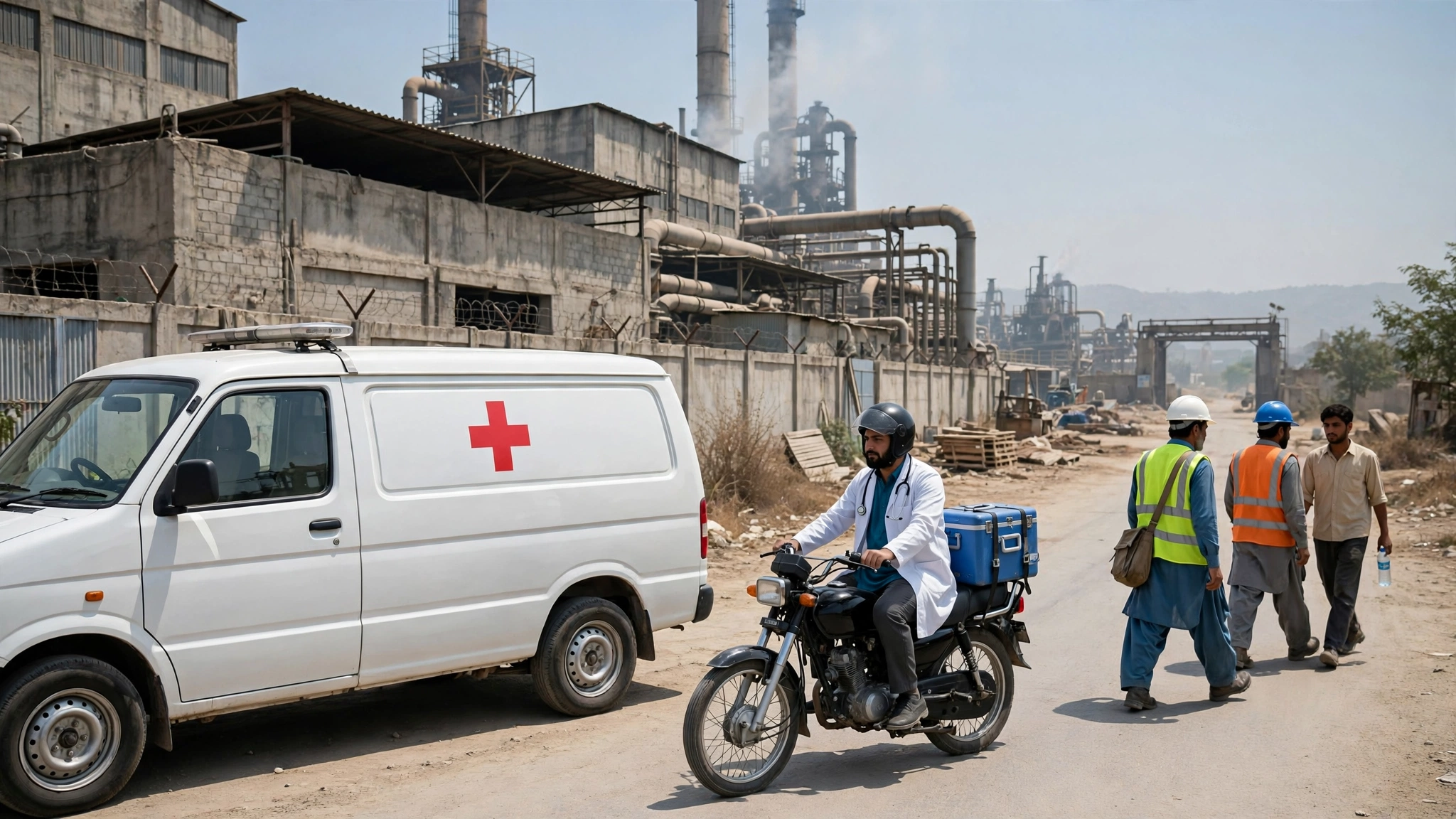
- 40 motorcycles and 10 scooters — agile two-wheelers carrying medicines and diagnostic devices into tight industrial areas, factory gates and residential pockets
The bikes and scooters are fitted with diagnostic tools and medicine boxes so a medical team can handle routine cases quickly without a large vehicle. During the launch event, the Chief Minister personally tried one of the devices carried on a mobile bike, checking her own temperature.
Where it starts — and where it goes next
The rollout begins in three industrial hubs:
| Phase | Areas | Timeline |
|---|---|---|
| Phase 1 | Lahore, Kasur, Sheikhupura | Underway — 4.6+ million workers and families covered |
| Phase 2 | Gujranwala, Sialkot, Gujrat, Faisalabad, Sargodha, Sahiwal, Multan, Muzaffargarh, Dera Ghazi Khan, Bahawalpur, Rahim Yar Khan, Rawalpindi | By March 2027 |
The choice of starting districts is deliberate. Lahore, Kasur and Sheikhupura form one of the densest industrial belts in the province, with factories and labour colonies concentrated within a short radius. The second phase then pushes the programme deep into central, southern and western Punjab — including Multan, Bahawalpur and Rahim Yar Khan, where workers have historically had thinner access to specialist care.
What the units can do
The briefing indicated that the units provide general outpatient services — examinations, routine treatment, basic medicines and screenings — with specialised wheels for dental and cardiac care. The cardiac component matters: cardiovascular disease is a leading cause of death in Pakistan, and factory workers, who often work long shifts with limited health monitoring, are an at-risk group. A mobile cardiac unit that screens workers at the factory gate could catch warning signs early, before they become emergencies.
The dental units fill another genuine gap. Dental care is one of the most neglected areas of public healthcare in Pakistan, with treatment often expensive in the private sector and long waiting lists in public hospitals. Bringing a dentist to the workplace removes the two biggest barriers for a labourer — cost and time off work.
Why this matters for Punjab’s workers
Industrial workers in Punjab have had access to social security hospitals and dispensaries for decades, but the system has a coverage problem in practice: facilities are fixed, while workers are scattered across industrial estates and housing colonies, often working shifts that make daytime hospital visits difficult. A worker who needs a checkup faces a choice between health and wages. Most choose wages.
Mobile health is not a new idea in Punjab — the provincial government already runs the Clinic on Wheels initiative for general public healthcare in underserved areas. What is new here is the dedicated targeting of the industrial workforce through PESSI, with specialised units (dental and cardiac) and two-wheeler teams designed around factory environments rather than general neighbourhoods.
The programme also arrives in a broader season of labour reforms in the province. Punjab has recently enforced the Punjab Labour Code 2026 and expanded worker-welfare measures including ration support, new labour housing projects and daycare centres for working mothers. The mobile health fleet slots into that same agenda: services that meet workers where they already are, instead of asking them to navigate government offices and hospitals.
The launch event itself
The inauguration took place at the Nawaz Sharif Social Security Hospital in Lahore, where the Chief Minister inspected the mobile hospital, mobile dental hospital, bikes and scooters lined up for deployment. She reviewed the medicines and medical equipment stocked on the two-wheelers and took a briefing on how the units will operate.
She also visited the hospital’s outpatient department and the Rehmatul-lil-Alameen Cardiac Centre, speaking with patients in the OPD and the cardiology ward about the care they were receiving.
What to watch
The programme’s promise — 4.6 million beneficiaries now, province-wide by March 2027 — is ambitious, and the real test will be operational: keeping 65 vehicles fuelled, staffed and maintained across factory zones; ensuring the mobile cardiac and dental units are genuinely available rather than parked for ceremonies; and extending the model into southern Punjab on schedule. For now, though, it is a concrete step toward a healthcare system that visits workers instead of the other way around — and for a labourer who has never seen a doctor without losing a day’s pay, that is a meaningful shift.