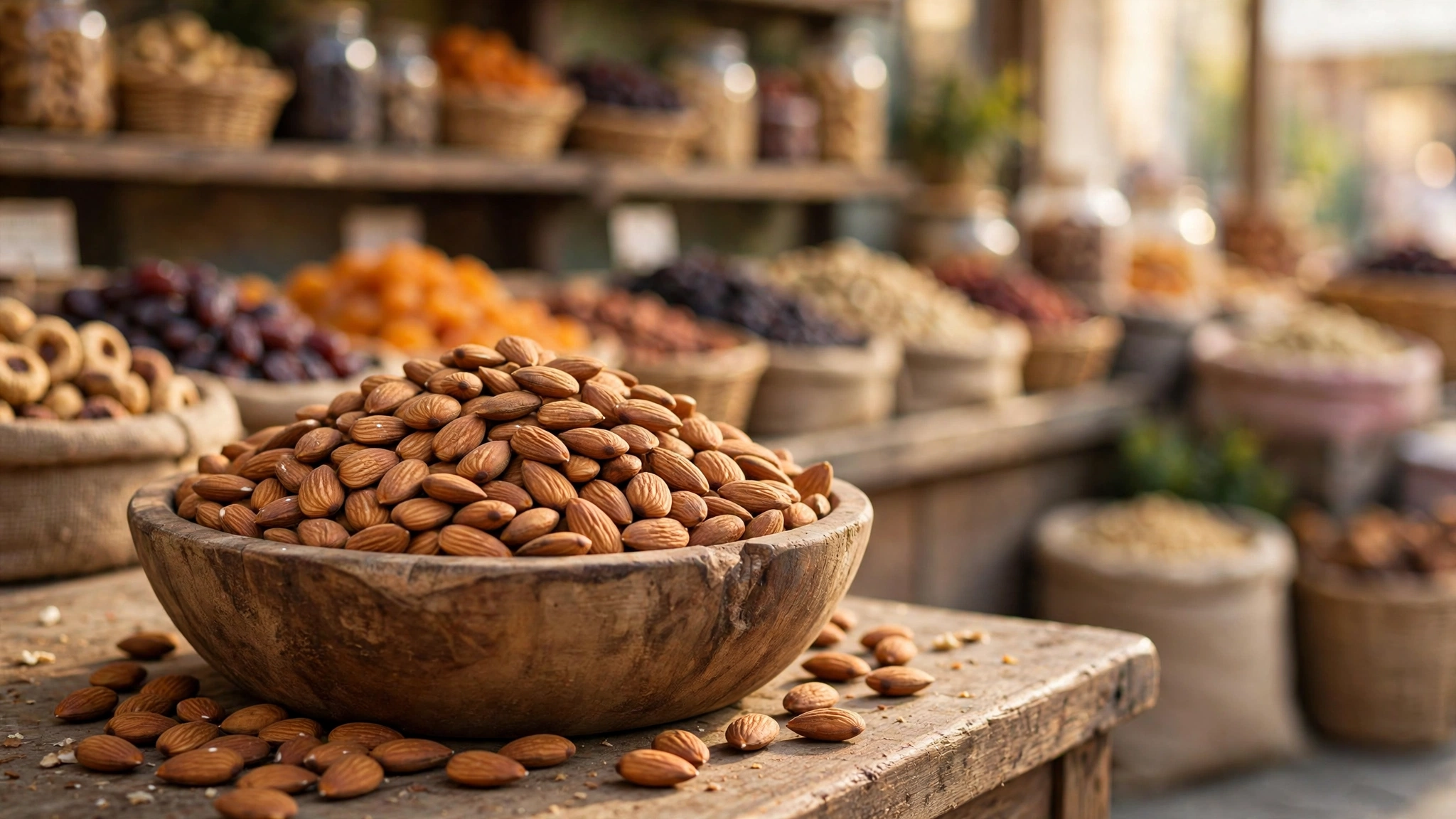
If almonds are on your winter shopping list, brace yourself: imported badam is about to cost more. On October 7, 2026, Pakistan Customs issued Valuation Ruling No. 2111/2026, raising the assessed customs value of shelled almonds to $3.81 per kilogram — up from $3.00 — a jump of around 27 percent. Because customs duties and taxes are calculated on these assessed values, the ruling will push up the landed cost of imported almonds, and that increase will almost certainly reach shop shelves right as winter demand kicks in.
Key Takeaways
- Pakistan Customs’ October 7, 2026 ruling raised the assessed import value of shelled almonds from $3.00 to $3.81 per kg — a 27% jump that will lift duties, taxes and retail prices.
- Soft-shell almonds also got slightly more expensive ($2.19/kg), while hard-shell almonds got cheaper ($1.41/kg) — a rare drop in this ruling.
- With winter dry-fruit demand peaking in Pakistan, shoppers should expect higher shelf prices for American and roasted almonds; buying early and choosing soft-shell varieties can save money.
What Changed in the New Customs Ruling
The Directorate General of Customs Valuation in Karachi revised the almond valuation tiers that had been in place since April 2026. Here’s how the new rates compare with the old ones:
| Almond Type | Old Value (April 2026) | New Value (Oct 7, 2026) | Change |
|---|---|---|---|
| Shelled almonds | $3.00/kg | $3.81/kg | +27% |
| Soft-shell almonds | $2.14/kg | $2.19/kg | +2% |
| Hard-shell almonds | $1.95/kg | $1.41/kg | −28% |
| Roasted/salted almonds | — | Old value +15% | +15% markup |
The new valuation applies to almond imports from all countries, and it stays in effect until Customs revises or withdraws it.
Why the Government Raised the Values
This revision did not come out of nowhere. The earlier valuation ruling (No. 2065/2026) was set aside through an order-in-revision issued in June 2026, which directed Customs to conduct a fresh valuation exercise. As part of that exercise, the directorate examined domestic market prices, importer and seller margins, and published international prices.
Importers did push back. At a consultation meeting on September 25, 2026, representatives of the Pakistan Kiryana Merchants Association in Karachi opposed any increase in customs values and submitted import documents and overseas invoices to support their case. Customs, however, said it had also conducted its own market survey and reviewed international trade data, and found it could not rely solely on declared import values because some importers lacked sufficient supporting documents.
What This Means for Retail Prices
The landed-cost chain
Pakistan imports most of its almonds — including the popular American (Californian), Australian, Afghan and Iranian varieties — so the customs value directly feeds into what importers pay.
Which almonds will cost more
The 27 percent hike hits shelled almonds hardest — the kernel-only badam that dominates retail packs of American, Sanora and Mamra varieties.
Roasted and salted almonds get an extra blow: the ruling adds a 15 percent premium on value-added varieties, which already carry higher retail prices.
Soft-shell almonds (like kagzi badam) see only a marginal rise of about 2 percent.
Hard-shell almonds are the one bright spot — their assessed value actually fell by nearly 28 percent, which could make in-shell badam relatively cheaper in the coming months.
Current market context
Even before this ruling, imported almonds were not cheap. Pakistani retailers were recently listing premium American almonds at roughly Rs 4,300 per kilogram and Mamra almonds around Rs 6,600 per kilogram, with soft-shell kagzi varieties nearer Rs 2,800 per kilogram. Market analyses put standard retail prices broadly between Rs 1,800 and Rs 3,200 per kilogram depending on grade and origin. With duties now rising on the shelled segment, the upper end of that range is likely to climb.
Winter Is When Demand Peaks
The timing of this ruling could not be worse for buyers. Winter is Pakistan’s peak dry-fruit season — demand for almonds, pistachios, walnuts and cashews climbs as temperatures drop, driven by wedding season and gifting as well as the traditional appeal of nuts as warming, energy-rich winter food.
Rising international dry-fruit prices add to the pressure. Across the region, traders have reported almond prices up 10–20 percent amid lower production in major growing countries, with higher freight costs compounding the increase.
How Shoppers Can Deal With It
- Buy early: Prices tend to rise through November and December as winter demand peaks. Buying now may be cheaper than buying in mid-winter.
- Consider soft-shell varieties: The ruling barely touched soft-shell almonds (up just 2 percent), so kagzi and similar varieties should remain relatively affordable.
- Look at hard-shell badam: This is the one category that actually got cheaper at the customs level, which could flow through to better retail prices.
- Compare wholesale markets: Traditional wholesale markets sell loose almonds with minimal packaging at prices well below branded retail packs and superstores.
- Check the grade: Prices vary sharply between whole kernels and broken pieces, and between branded and loose stock — compare the same grade and weight, not just the headline price.
- Store them right: If you buy in bulk, keep almonds in an airtight container away from heat and sunlight; in humid conditions, sealed packs keep better in the fridge.
Conclusion
The October 7 customs ruling is the clearest signal yet that this winter’s imported almonds will cost more than last year’s. Shelled badam — the variety most Pakistani households buy — now carries a customs value 27 percent higher than before, and duties and taxes will follow.
The one consolation: hard-shell and soft-shell almonds escaped the worst of the revision, giving budget-conscious shoppers alternatives that should stay relatively stable. Whatever you choose, the economics are straightforward — winter demand is about to rise, import costs have just gone up, and prices at the shop will reflect both. Stocking up a little earlier this year might be the smartest move of the season.