Pakistan’s drug regulator has drawn a firm line in the fight against counterfeit medicines. The Drug Regulatory Authority of Pakistan (DRAP) has made two-dimensional (2D) barcoding and serialization compulsory for all pharmaceutical products manufactured locally or imported into the country on or after October 9, 2026. In practical terms: any medicine pack produced or brought in from that date without a unique 2D barcode and serial number cannot be legally manufactured, imported, distributed or sold.
The requirement arrives under DRAP’s Pharmaceutical Track and Trace System, and the authority has warned that legal action will be taken against companies that violate the new rules.
Key Takeaways
- All medicines manufactured or imported in Pakistan on or after October 9, 2026 must carry a unique 2D Data Matrix barcode and serial number.
- Batches made or imported before the deadline are exempt and can still be sold legally.
- The move is aimed at curbing counterfeit, substandard and unregistered medicines, with smartphone verification for consumers planned.
Why DRAP acted now
Counterfeit, substandard, falsified and unregistered medicines have been a long-running problem in Pakistan, where patients often have no reliable way to confirm that what they buy at a pharmacy is genuine. The new track-and-trace framework is designed to give every medicine pack a unique digital identity, so regulators — and eventually consumers — can verify authenticity as products move through the supply chain.
The groundwork was laid months earlier. The federal cabinet approved a nationwide track and trace system for medicines through amendments to the Drugs (Labelling and Packing) Rules, 1978, giving DRAP the legal mandate to roll out the system. Federal Health Minister Syed Mustafa Kamal described the move as a major step toward eradicating fake, counterfeit and substandard medicines, noting that every medicine in the country would become digitally traceable and verifiable for the first time.
What the new rule requires
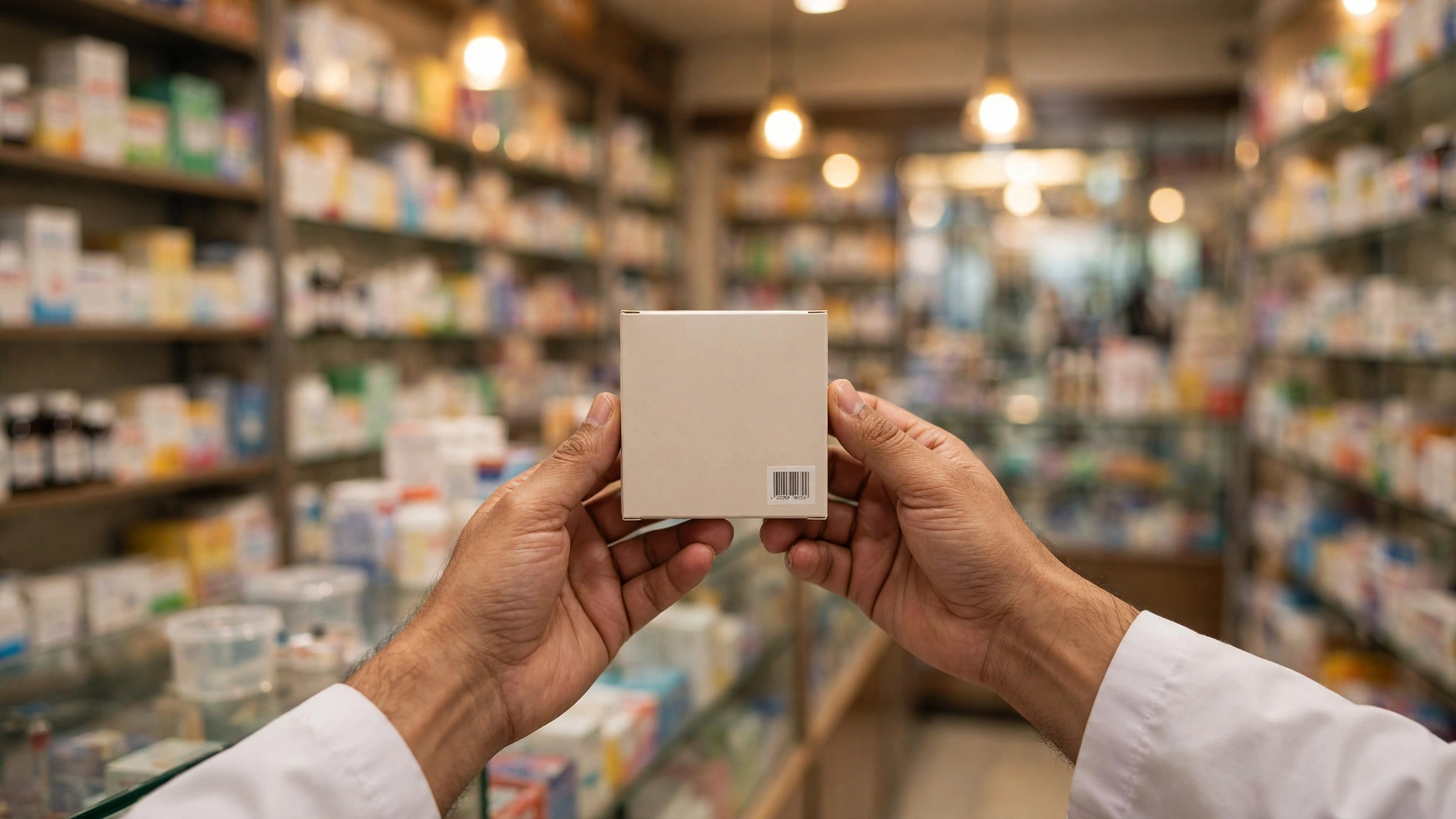
At the core of the requirement is a GS1-style 2D Data Matrix barcode printed on each medicine pack at the secondary packaging level, carrying serialization data — a unique random alphanumeric number (reportedly 12 to 20 characters) assigned to each individual pack, alongside product information such as the GTIN, batch number and expiry date.
The rollout is being introduced in phases. Key details announced so far:
- Who it covers: All pharmaceutical manufacturers and importers operating in Pakistan — local and foreign supply alike.
- Which products: All human and veterinary pharmaceutical products.
- The cut-off date: Products manufactured or imported on or after October 9, 2026 must comply.
- The exemption: Batches manufactured or imported before October 9, 2026 remain exempt and can still be imported, distributed and sold legally.
- The penalty: DRAP has directed companies to follow the technical requirements in the relevant rules and warned of legal action against violators.
What changes for pharmacies and patients
For now, the immediate compliance burden falls on manufacturers and importers, who must upgrade their packaging lines and systems to print and register serialization data. But DRAP says the system is being built for end-to-end visibility — monitoring medicines from production through distribution and retail.
That has two important downstream effects:
1. Faster, targeted recalls
Because each pack carries a unique serial number tied to its batch, regulators can pinpoint and pull specific batches when quality problems surface — instead of relying on blanket recalls or slower paper trails.
2. Consumer verification via smartphone
DRAP plans for consumers to eventually scan the 2D code on a medicine pack with a smartphone to check product information, including the expiry date, official retail price and authentication status. This would let a patient confirm at the counter whether a pack is genuine — a meaningful shift in a market where verifying authenticity has historically been left to inspectors.
Industry consultation came first
DRAP says it held consultations with key industry stakeholders before enforcement, including the Pakistan Pharmaceutical Manufacturers’ Association (PPMA), the Pakistan Veterinary Pharmaceutical Association, the Pharma Bureau, medicine importers, provincial drug controllers and chief drug inspectors. The stated goal was to give companies enough time to upgrade equipment and systems ahead of the October 9 deadline and to make the transition as smooth as possible.
What to watch next
The October 9 cut-off marks the start, not the finish. DRAP has said the system will be introduced in phases to modernise the pharmaceutical regulatory framework, and detailed technical guidelines for industry are part of the rollout plan. The real test will be enforcement: whether violators face consequences, whether the smartphone verification reaches consumers on time, and whether the unique serial numbers genuinely close the door on counterfeit products entering the supply chain.
For patients, the immediate takeaway is simple. Medicines already on pharmacy shelves — made or imported before October 9, 2026 — remain legal to buy and use. For shoppers, the guidance is practical rather than dramatic: keep buying from licensed pharmacies, check expiry dates as usual, and watch for DRAP’s consumer verification feature when it goes live. Over time, every new pack should carry a scannable 2D barcode, and that small square of pixels may become one of the strongest guarantees of medicine safety Pakistan has ever had.