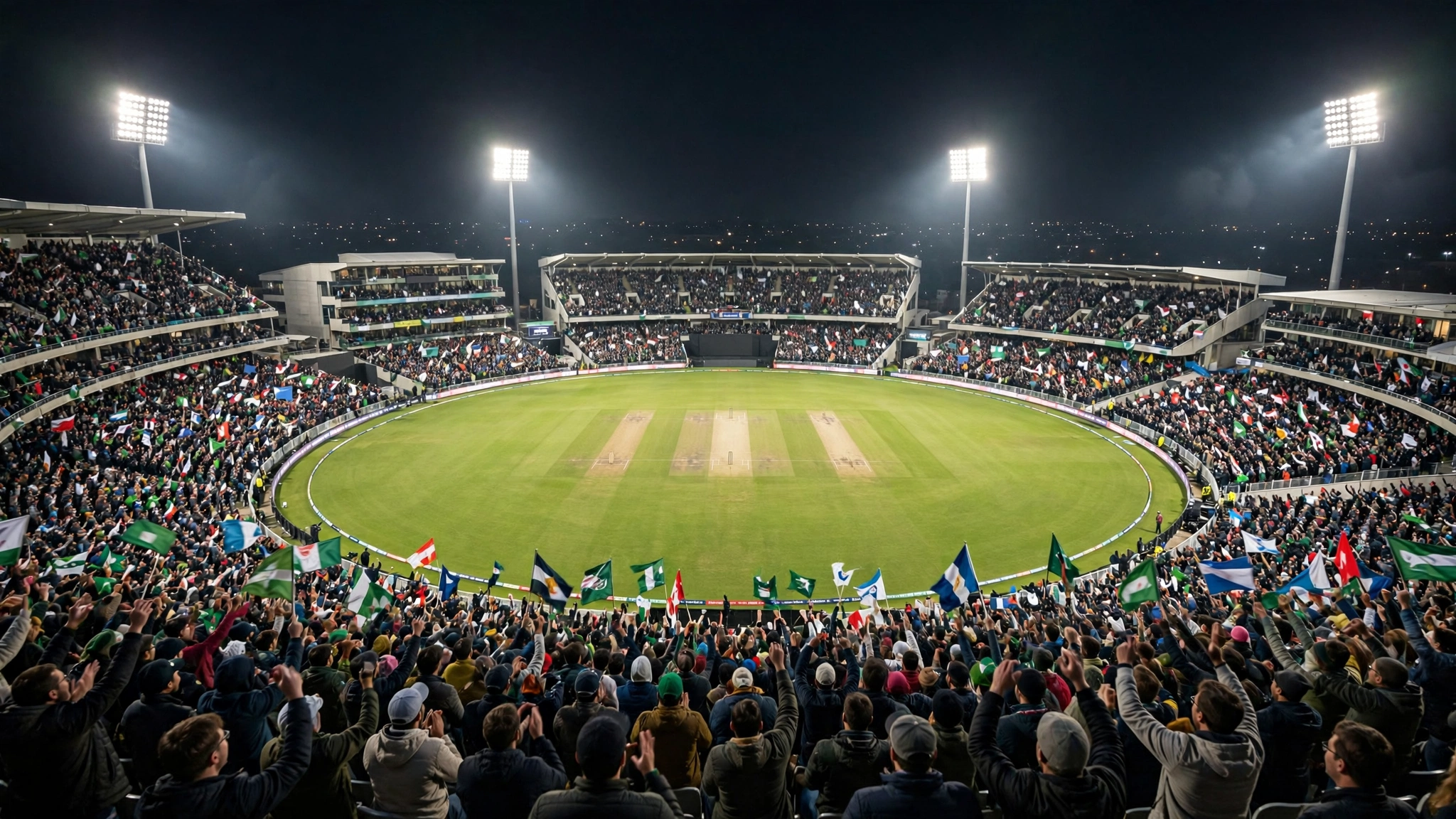
Losing a final to India hurts. Losing it on the back of a career-best innings hurts even more. Hasan Nawaz knows both feelings now — and his message to Pakistan’s fans is simple: this is not the end of the story.
The 24-year-old middle-order batter was Pakistan’s lone warrior in the Asian Games 2026 men’s cricket final in Japan, smashing 96 off 51 balls in a daunting chase of 212. But the Green Shirts fell 19 runs short on October 3, and India walked away with the gold medal.
Speaking to reporters on the sidelines of Pakistan’s training session at Rawalpindi Cricket Stadium five days later, Nawaz did not hide his pain — but he refused to let it define the team.
Key Takeaways
- India beat Pakistan by 19 runs in the Asian Games 2026 men’s cricket final in Japan, defending 211/6 as Pakistan reached 192/6.
- Hasan Nawaz scored a fighting 96 off 51 balls — the highest T20I score in a Pakistan-India match — but fell on the final ball.
- Nawaz told reporters the loss hurt but ‘this cricket is not over yet’, vowing to learn from small mistakes and bounce back.
How the final slipped away
India, fielding a full-strength squad against a second-string Pakistan side, posted 211 for 6 in their 20 overs at the Korogi Sports Park in Nisshin. Pakistan’s chase never truly got going until Nawaz walked in at number four after the fall of Usman Khan’s wicket in the fifth over.
What followed was one of the great Pakistan-India innings. Nawaz attacked from the start, reaching his fifty off just 28 balls and piling up five fours and seven sixes. He added 87 for the fourth wicket with Saim Ayub (29), and Pakistan — who had looked buried — suddenly believed again.
But the belief died on the final ball of the match. Nawaz, six runs short of a century, holed out to Sanju Samson off Shivam Dube. Pakistan finished on 192 for 6. Nineteen runs. The gold medal gone.
His 96 is now the highest individual score in a T20 international between the two traditional rivals — a record that drew praise from Pakistani legends Shahid Afridi and Mohammad Yousuf.
What Nawaz said: pain, mistakes, and a promise
“I am still disappointed and hurt at not being able to win the final,” Nawaz told reporters. “We made small mistakes and we paid the price for them.”
He was honest about his own innings too — satisfied with the runs, gutted by the result. “I really believed we could win the game. I was batting according to the situation… but we made some mistakes in the run chase and lost.”
Then came the line that summed up the team’s mindset: “This cricket is not over yet. There will be a match with them again. We will try to win the match. This is just a part of the game.”
Nawaz’s point was about moving forward rather than being stuck. “When you lose, and if you are stuck in that thing, how will you move forward? When you make mistakes, you learn and move forward. And we will try not to repeat the mistakes we made there.”
He also reflected on the journey that took him from being dropped to delivering on the biggest stage. After losing his place in the side, he said, coach Mike Hesson and the rest of the coaching staff gave him detailed plans, and he worked through them. His recent stint in the Caribbean Premier League, he added, had been part of that rebuild — he travelled to Japan with a personal goal of winning gold for his country, and came home with confidence instead of a medal.
What the innings changes for Nawaz
Before the final, Nawaz was an emerging batter fighting to cement his place. Now, his stock has risen sharply. His 96 against a full-strength Indian attack — under the pressure of a gold-medal match — answered questions about his temperament at the highest level.
The selectors responded quickly: Nawaz was named in Pakistan’s squad for the three-match home T20I series against Sri Lanka, which began on October 9 at Rawalpindi. It is a vote of confidence that the Asian Games performance was not a one-off, and a first chance for him to build on the innings in home conditions.
The bigger picture: Pakistan’s rebuild
Context matters here. Pakistan sent a second-string squad to the Asian Games — most of the senior players were rested — while India arrived with their strongest available team. Taking that Indian side to the final ball of a chase of 212 is, in a cold light, a respectable showing.
But respectable does not win medals, and Pakistan-India matches are never judged coldly. For fans back home, a 19-run defeat in a final stings regardless of squad strength. Nawaz understood that, which is why his comments struck a balance: owning the loss, naming the mistakes, and pointing forward.
The young batter’s message — learn, don’t dwell, come back stronger — is exactly what Pakistan’s team management will want echoing through the dressing room as the side builds toward bigger assignments. The gold medal is gone. The rivalry, as Nawaz put it, is not over yet.