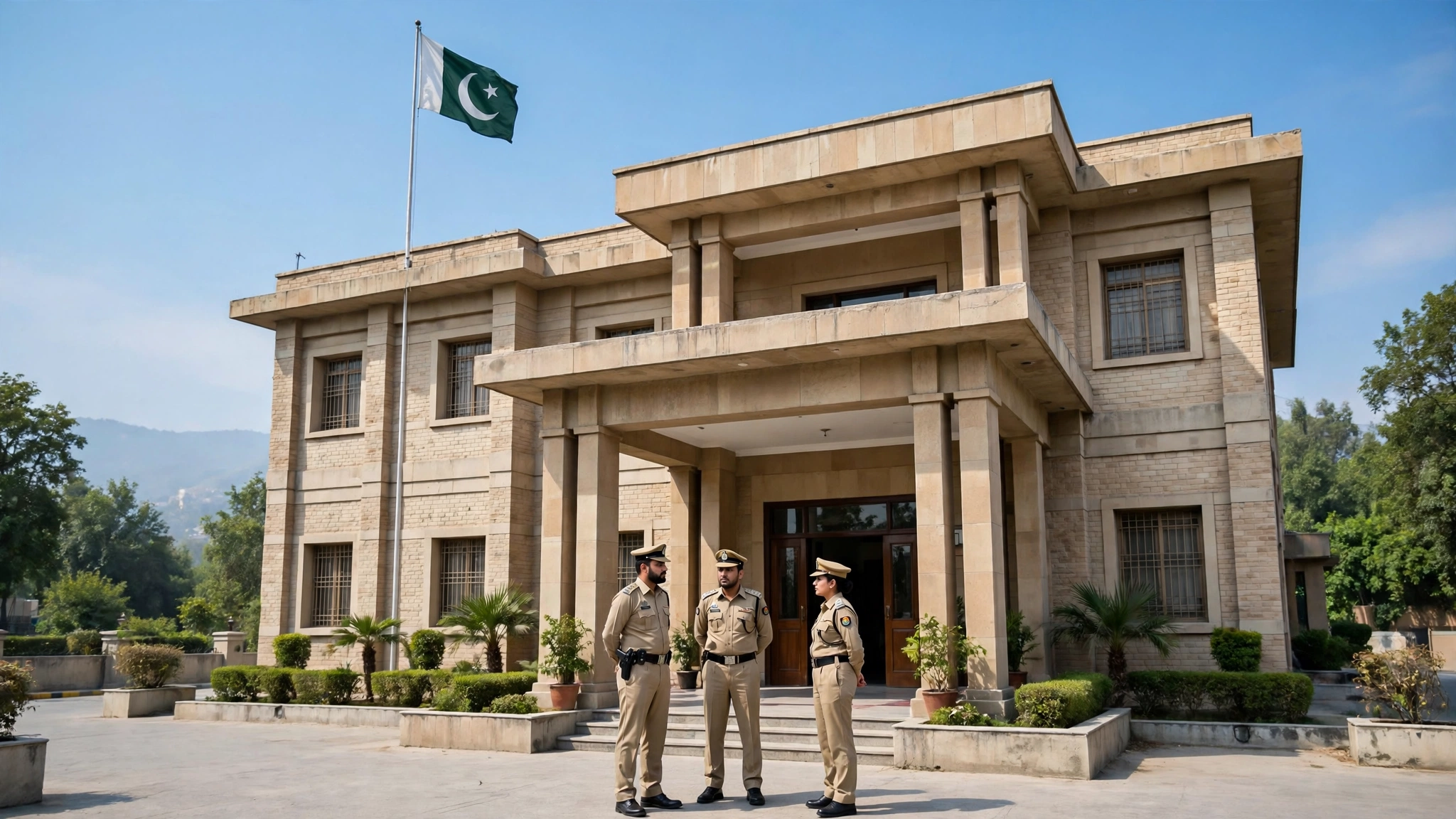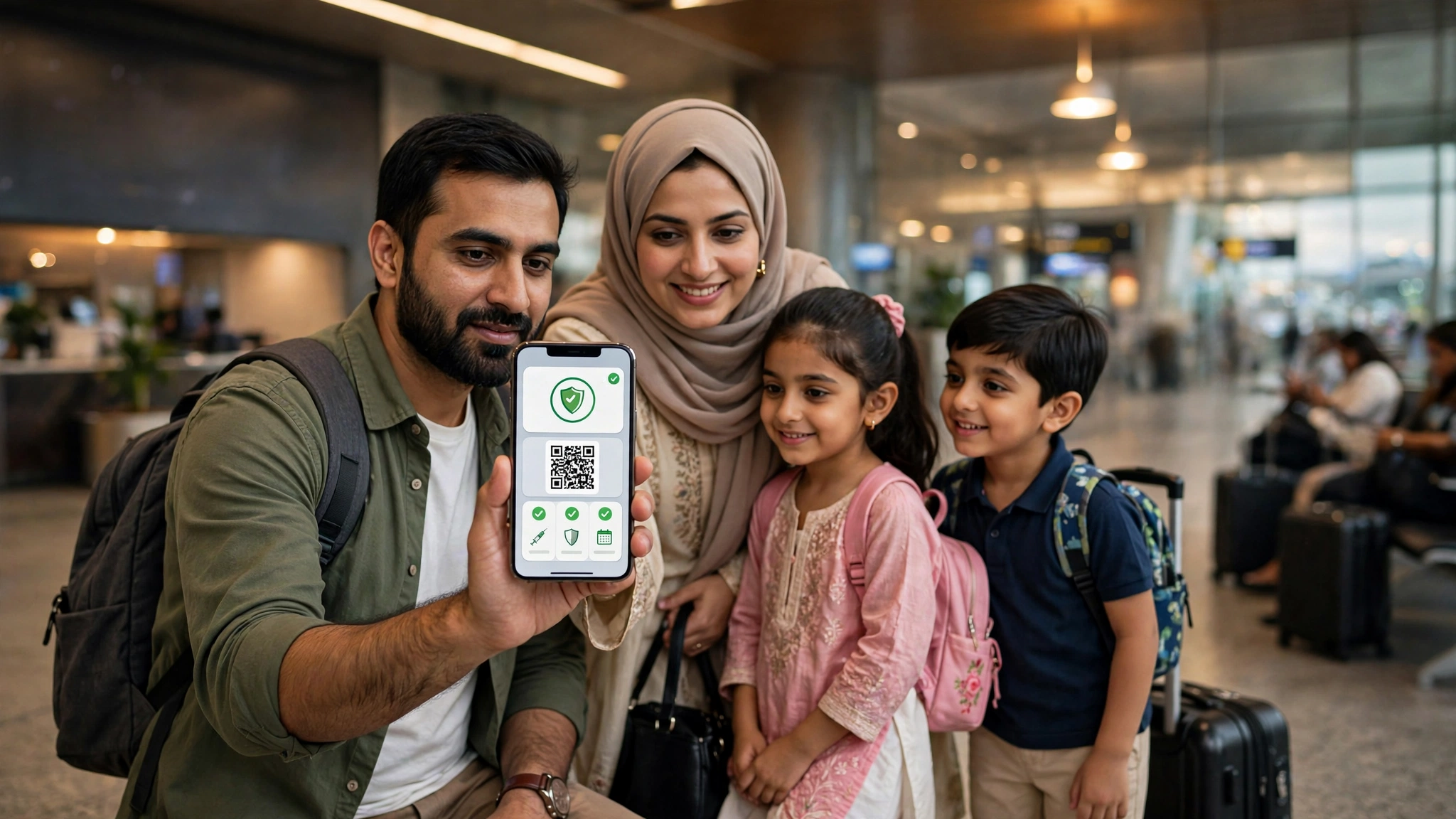
Pakistan has drawn a hard line against forged vaccination documents. Only NADRA-issued, digitally verifiable vaccination certificates are now accepted for international travel from Pakistan — a move officials say is aimed squarely at the market in fake paper cards that has operated around vaccination centres for years.
If you are flying out of Pakistan in the coming months — for work, study, Umrah, or any other reason — the short version: get your vaccines through the official channels, have them recorded in NADRA’s system, and carry the digital certificate. Anything else risks offloading at the counter.
Key Takeaways
- Only NADRA-issued digital vaccination certificates are accepted for international travel from Pakistan; paper cards and clinic-issued documents are no longer enough.
- Forged vaccination documents have led to offloading and quarantine for Pakistani travelers, and authorities are sealing labs caught selling fakes.
- Travelers should get vaccinated at least 10 days before departure and arrive at the airport six hours early if using airport vaccination facilities.
Why the Warning Came Now
Pakistan is one of the very few countries where polio still circulates, which puts Pakistani travelers under unusual scrutiny at both ends of their journey. The World Health Organization’s temporary travel recommendations for polio-affected countries state that residents of Pakistan who cannot show proof of vaccination may be prevented from departing by land, air, or sea. Several destination countries also require documented proof of specific immunisations on arrival.
That scrutiny created a shadow market. Forged paper vaccination cards — sold outside vaccination centres and through unscrupulous operators — became a shortcut for travelers who wanted paperwork without the jab. The cost fell on ordinary passengers: travelers caught with forged documents have been offloaded at Pakistani airports or quarantined on arrival abroad.
The federal government has linked the vaccination record system with NADRA, moving certificates into a digital, digitally verifiable format specifically to stop fake documents. The message to travelers is blunt: a paper card from a private clinic or hospital no longer qualifies, no matter what it records.
What Changed at the Airports
In September, the Airport Health Department announced that international passengers would not be permitted to fly without a NADRA vaccination certificate, with Umrah pilgrims directed to obtain the NADRA vaccine card before departure. Airlines were instructed to verify vaccination certificates at the counter before issuing boarding passes.
The rollout was not smooth. Karachi’s enforcement, originally set for September 14, was pushed to September 25 after the NADRA system went down on the original date, forcing staff to hand-write certificates with priority given to passengers with the earliest flights. Under the phased plan, Karachi enforces first, followed by Peshawar, Islamabad, and Lahore.
Separately, a temporary exemption that had allowed Umrah pilgrims and other international travelers to travel without the required vaccines ended on Saturday, October 10. With the exemption expired, the International Traveller Vaccination Centre run by Border Health Services at the Civil Dispensary near Star Gate at Karachi’s Jinnah International Airport resumed round-the-clock vaccination services covering polio, meningitis, yellow fever, and other applicable vaccines. The enforcement had already been postponed twice between September 5 and October 10.
Crackdown on the Forgery Business
The warnings are being backed up with enforcement. The Health Department in Rawalpindi recently sealed a laboratory on Murree Road that was issuing counterfeit medical certificates required for foreign travel, recovering forged certificates and counterfeit official government stamps from the premises.
According to the district sanitary officer, the lab’s owner had been charging thousands of rupees to people applying for jobs abroad or planning Hajj and Umrah, selling forged medical certificates in exchange for payment. Legal proceedings were launched against those involved.
Officials have also flagged overcrowding at airport vaccination centres caused partly by travelers arriving without having paid the prescribed vaccination fees in advance — a gap that dishonest agents can exploit by offering “shortcuts.” Payments and registration go through NADRA’s Pak ID application, and travelers can also register at NADRA e-Sahulat centres.
What Travelers Need to Do
Get vaccinated early
The Health Ministry advises travelers to visit a vaccination centre about 10 days before departure. Influenza and meningitis vaccines remain compulsory for Umrah pilgrims, while polio vaccination is required for all outbound travelers under WHO-linked rules. Yellow fever is needed only for travelers arriving from or transiting through Africa, Central America, or South America.
Register through NADRA — not an agent
Travelers must register through the NADRA Pak ID application or at an e-Sahulat centre. After vaccination, the record should appear against your CNIC on NADRA’s system, and the downloadable certificate should list the correct shots. If you were previously vaccinated elsewhere, bring your old card to the dispensary so staff can record what you have already received.
Allow extra time at the airport
Passengers who intend to be vaccinated at the airport must reach at least six hours before their flight — well above the usual three to four hours for international check-in — because vaccination and registration are carried out at international departures. Complete the process at a dispensary before your travel day if your schedule is tight.
Know the fee schedule
Reported fees at the Karachi airport facility are Rs 2,785 for meningitis and Rs 1,720 for influenza — Rs 4,505 together — plus a Rs 150 NADRA service charge. Fees may vary by centre, so confirm locally.
Why Forged Certificates Keep Backfiring
The forgery trade survives because the official process is slow: long queues, overcrowded dispensaries, and system outages have left passengers waiting for hours with flights only hours away. Travelers in that situation are prime targets for anyone selling a quick fix.
But the fix is an illusion. With certificates now tied to NADRA records, a paper document that is not in the system is simply a rejected boarding pass. Health authorities have been clear that the digital shift was designed to make forgery pointless — and with airlines checking certificates at the counter, the shortcut now fails at the earliest possible point, with the passenger absorbing the cost of a missed flight.
For travelers with genuine medical concerns about vaccination, the answer is to consult an approved health facility and document any exemption through official channels — not to buy a forged card.
Bottom Line
Pakistan’s message to travelers is unambiguous: only a NADRA-linked digital vaccination certificate counts for international travel, and forged documents will be treated as a fraud to be prosecuted, not a shortcut to be tolerated. The official process requires planning — registration through the Pak ID app, vaccination roughly ten days before departure, and early arrival at the airport — but it is the only route that gets you on the plane.
Travelers facing problems with registration or centre capacity should report them to the health authorities rather than paying agents for documents. In a system built specifically to detect fakes, the cheapest document on offer is also the most expensive mistake.