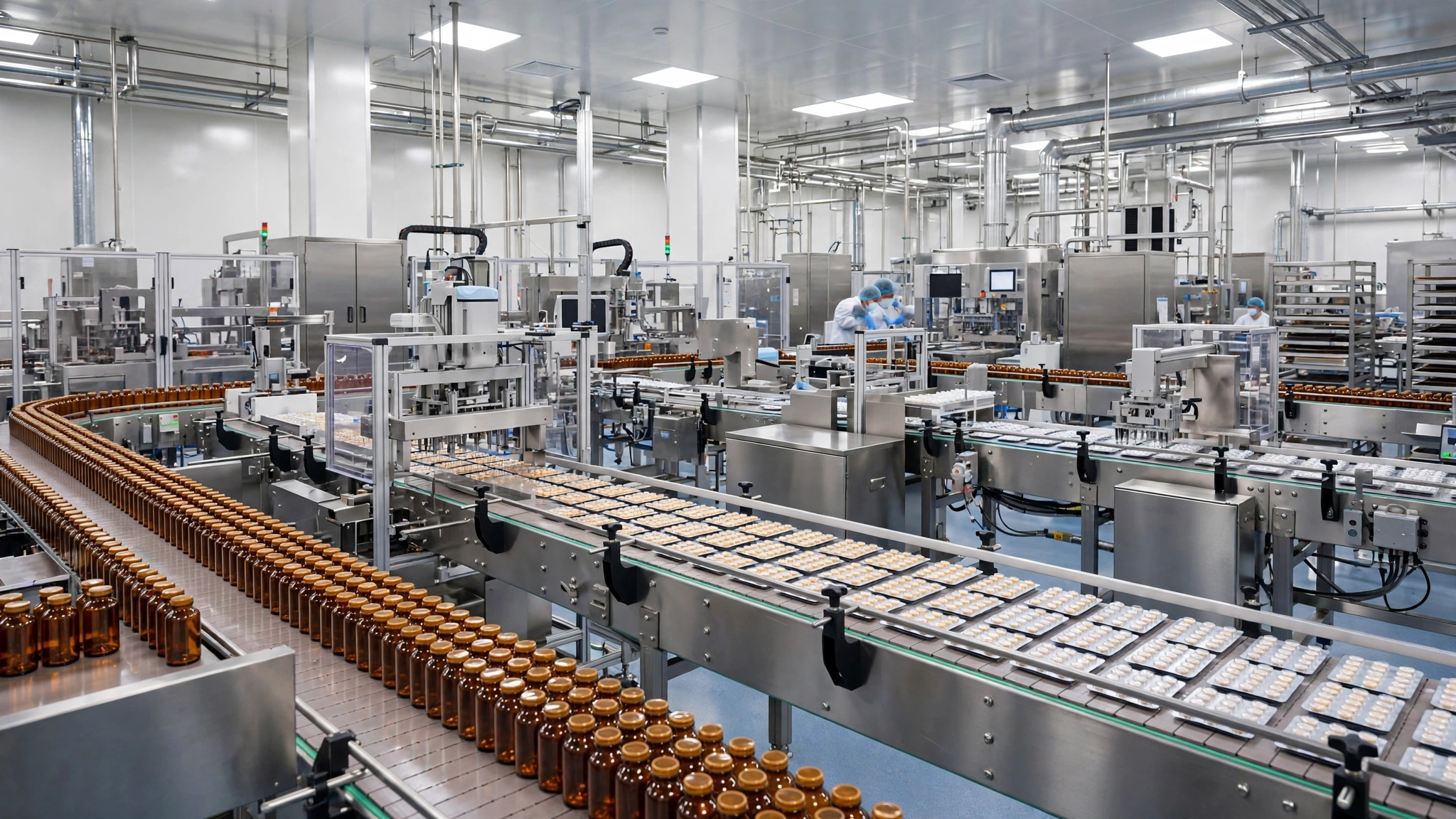
Pakistan’s listed pharmaceutical industry has just closed its most profitable year on record. Profits at pharmaceutical companies listed on the Pakistan Stock Exchange climbed 28 percent year-on-year to Rs42.2 billion in the fiscal year ending June 2026 (FY26), according to a sector report cited by the business press this month.
The figure marks the highest annual earnings the listed pharma segment has ever posted. Combined net sales grew 10 percent to Rs377.9 billion, up from Rs342.6 billion a year earlier, while the sector’s gross margin touched a record 42.8 percent for the full year, compared with 38.9 percent in FY25.
For an industry that spent much of the last decade complaining about price controls and rupee depreciation, the turnaround is dramatic. The question now is how much of the gain came from genuinely better business — and how much simply came from charging patients more.
Key Takeaways
- Listed pharma companies earned Rs42.2bn in FY26, a record 28% jump driven by higher drug prices and lower borrowing costs.
- Gross margins hit an all-time high of 42.8% as price deregulation and softer interest rates reshaped the sector’s finances.
- The windfall raises questions about medicine affordability as patients face continued price pressure.
What drove the record year
Higher medicine prices
The single biggest driver, according to the sector report, was pricing power. Medicine prices rose roughly 50 percent in 2024 and a further 30 to 40 percent in 2025, with the gains flowing straight to company bottom lines.
The deregulation of drug prices — begun in early 2024 when the government freed prices of non-essential medicines — gave manufacturers room to raise prices they had long been denied. Combined with a stable rupee and softer raw-material costs, that pricing freedom turned into record margins.
Fourth-quarter sales figures show the momentum continued through the end of the year: sales rose 3 percent year-on-year to Rs88.9 billion in the quarter, with margins holding at 42.8 percent.
Lower borrowing costs
Finance costs were the other half of the story. As the State Bank brought policy rates down from their peak, heavily indebted drug makers saw interest expenses fall sharply. Analysts tracking the sector have noted finance costs dropping by roughly half in calendar 2025, reflecting both lower rates and reduced debt levels.
With cheaper borrowing and fatter margins, shareholder payouts followed. Total dividends from listed pharma companies rose to Rs21.1 billion, up from about Rs12 billion a year earlier, with established multinationals — GlaxoSmithKline Pakistan, Abbott Laboratories Pakistan and Haleon Pakistan — among the largest dividend contributors.
How the top companies performed
Not all companies shared equally in the windfall, but gains were broad-based across the listed universe. The standout names:
- AGP Limited — reported one of the sector’s highest gross margins, with quarterly profitability up sharply on improved pricing and product mix.
- The Searle Company — profit growth exceeded 100 percent year-on-year in recent quarters, helped by a one-off adjustment alongside strong sales.
- Highnoon Laboratories — consistently among the top-margin operators in the listed space.
- Abbott Laboratories Pakistan — steady double-digit sales growth and strong cash generation made it one of the top dividend payers.
- Ferozsons Laboratories — market value rose from about Rs5.8 billion in FY22 to Rs21 billion in FY26, a 38.1 percent annual growth rate that outpaced the broader market’s 17.5 percent, according to company figures.
- Hoechst Pakistan and BF Biosciences — both posted sharp profit increases, with BF Biosciences showing biosimilar-led growth.
Smaller players also benefited: gross margins expanded across the board as deregulation applied to the whole listed segment, not just the market leaders.
What it means for patients and investors
For patients: higher bills
The record profits have a flip side that consumer groups have not been shy about pointing out. The same price increases that enriched shareholders have made medicines harder to afford, particularly for households managing chronic conditions that require ongoing medication.
Reports on the sector note that patient groups remain concerned about affordability, and that the general sales tax applied to medicines adds to the burden. Pakistan already has one of the lowest per-capita healthcare spends in the region, so even modest price increases hit family budgets hard.
The policy tension is now unavoidable: the deregulation that revived the industry’s finances is the same policy that raised costs for consumers. Regulators will face pressure to show that price freedom translates into better medicine availability and quality — not just bigger dividends.
For investors: a transformed sector
For equity investors, FY26 confirms that pharma has become one of the most defensive and profitable corners of the PSX. Record margins, falling leverage, rising dividends and a stable currency have all lined up at once. Brokerage analysts expect profitability to stay strong as companies expand product portfolios and shift toward higher-margin segments, though they flag raw-material price volatility as a key risk.
Exporters, meanwhile, are eyeing opportunity. A profitable, well-capitalised industry is better placed to invest in the quality certifications needed to sell into regulated markets abroad — something Pakistan’s pharma exports have long underperformed on relative to regional peers.
The risks behind the record
Record years invite complacency, and there are real clouds on the horizon:
- API price volatility — lower active pharmaceutical ingredient costs helped margins this year, but global supply chains for raw materials remain fragile, and a reversal would squeeze the gains fast.
- Regulatory pushback — if public anger over drug prices builds, the government could revisit price controls, erasing the sector’s core earnings engine.
- Demand destruction — there is a ceiling to how much of a price increase the local market can absorb before patients simply stop buying or switch to smuggled and unregistered alternatives.
- Tax pressure — with the sector posting record profits, tax authorities may take a closer look at effective rates and transfer-pricing arrangements.
Conclusion
FY26 will go down as the year Pakistan’s pharma sector finally broke out of its long profitability rut. Rs42.2 billion in earnings, a record 42.8 percent gross margin and a dividend bonanza tell a story of deregulation done right — from the industry’s point of view, at least.
Whether the record proves durable depends on three things: stable input costs, a policy environment that keeps pricing freedom without sparking a consumer backlash, and companies using the windfall to build better businesses rather than simply harvesting it. The next annual cycle will show whether this was a structural transformation or a one-time pricing sugar rush.
