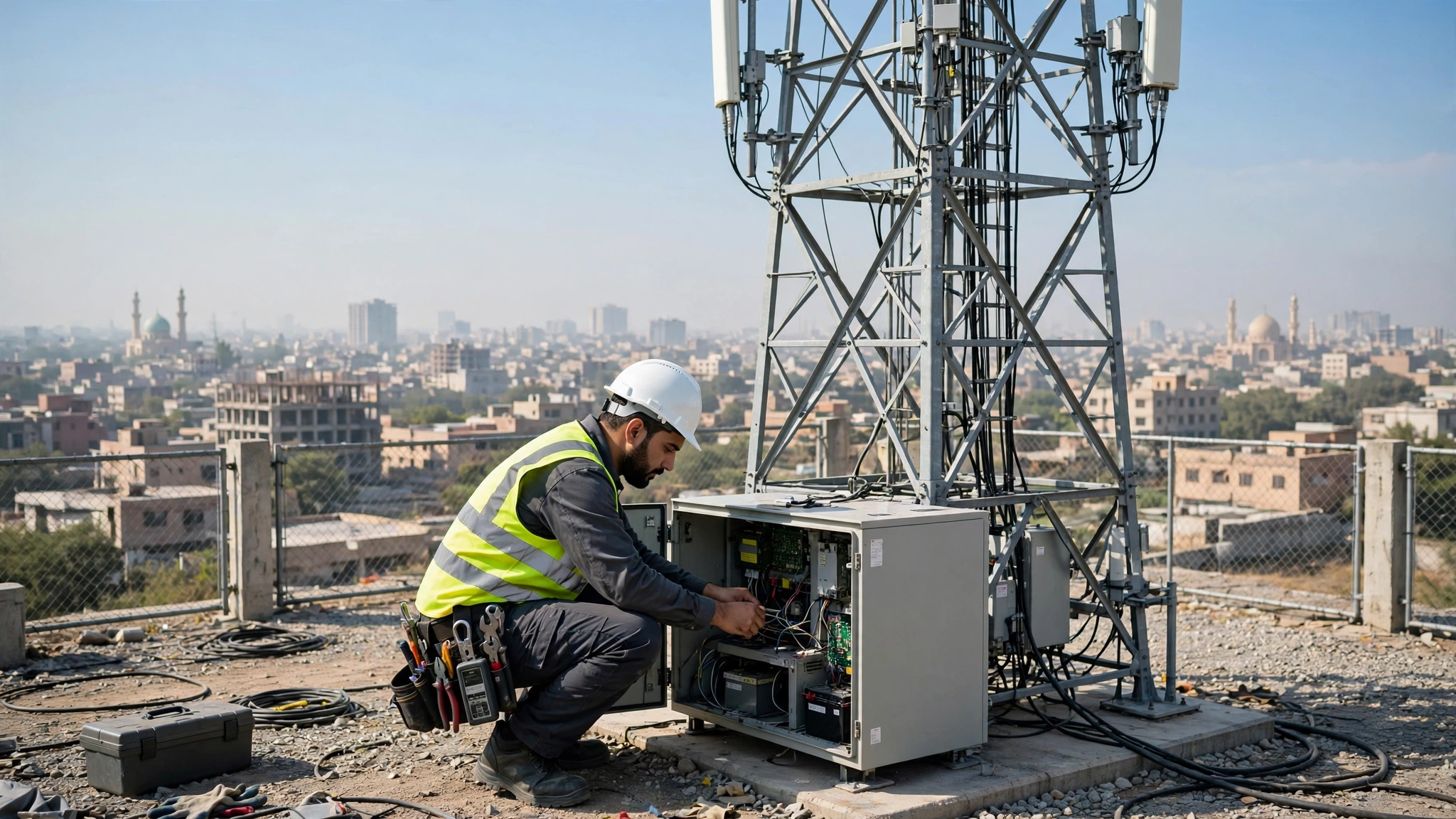
If your calls keep dropping, your mobile internet crawls, or your phone loses signal in parts of town, the Pakistan Telecommunication Authority (PTA) says it is looking into it — on the ground. Between September 30 and October 7, 2026, the regulator’s zonal teams inspected 115 telecom sites across eight cities in Pakistan, checking voice calls, mobile internet speeds, coverage and backup power, and ordering mobile operators to fix whatever faults they found.
Key Takeaways
- PTA’s zonal teams inspected 115 telecom sites between September 30 and October 7, 2026 — Lahore saw the most visits with 39, followed by Karachi with 17.
- Field teams checked voice calls, mobile internet speeds, network coverage and backup power at towers, targeting call drops, failed connections and slow data.
- Operators have been told to fix faults found during the checks, and PTA says service quality has already improved in some inspected areas.
What PTA did and where
The week-long monitoring drive covered cell sites and towers in Lahore, Karachi, Sukkur, Multan, Rawalpindi, Quetta, Abbottabad and Gilgit. Lahore accounted for the largest share of visits, with 39 sites inspected, followed by Karachi with 17 and Sukkur with 16. Multan and Rawalpindi each saw 14 inspections, Quetta 8, Abbottabad 4 and Gilgit 3.
| City | Sites inspected |
|---|---|
| Lahore | 39 |
| Karachi | 17 |
| Sukkur | 16 |
| Multan | 14 |
| Rawalpindi | 14 |
| Quetta | 8 |
| Abbottabad | 4 |
| Gilgit | 3 |
| Total | 115 |
What the teams actually checked
These were not desk reviews. PTA’s field teams visited the sites in person and measured how the networks were actually performing for consumers. The checks covered:
- Voice call quality — whether calls connect on the first try and stay connected without dropping
- Mobile internet speed — data performance on the networks people actually use
- Network coverage — identifying dead zones and weak-signal pockets
- Backup power arrangements — whether towers can keep running during electricity outages
The exercise was built around the complaints PTA hears most often from the public: calls that fail to connect, calls that drop mid-conversation, slow mobile internet and patches where coverage simply disappears. Before and during the visits, field teams also reviewed consumer feedback and complaints to zero in on the areas where users were suffering the most.
Talking to the people on the ground
One notable part of the drive was the outreach. PTA teams did not just test equipment — they engaged with local administrations, elected representatives and community members to identify connectivity problems in different areas. That matters in Pakistan, where coverage complaints often cluster in specific neighbourhoods, markets or rural corridors, and where towers sometimes face local-level hurdles like power cuts, equipment theft or damaged infrastructure.
Why this inspection round matters
Mobile internet has quietly become the weakest part of Pakistan’s telecom experience, even as coverage looks strong on paper. PTA’s own Quality of Service survey for the second quarter of 2026 — conducted across 11 cities — found mobile broadband compliance at just 85%, the lowest of any major service category, compared with 98% for network coverage, 97% for SMS and 92% for voice services. In other words, the towers are mostly there, but the data flowing through them is not always up to the mark.
That context explains why backup power was part of the checklist too. During prolonged load-shedding or grid failures, towers without working backup batteries simply switch off, and whole neighbourhoods lose service. Checking power arrangements at 115 sites is a practical way of answering a question every Pakistani mobile user has asked: why does my signal vanish the moment the electricity does?
What happens next
PTA has directed the relevant mobile operators to take corrective action wherever deficiencies or technical faults were found at their sites. The authority says these interventions are aimed at sustained — not cosmetic — improvements in network performance. It also reported that improvements in mobile service quality have already been observed in several of the areas covered by the inspections.
The regulator has said it will continue monitoring operators and strengthening its oversight, with the goal of resolving consumer complaints more quickly and improving the reliability and availability of mobile services across the country.
What this means for you
For the average mobile user, the takeaway is straightforward:
- Complaints actually feed into these inspections. PTA reviewed consumer feedback to pick problem areas, so reporting bad service through the regulator’s complaint channels is more useful than it sounds.
- Fixes take time to reach your area. Corrective measures ordered this week will roll out gradually as operators repair or upgrade individual sites.
- Coverage gaps are a known priority. The drive explicitly targeted weak coverage, which is good news for users in fringe areas of cities like Sukkur, Quetta and Gilgit, which received fewer inspection visits but are often the hardest hit by poor connectivity.
The PTA has made field monitoring a recurring exercise rather than a one-off, and this latest round — 115 sites in a single week — is one of its most intensive. Whether the improvements hold will depend on how quickly operators act on the faults flagged at their towers. For now, Pakistani users can at least expect the regulator to keep showing up at the towers themselves, measuring what subscribers actually experience rather than what the coverage maps claim.