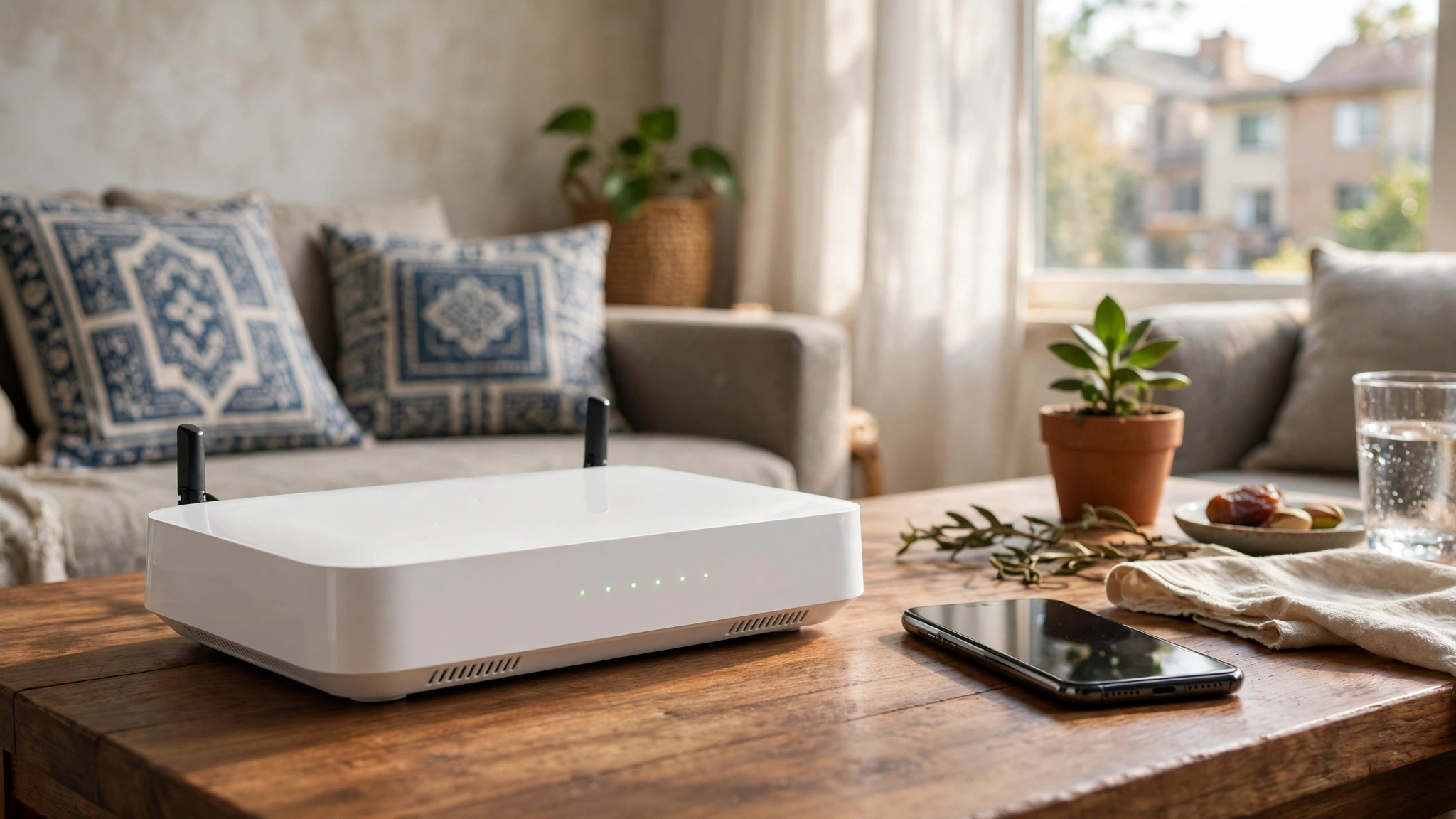
Zong has officially launched Z HomeFi, Pakistan’s first 5G Fixed Wireless Access (FWA) home broadband service, taking its 5G technology beyond smartphones and into Pakistani households. Announced on October 8, 2026, the service delivers home internet over Zong’s 5G network through a plug-and-play indoor device — no fibre installation, no fixed-line infrastructure, no technician visit required.
Key Takeaways
- Zong launched Z HomeFi on October 8, 2026 — Pakistan’s first 5G fixed wireless home broadband service, available in the country’s top 10 cities.
- 12 prepaid bundles offer 10-50 Mbps speeds with 100-500GB monthly data at Rs 4,500-11,000 per month, plus a Rs 22,000 Wi-Fi 6 5G indoor CPE device.
- Early criticism questions the value: entry pricing is steep compared to existing fibre plans, while the 10 Mbps entry speed sits far below Zong’s own 5G trial speeds.
What Is Z HomeFi?
Fixed Wireless Access means the “last mile” to your home travels over the mobile network instead of a cable. You buy a 5G indoor Customer Premises Equipment (CPE) device, insert a SIM, plug it in, and the device broadcasts Wi-Fi to your home. Zong’s 5G indoor CPE, priced at Rs 22,000 inclusive of taxes with a two-year warranty, supports Wi-Fi 6 on both 2.4 GHz and 5 GHz bands, connects up to 64 users on a single band, works on both 5G and LTE networks, and includes a gigabit Ethernet port plus web-based management.
Packages and Pricing
Z HomeFi is currently available across Pakistan’s top ten cities, offered exclusively through Zong Customer Service Centres, with expansion to franchise outlets planned. There are 12 prepaid bundles, all valid for 30 days, with prices inclusive of taxes (GST 19.5% + AIT 15%):
| Speed | 100 GB | 250 GB | 500 GB |
|---|---|---|---|
| 10 Mbps | Rs 4,500 | Rs 5,500 | Rs 7,500 |
| 20 Mbps | Rs 5,500 | Rs 6,500 | Rs 8,500 |
| 30 Mbps | Rs 6,000 | Rs 7,500 | Rs 10,000 |
| 50 Mbps | Rs 7,500 | Rs 9,000 | Rs 11,000 |
Getting connected takes five steps per Zong’s official guide: choose a package, get the 5G CPE, insert the SIM and power on, connect devices, and start using the internet.
Who Is It For?
Z HomeFi targets households that fibre cannot easily reach — areas where fixed-line infrastructure is unavailable, rented homes where tenants cannot get wiring installed, and users who want broadband without a lengthy installation process. For streaming, remote work and online learning, the 20–50 Mbps tiers with 250–500 GB allowances cover typical family usage, at least on paper.
The service also marks a strategic milestone: Zong is positioning itself as the operator furthest along in converting Pakistan’s 5G spectrum auction into commercially available consumer services, not just handset data plans.
The Critical Question: Is It Worth It?
The launch has drawn pointed criticism from Pakistani tech commentators. The entry plan — 10 Mbps with 100 GB for Rs 4,500 a month — works out to roughly Rs 45 per GB. Compare that with PTCL fibre: 40 Mbps with 2,500 GB of data for Rs 3,350 a month, or roughly Rs 1.34 per GB. On pure price-per-gigabyte terms, fibre is dramatically cheaper.
Critics have also flagged the gap between 5G’s promise and the product: Zong’s own 5G trials reportedly recorded speeds above 1.4 Gbps, while the consumer service tops out at 50 Mbps — and starts at 10 Mbps, a speed many households already get from DSL.
Zong’s counterargument, implicit in the product design, is about access rather than raw speed: HomeFi reaches homes that fibre does not, needs no installation, and can move with you. For a family in a neighbourhood without FTTH coverage, the comparison is not with PTCL fibre — it is with expensive mobile data bundles or nothing at all.
What to Check Before Buying
If you are considering Z HomeFi, run through these questions first:
- Is there 5G at your address? FWA performance depends entirely on signal strength at the spot where the CPE sits. Confirm coverage before buying the device, because the Rs 22,000 is a sunk cost.
- Do you have fibre options? If PTCL, StormFiber or another FTTH provider already serves your street, compare their plans honestly — unlimited or high-quota fibre is usually far cheaper per GB.
- How much data do you really use? A family of four streaming HD video can burn through 100 GB in two weeks. The 250 GB and 500 GB tiers are the realistic options for streaming households.
- Are you renting? One genuine advantage of HomeFi: no landlord permission, no drilling, no waiting for an installation crew. It moves with you to the next house.
The Bigger Picture: 5G Coming Home
The launch matters beyond one product. Pakistan’s 5G spectrum auction was meant to translate into consumer-facing services, and HomeFi is the first clear example of a Pakistani operator selling 5G as a household utility rather than a handset feature. Whether rival operators follow with their own FWA products will shape how quickly 5G reaches Pakistani homes — and how hard prices compete.
The Verdict
Z HomeFi is a genuine first for Pakistan: the country’s first commercial 5G fixed wireless home broadband. Whether it becomes a mass-market product or stays a niche solution for fibre-less areas will depend on how quickly Zong expands coverage, and whether prices move down as adoption grows. For now, buyers should check 5G coverage at their exact address before spending Rs 22,000 on the device — and weigh the monthly bundles honestly against whatever fibre or DSL options their street already offers.