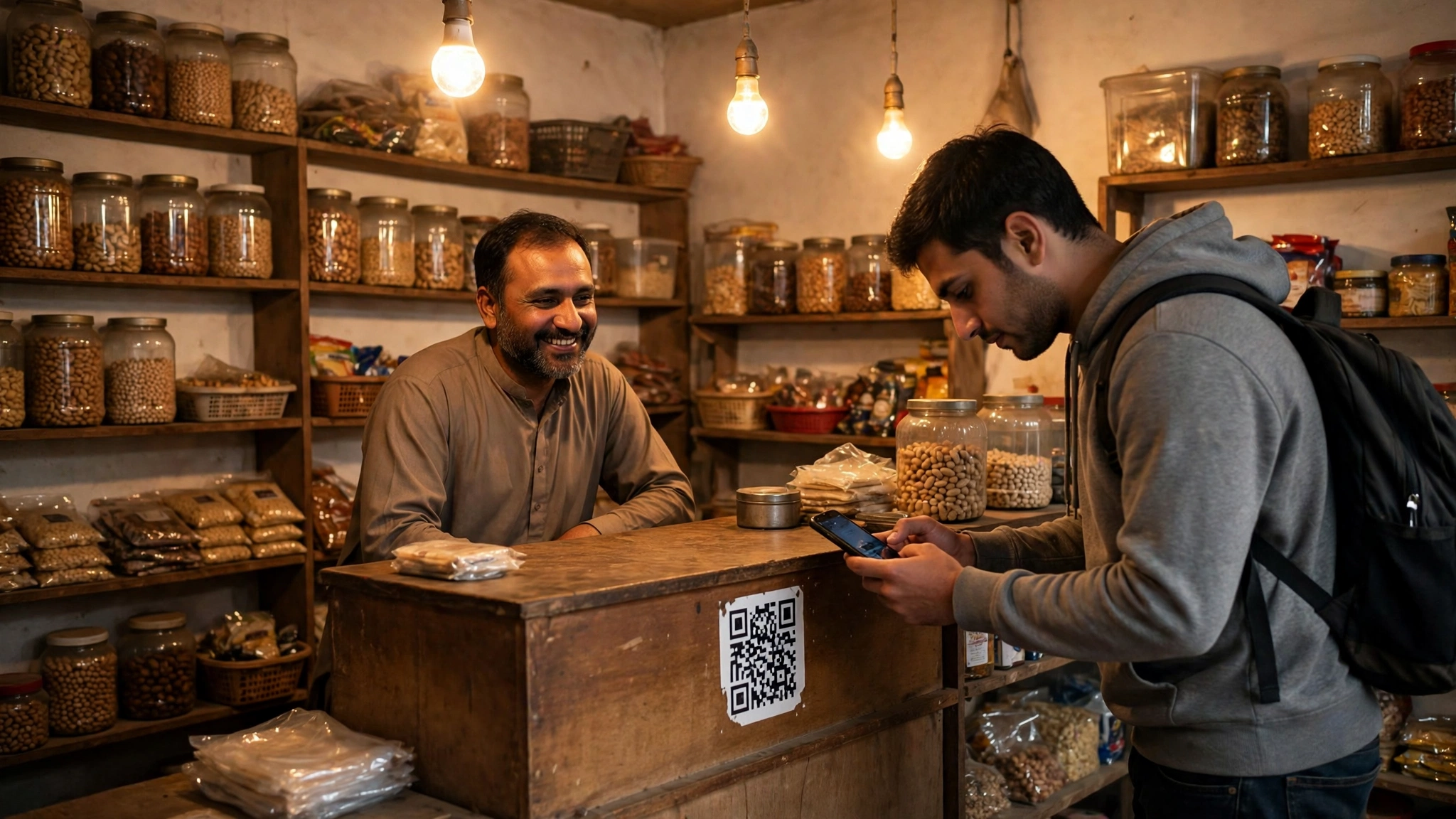
Pakistani farmers face the same painful choice every harvest season: sell their crop immediately when prices are lowest, or hold it back with no cash in hand. This week, a new platform launched at the Pakistan Agriculture Connections Expo 2026 promises to end that dilemma. KissanPay, built jointly by agri-storage company Kissan Gudam and aik — BankIslami’s digital Islamic banking arm — is positioned as Pakistan’s first Shariah-compliant agri-fintech platform, offering farmers interest-free financing against their stored harvests.
Key Takeaways
- KissanPay, built by Kissan Gudam and aik by BankIslami, finances farmers against stored harvests instead of forcing harvest-time distress sales.
- The platform disburses up to 70% of a commodity’s value in about 45 minutes through an Electronic Warehouse Receipt (EWR) system.
- The launch at Pakistan Agriculture Connections Expo 2026 marks a push toward Riba-free digital finance for Pakistan’s farming sector.
How KissanPay Works
The concept is straightforward. Instead of taking a loan against land — something most smallholders either cannot or will not do — farmers store their harvest in a Kissan Gudam warehousing facility and receive an Electronic Warehouse Receipt (EWR). That receipt then becomes collateral: the platform can disburse up to 70% of the commodity’s value in about 45 minutes, according to the launch details.
The farmer gets working capital the same day — money for inputs for the next crop cycle, household expenses, or loan repayments — while the grain stays safely stored. When market prices recover weeks or months later, the farmer sells at a better rate. It is the warehouse-receipt financing model, repackaged for Pakistan’s smallholders and delivered entirely in a Riba-free structure.
Two Partners, One Value Chain
KissanPay combines two very different pieces of infrastructure. Kissan Gudam, backed by the Haji Sons Group, brings modern agri-storage facilities and an existing network in Pakistan’s farming communities. aik by BankIslami brings the regulated banking backbone: BankIslami launched aik in 2025 as Pakistan’s first fully digital Islamic banking solution, with digital account opening via CNIC, biometric authentication, and instant transfers — all structured to comply with Shariah principles.
The partnership covers the full agricultural value chain: harvest, storage, financing, and liquidity. A farmer who once needed weeks of paperwork and land documents can, in theory, open a digital account and receive funds in minutes against grain already sitting in storage.
Why This Matters for Pakistani Agriculture
Agriculture remains the backbone of Pakistan’s economy, contributing roughly a quarter of GDP and employing a massive share of the workforce. Yet access to formal credit for small farmers has always been the bottleneck. The Electronic Warehouse Receipt mechanism is not new globally — India has used it at scale — but pairing it with instant, interest-free digital disbursement is a significant step for Pakistan.
The distress-sale problem is real and well documented. At harvest time, supply floods the market and prices drop. Farmers who owe money to banks or informal lenders sell immediately, often at a loss relative to prices a few months later. Middlemen and aggregators exploit this gap, storing in bulk and profiting from the rebound. Warehouse-receipt financing breaks that cycle by turning stored grain itself into borrowing power.
What KissanPay Offers Farmers
| Feature | Details |
|---|---|
| Financing limit | Up to 70% of stored commodity value |
| Disbursement speed | Around 45 minutes via EWR |
| Financing type | Shariah-compliant, Riba-free |
| Collateral | Stored harvest (warehouse receipt), not land |
| Banking partner | aik by BankIslami (digital Islamic banking) |
| Storage partner | Kissan Gudam (Haji Sons Group network) |
The Challenges Ahead
The model depends on one thing working reliably: trust in the warehousing system. If farmers doubt the quality of storage or the fairness of commodity valuation, the EWR is worthless. Kissan Gudam will need to prove its facilities protect grain quality at scale, especially through Pakistan’s hot summers.
Digital literacy is the second hurdle. Opening a digital account and navigating a fintech platform is easy in theory, but smallholder farmers in rural areas often lack smartphones or reliable connectivity. Success will depend on on-the-ground agents and support in Urdu and regional languages.
The Shariah-Compliant Angle
Why does Riba-free matter so much here? In rural Pakistan, a large share of smallholders avoid conventional bank loans not because of the paperwork but because of interest — Riba is forbidden in Islam, and many farming families simply will not take an interest-bearing loan, no matter how cheap. That leaves them dependent on informal lenders (arthi) who charge punishing terms in kind or in cash. A financing product that is both digital and genuinely Shariah-compliant removes that religious barrier while keeping the cost of credit fair.
The aik connection is what gives KissanPay its Islamic-finance credibility. aik was launched by BankIslami in March 2025 as Pakistan’s first fully digital Islamic banking solution, and its Banking-as-a-Service framework lets partners like KissanPay plug regulated, Shariah-certified financing directly into their platforms. For the farmer, there is no separate banking app to figure out — the account, the disbursement, and the repayment all live inside one journey.
A Signal of Momentum in Agri-Fintech
KissanPay is not arriving in a vacuum. The State Bank of Pakistan has been pushing agri-lending targets for banks for years, and fintech coverage of the launch has framed the Kissan Gudam–aik partnership as one of the most concrete steps toward digitising agricultural finance. Earlier collaborations — such as FasalPay’s tie-up with Kissan Gudam’s storage network — tested the warehouse-plus-finance model on a smaller scale. KissanPay is that model’s bigger, fully regulated, Riba-free version.
The real test, of course, is disbursement at scale. Announcements in Pakistani fintech are cheap; working capital reaching a farmer in Okara or Sargodha within 45 minutes is the part that has to hold up.
The Bottom Line
KissanPay’s launch is one of the more credible attempts to solve Pakistani agriculture’s oldest financing problem. It does not ask farmers to mortgage land, wait for bank approvals, or accept interest-based loans. Instead, it turns the harvest itself into the collateral — and does it in under an hour. If the warehousing network scales and rural outreach keeps pace, this could become the template for Riba-free agri-finance across Pakistan.