Pakistan’s Federal Board of Revenue is racing toward a year-end deadline: tax monitoring systems must be fully operational across 18 manufacturing sectors by December 31, 2026. Prime Minister Shehbaz Sharif set the target at a review meeting on FBR reforms held in Islamabad on Monday, where officials briefed him that five sectors are already wired up, four more are being equipped, and equipment procurement for the rest must be completed by the end of October.
The move is part of the FBR’s broader transformation plan — a technology-first push to close the gap between what factories actually produce and what they report for tax purposes.
Key Takeaways
- FBR will operationalize tax monitoring systems across 18 manufacturing sectors by December 31, 2026.
- Systems are already installed in sugar, cement, tobacco, tiles and fertilizer; rollout phases continue through October.
- The government says enforcement added Rs1.3 trillion in revenue over three years — but how that figure breaks down is not public.
Which sectors are covered?
According to the briefing presented to the prime minister, the 18 sectors fall into four rollout phases:
Already installed (5 sectors)
- Sugar
- Cement
- Tobacco
- Tiles
- Fertilizer
Installation underway (4 sectors)
- Textiles
- Packaged water
- Packaged juice
- Packaged milk
Equipment purchases for this group are reportedly already complete, and installation work is in progress.
Equipment procurement by October 15
- Steel
- Poultry
- Tires
Equipment procurement by October 30
- Tea
- Domestic electronics / home appliances
- Leather
- Paper and board
- Oil and ghee
Separately, a related FBR notification reported by ARY News covers factories manufacturing packaged tea, ghee and edible oil, electronics and home appliances, paper and cardboard, leather products, garments, textiles and ginning, beverages, bottled water, tiles and packaged milk. Under that mechanism, manufacturers must have their production monitored for three years through FBR-approved monitoring and digital-labelling companies — reported as Obzidian Technologies, Tollink Pakistan, Authentic and ISSM Labelling — and must source their monitoring equipment from these firms.
How the monitoring actually works
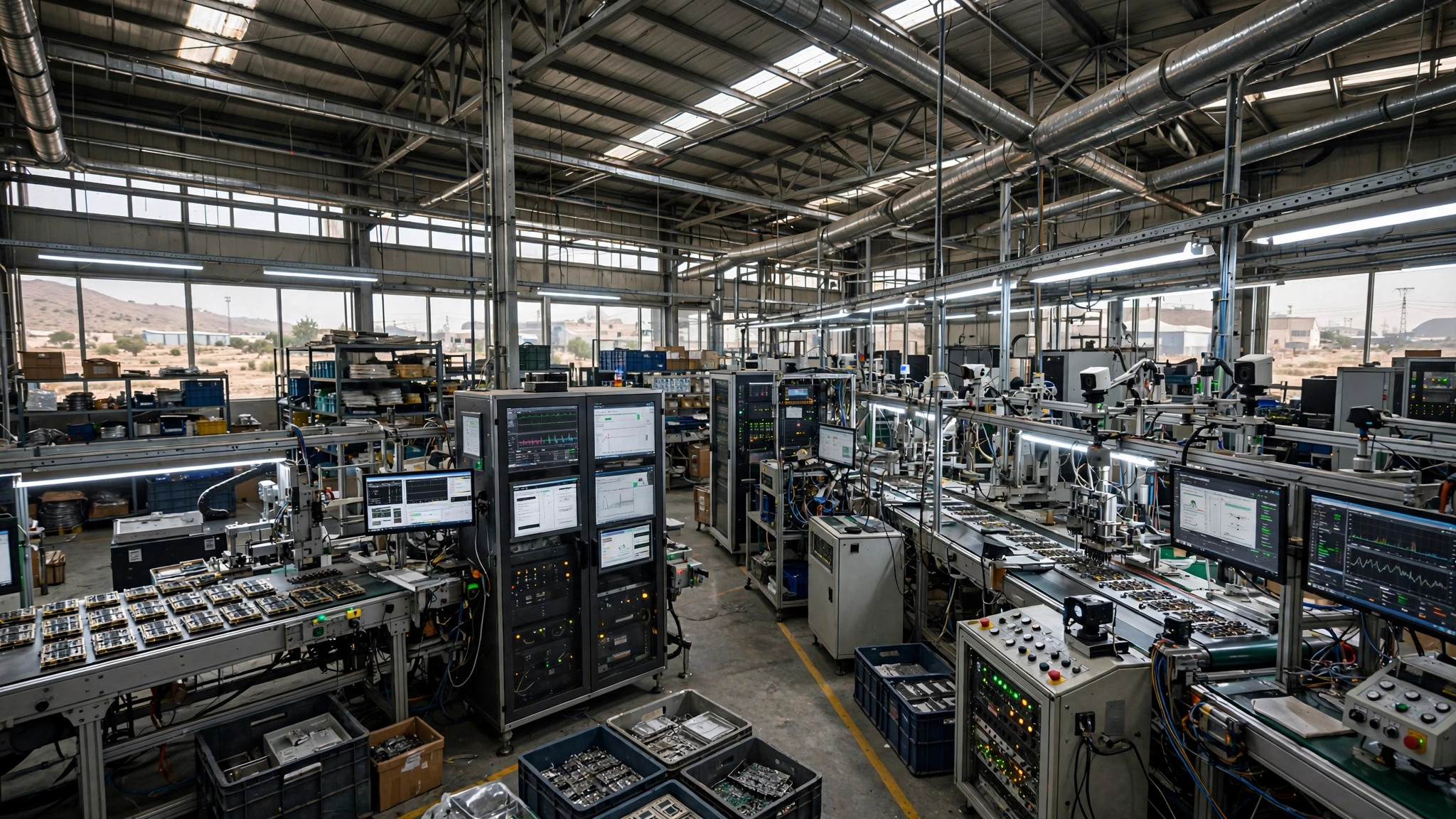
The systems combine electronic production monitoring hardware installed at factory gates and production lines with digital labelling, giving FBR real-time visibility into actual output. The data lets tax authorities cross-check reported sales against real production — and collect the correct sales tax on the difference.
The government points to the sugar sector as the early proof of concept. At the review meeting, the prime minister noted that for the first time in Pakistan’s history, production data from the sugar industry is now aligned with FBR records — a sign, he said, that the tracking system is doing its job. An audit report on the cement sector’s monitoring system drew similar praise, and the Ministry of Information Technology has been directed to audit the remaining sectors to verify whether the systems are delivering the intended results.
The revenue argument
The meeting was told that government enforcement measures have generated an additional Rs1.3 trillion in tax revenue over the past three years, representing roughly a 40% increase in collections. That figure comes from the official briefing and has not been independently broken down, but it underscores how much of the revenue push is riding on enforcement rather than new taxes.
The prime minister also commended the team that assessed the manufacturing sector’s true tax potential — describing their gap analysis between potential and actual receipts as excellent — and presented shields to the officials behind it. His message was pointed: collecting taxes in line with the country’s full revenue potential is genuine public service, and taxes that consumers already pay must actually reach the national exchequer.
This enforcement-first approach also lines up with commitments made to the IMF on improving sales tax collection and curbing evasion, which is why the December deadline is being treated as non-negotiable.
What this means for ordinary Pakistanis
The list reads like a household shopping list: sugar, cooking oil and ghee, packaged milk, tea, bottled water, textiles, leather, tires, poultry — the very goods whose prices strain monthly budgets. The official logic is that transparency helps honest manufacturers compete with tax-dodging rivals, and ensures the sales tax consumers already pay at the till reaches the treasury instead of leaking out along the supply chain.
For manufacturers in the covered sectors, the immediate practical effect is an equipment bill and a compliance clock: factories will need to buy and install monitoring gear from approved vendors on FBR’s timetable — October 15 and October 30 for the remaining procurement waves, with everything live by year-end.
What happens next
Alongside the December deadline, the prime minister ordered an immediate third-party audit and validation of customs bonded warehouses to root out irregularities, directed FBR to develop a scientific, sector-by-sector methodology for assessing tax potential, and instructed the FBR chairman and senior officers to visit Karachi during the first week of every month to hear the business community’s concerns.
Whether the December 31 target holds will be tested in the next ten weeks. Five sectors are done and four are underway — the pressure now shifts to the steel, poultry, tire, tea, electronics, leather, paper and oil-and-ghee industries to procure and install their equipment on schedule. If they do, Pakistan’s tax machinery will enter 2027 with eyes on factory floors across eighteen of its most economically significant sectors.