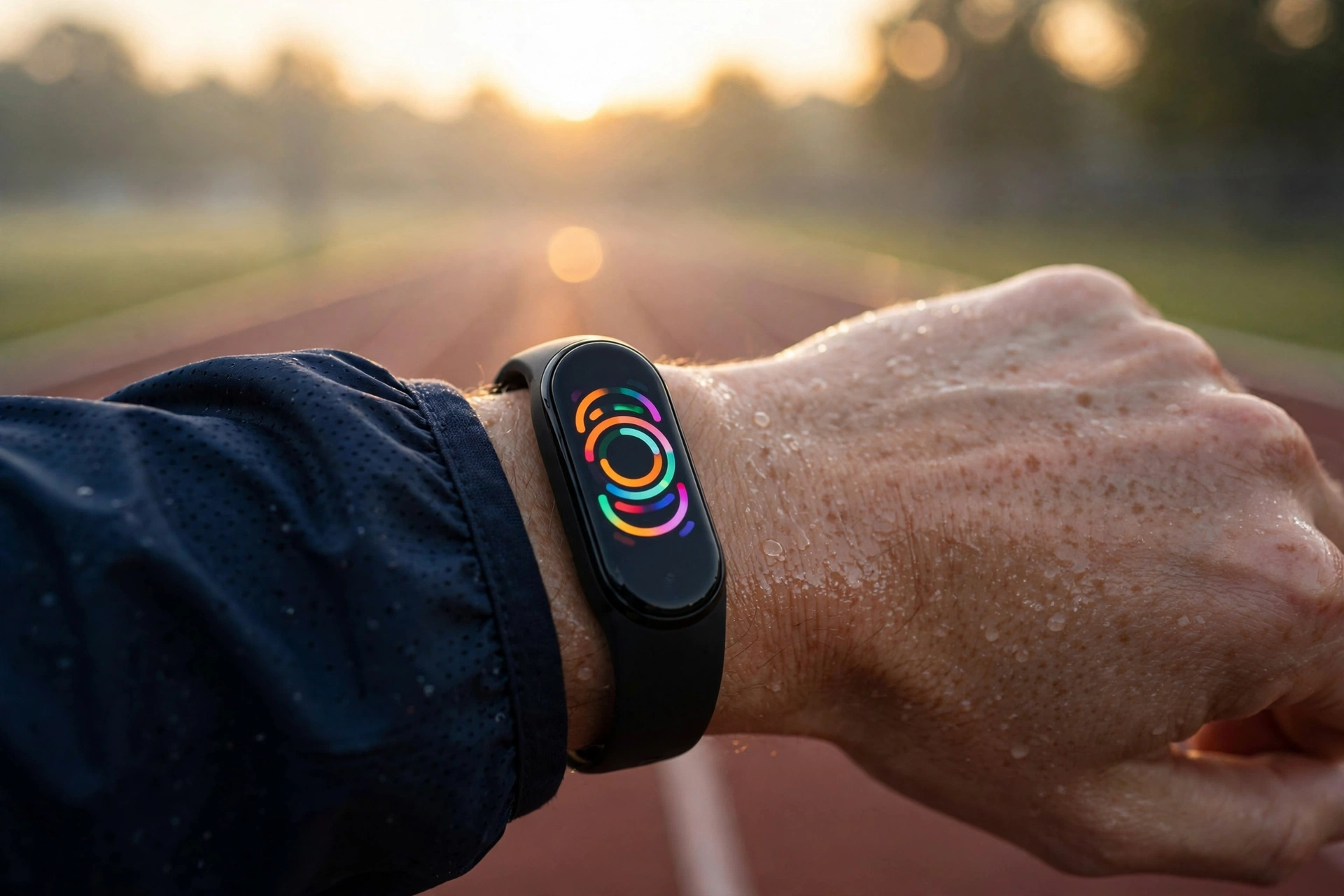
Google has unveiled the Fitbit Edge, a new fitness tracker announced on October 12, 2026, priced at $179.99 with retail availability starting October 27. It sits between the screenless Fitbit Air and the full-fledged Pixel Watch in Google’s wearable lineup, and its two headline features are exactly what the announcement promises: more than 50 manually selectable workout modes and a user-replaceable battery rated for up to seven days of use.
Key Takeaways
- Google announced the Fitbit Edge on October 12, 2026, at $179.99, with retail availability from October 27.
- It offers 50+ manual workout modes, automatic detection for up to 100 activities, and a user-replaceable battery rated for seven days.
- In Pakistan, expect a local price near Rs 50,000 through importers, since Google sells no hardware officially in the country.
Where the Edge sits in Google’s lineup
The Fitbit Edge is essentially the successor to the Fitbit Charge 6, which launched back in 2023. Google is clearly thinking in tiers now: the $100 screenless Fitbit Air for minimalists, the $179.99 Edge for people who want a display and serious fitness tracking, and the Pixel Watch 5 for those who want a full smartwatch.
The Edge runs Fitbit’s own simpler operating system rather than Google’s Wear OS. That is a deliberate choice — it keeps the interface fast and the battery long — but it means the device is a fitness tracker with some smartwatch features, not a smartwatch.
The battery is the real story
The most unusual thing about the Fitbit Edge is that it is the first Fitbit tracker Google has designed to be repaired. The 65 mAh battery is user-replaceable thanks to a modular internal design, which is a notable shift for a company whose wearables have historically been sealed disposable units.
According to Google, a full charge delivers up to seven days of typical use. If the battery runs low, five minutes on the included magnetic charging puck provides roughly a full day of wear, and a complete charge takes about 90 minutes. The tracker is also rated 5 ATM and IP68 for water and dust resistance, so it can survive swims down to 50 meters.
This move arrives ahead of EU regulation 2023/1542, which will require consumer electronics makers to offer easily replaceable batteries by early 2027. Whether repairability becomes a selling point or just a compliance checkbox, it is a meaningful change for a product category that has long treated battery degradation as an excuse to buy a new device.
50+ workout modes — and 100 more it spots on its own
For fitness tracking, the Edge supports more than 50 exercise modes that can be started manually, covering the usual suspects: running, cycling, swimming, weight training, yoga, and dozens more. In addition, it can automatically recognize and log up to 100 different activities, so a workout you forget to start still gets recorded toward your weekly goals.
Google says the built-in GPS is up to 40% more accurate than on previous Fitbit generations, thanks to a new chipset and the aluminum case design. The Charge 6 had a known issue where a tight strap fit — needed for accurate heart rate readings — could interfere with GPS reception, so this fix addresses a real complaint. An altimeter is also on board for tracking elevation and stair climbing.
On the health side, the Edge includes an ECG app, continuous heart rate tracking, skin temperature sensing, blood oxygen measurement, and heart rate variability data. Google claims sleep stage detection is 15% more accurate than before. A physical side button with tactile feedback makes it possible to pause or resume workouts without fighting a touchscreen with sweaty fingers.
Gemini-powered coaching, with a subscription catch
Like the Fitbit Air and Pixel Watch 5, the Edge feeds into Google’s redesigned Google Health app and its Gemini-powered Google Health Coach, which builds adaptive weekly training plans, suggests daily workouts, and adjusts around your schedule. A feature called Health Guardian watches for longer-term trends such as blood pressure indicators, insulin resistance markers, and unusual resting heart rates.
There is a catch: the full coaching experience requires a Google Health Premium subscription. Google bundles a three-month trial with the Edge. Google also stresses that the Health Guardian insights are for general wellness only, not for diagnosing or treating medical conditions — and some health features vary by country, which matters for buyers outside major markets.
What is missing
The trade-offs are worth noting. The Edge drops Google Pay and NFC contactless payments entirely, so it cannot replace your wallet. The electrodermal activity (EDA) stress scan from the Charge 6 is also gone, although continuous background stress monitoring remains. And while the display is 46% larger than on previous trackers — a 1.34-inch always-on AMOLED — there is no onboard music storage, only controls for your phone’s music.
A Stephen Curry special edition is also on sale for $219.99 in the US, Canada, and EMEA markets. Pre-orders are open across about 20 markets including the US, UK, and Europe.
What this means for buyers in Pakistan
At $179.99 and an exchange rate of roughly Rs 277 to the dollar, the Fitbit Edge works out to just under Rs 50,000 before any import costs — the Stephen Curry edition would land closer to Rs 61,000. However, Google sells no hardware through an official store in Pakistan, so early units will almost certainly reach local buyers through importers and third-party online sellers, with customs duties likely pushing the street price higher.
Two caveats deserve attention here. First, the battery-life and GPS accuracy figures are Google’s own claims from controlled testing; real-world results with always-on display enabled will be lower. Second, Google has said some health features are not available in every country, so Pakistani buyers should check which features — particularly the ECG app and Health Guardian insights — actually work locally before paying a premium.
The bottom line
The Fitbit Edge is Google’s most interesting fitness tracker in years: a slim, light device with a genuinely useful display, serious workout tracking, AI-powered coaching, and a replaceable battery that pushes back against the disposable-gadget model. The missing payments support and the Premium subscription gate on coaching are real compromises, but at $179.99 it undercuts most serious rivals while offering a feature set few bands can match. For Pakistani fitness enthusiasts willing to buy through importers, it is one to watch when it starts shipping on October 27.