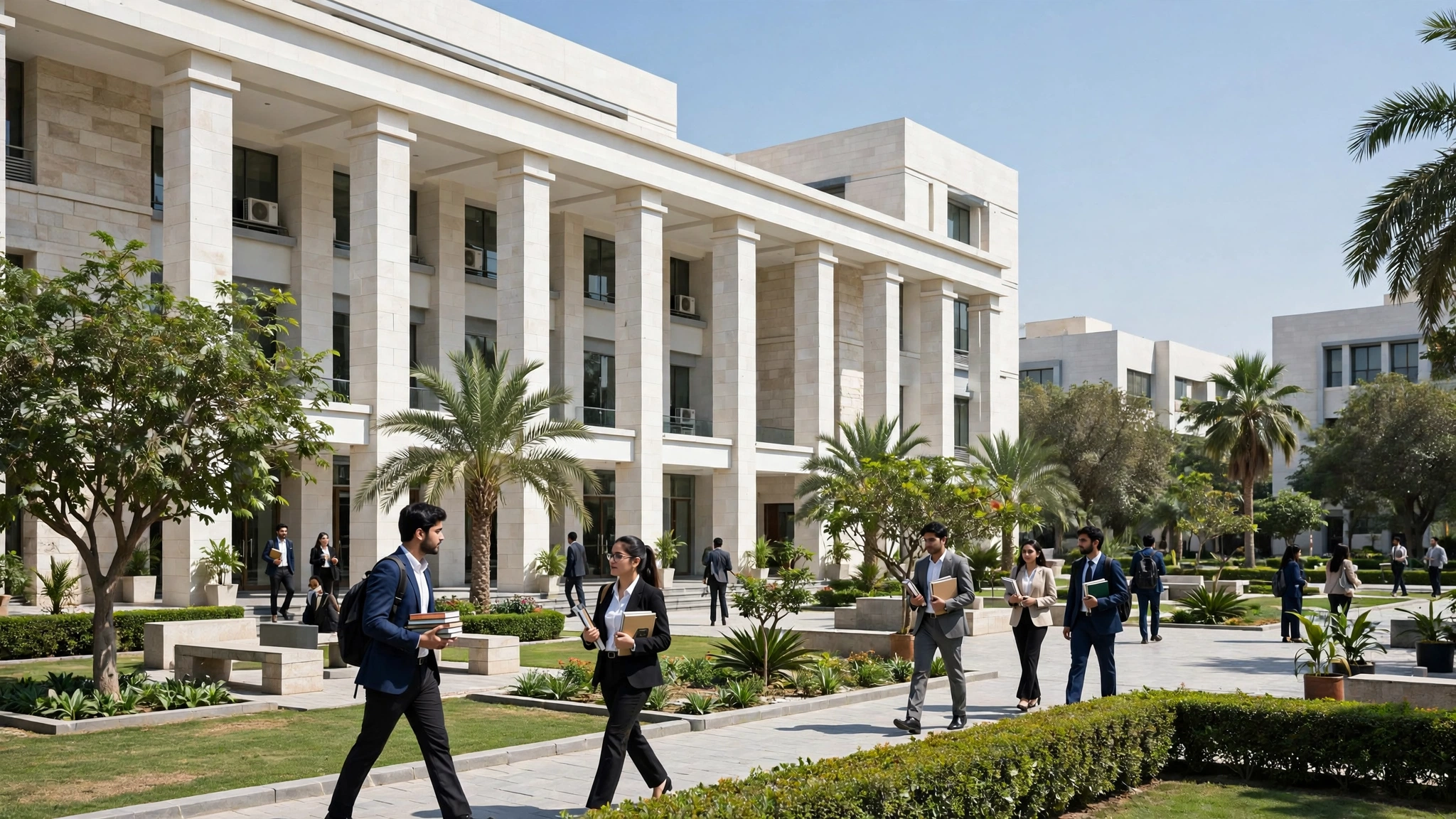
Aspiring lawyers in Sindh have a fresh window of opportunity: Shaheed Zulfikar Ali Bhutto Law College (SZABLC), Karachi, has announced admissions for its four-year LLB degree program for the 2026 session. Completed application forms — along with academic documents and fee deposit slips — must be submitted to the college’s Malir campus before December 4, 2026.
The announcement, posted in early October 2026, applies to candidates seeking entry into one of Karachi’s HEC and Pakistan Bar Council–recognised law institutions. With seats described as limited, the college has advised applicants to file early rather than waiting for the December deadline.
Key Takeaways
- Shaheed Zulfikar Ali Bhutto Law College, Karachi has opened admissions for its 4-year LLB degree program for the 2026 session.
- Applications with documents and fee slips must reach the Malir campus by December 4, 2026.
- Applicants need Intermediate/A-level with at least 50% marks and a cleared HEC Law Admission Test with a minimum score of 50.
A Karachi Institution for Legal Education
Shaheed Zulfikar Ali Bhutto Law College operates its Karachi campus at Memon Goth in Malir, and its LLB program is run under the regulatory framework laid down by the Higher Education Commission, the Pakistan Bar Council, and the Supreme Court of Pakistan’s orders on legal education standards.
The four-year LLB is a full-time, semester-based degree designed to prepare graduates for a wide range of professional roles across Pakistan’s public and corporate sectors. Among the career paths the program is geared toward are:
- The judiciary and district courts
- Legal counsel for local and multinational companies
- Law enforcement and investigative agencies such as police, NAB, and FIA
- Attorney General and Advocate General offices
- Government law officers, prosecutors, and district attorneys
- Academic and law faculty positions
- Independent legal practice and advisory work
For students in Karachi and interior Sindh who want to stay close to home while studying law, the Malir campus offers an accessible option in the metropolis’s eastern corridor.
Eligibility: The Three Non-Negotiables
Admission to the program is governed by strict regulatory standards. Prospective students must meet all of the following:
- Academic qualification: Intermediate or A-level completion with a minimum of 50% marks.
- HEC Law Admission Test (LAT): Candidates must have cleared the LAT with a minimum score of 50 marks — a requirement mandated by the Supreme Court of Pakistan’s order dated March 6, 2018. Applications without a valid LAT clearance cannot be entertained.
- Attendance commitment: The college enforces a strict 80% minimum attendance rule during active semesters, in line with Bar Council requirements for professional legal training.
These are not flexible guidelines — they are regulatory prerequisites. A strong intermediate score alone does not qualify a candidate; the LAT clearance is the gatekeeper for every recognised law program in the country.
The LAT Timing Advantage
Notably, the December 4 admission deadline falls conveniently after the year’s final HEC Law Admission Test, tentatively scheduled for November 15, 2026. Candidates who register for that session (registration closes October 20) can secure their LAT result in time to include it in their SZABLC application — making this a well-timed window for students who missed earlier LAT sessions this year.
What to Submit and Where
Applicants must submit physical application forms with the complete supporting file to the Malir campus. The required package includes:
- The completed admission form
- All required academic documents (intermediate/A-level certificates and transcripts)
- Fee deposit slips as specified in the official admission notice
Incomplete forms will not be processed, and late submissions will not be considered. The college’s previous announcements have emphasised that seats are limited, so early applicants have a practical advantage.
Why Law Remains a Strong Career Bet in Pakistan
Legal education in Pakistan continues to draw growing interest, and the reasons are structural rather than faddish. The judiciary remains one of the most prestigious career destinations in the country, while corporate law, compliance, and regulatory practice have expanded alongside the business sector. Public-sector openings — from prosecution services to NAB and FIA legal wings — provide stable, respected employment, and the rise of legal tech, arbitration, and commercial dispute resolution is creating new niches every year.
For students weighing their options after intermediate, a law degree also offers unusual flexibility: it keeps doors open to the civil services (CSS/PMS), the judiciary, private practice, academia, and the corporate world simultaneously. Few other four-year degrees offer that breadth.
A Note on Choosing the Right Law School
Karachi has several recognised law institutions, and applicants should always verify a college’s current HEC and Pakistan Bar Council recognition status before applying. Unrecognised programs cannot qualify graduates for Bar enrolment, which effectively makes the degree unusable for legal practice.
SZABLC Karachi’s four-year LLB is positioned as a Bar Council–recognised program with a semester system and the standard regulatory attendance and testing requirements. Candidates comparing options — including Sindh Muslim Government Law College and Government Islamia Law College, both affiliated with the University of Karachi — should weigh campus location, faculty strength, fee structures, and session timelines.
Key Details at a Glance
| Detail | Information |
|---|---|
| Institution | Shaheed Zulfikar Ali Bhutto Law College, Karachi (Malir campus) |
| Program | LLB — 4-year degree (semester system) |
| Admission notice | Early October 2026 |
| Last date to apply | December 4, 2026 |
| Eligibility | Intermediate/A-level with 50%+ marks |
| LAT requirement | Cleared, minimum 50 marks (Supreme Court order 06-03-2018) |
| Attendance requirement | 80% minimum |
| Recognition | HEC and Pakistan Bar Council–recognised |
What to Do Now
If you are an intermediate graduate or an A-level student with law in your plans, the immediate action list is short: confirm your LAT status (or register for the November 15 session before October 20), gather your academic documents, and get your application to the Malir campus well before December 4.
For the college’s exact fee schedule, form availability, and campus timings, applicants should consult the official admission notice or contact the college’s admission office directly — fee structures and form details are announced in the notice itself and should not be assumed from previous years.