The Capital Development Authority (CDA) has announced plans to introduce electric double-decker buses on a dedicated sightseeing route connecting more than 15 of Islamabad’s major recreational, scenic and heritage destinations.
Instead of hiring a car or navigating between scattered attractions, residents and visitors would be able to hop on a single organised service covering the capital’s best-known spots. Here is what the plan involves, what is still undecided, and what it could mean for tourism in the city.
Key Takeaways
- CDA plans a fleet of four electric double-decker buses for a dedicated sightseeing service connecting more than 15 Islamabad attractions.
- Each bus will carry up to 90 passengers with low-floor boarding, wheelchair spaces and air-conditioning; fares and launch date are not yet announced.
- Heavy Industries Taxila is preparing a feasibility study and cost estimates, and officials hope to launch within about three months if procurement stays on track.
What the CDA Has Announced
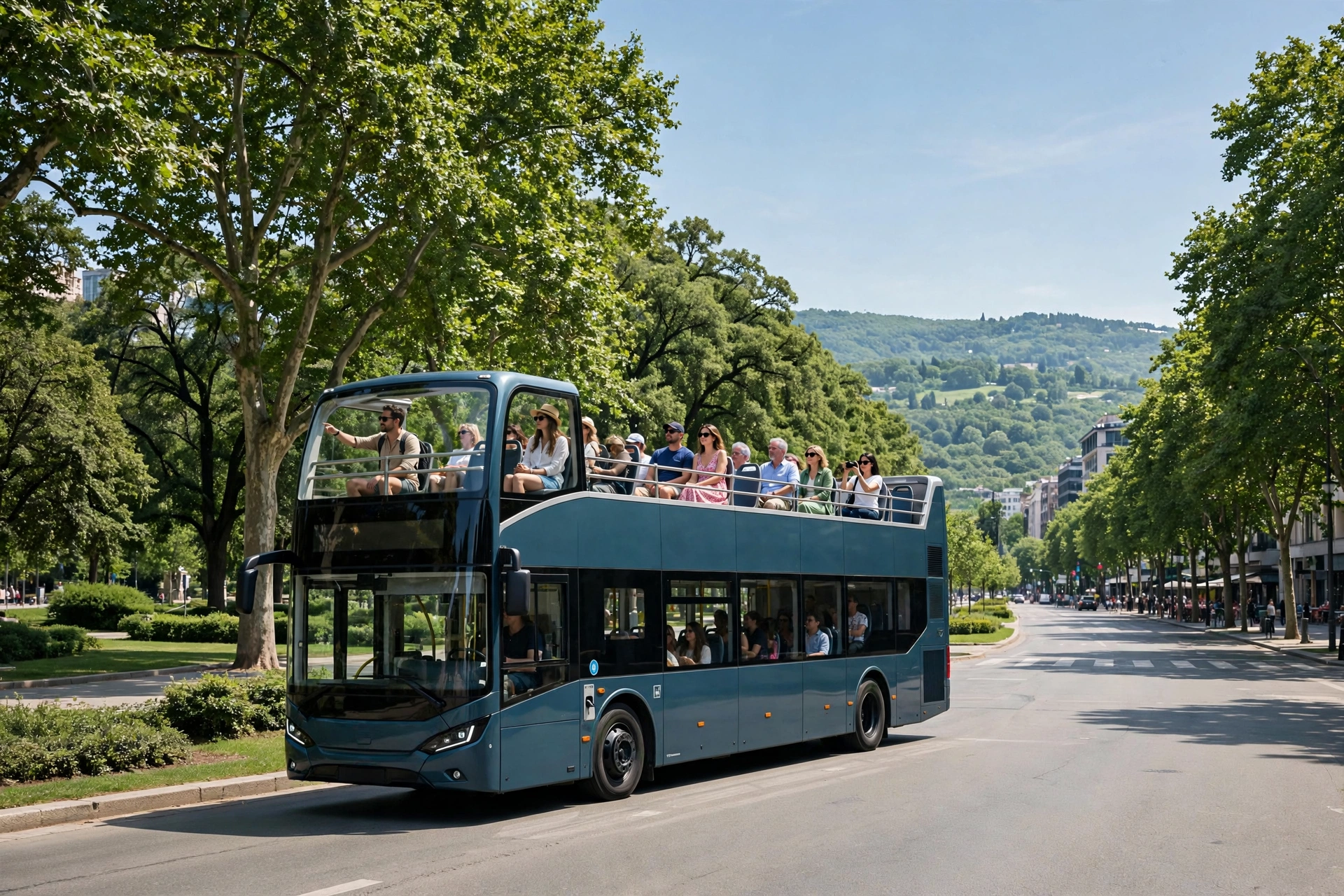
The initiative was announced by the CDA in late September 2026 as a purpose-built sightseeing service rather than an extension of the regular city bus network. The idea is straightforward: a small fleet of eye-catching double-decker buses, running on electricity, that tour Islamabad’s tourist circuit on a fixed route.
Under the initial proposal, the service would start with four buses covering a roughly 25-kilometre city tour beginning from F-9 Park and passing major attractions such as Faisal Mosque, Lok Virsa and Shakarparian. The CDA Board has approved a proposal to procure the four buses, with the board meeting chaired by CDA Chairman Sohail Ashraf also moving forward on a separate feasibility study for a zipline project in the Margalla Hills.
Proposed Route: 15+ Attractions on One Circuit
The broader vision for the sightseeing circuit is more ambitious than the starter route. According to the CDA, the dedicated circuit would eventually connect more than 15 major destinations across the capital, including:
- Lake View Park
- Shakarparian and the Pakistan Monument
- Faisal Mosque
- Daman-e-Koh
- D-Chowk
- Lok Virsa
The proposed route is aimed at families, students, senior citizens, domestic and international tourists, and people without private transport — anyone who wants to see multiple landmarks without arranging separate transport for each stop.
What the Buses Will Be Like
The planned buses are fully electric, aligning with the CDA’s push toward cleaner urban transport. Key features announced so far:
- Capacity: up to 90 passengers, including 67 seats
- Zero tailpipe emissions from the electric drivetrain
- Air-conditioning and modern braking, stability and suspension systems
- Low-floor boarding for easier access
- Dedicated wheelchair spaces to accommodate passengers with disabilities
The accessibility features are a notable inclusion. Sightseeing services in many cities are poorly suited to elderly visitors and people with disabilities, and the planned low-floor design with wheelchair spaces would make the capital’s attractions easier to reach for those groups.
The Procurement Question
The buses do not exist yet, and how they will be obtained is still open. The CDA has approached Heavy Industries Taxila (HIT) — the state-owned heavy engineering complex — to conduct a feasibility study and prepare cost estimates for the double-decker buses. The final decision on procurement will follow HIT’s technical and financial assessment.
Officials have also indicated that importing the buses could be considered, including from China. That would follow the same playbook as Islamabad’s existing electric bus fleet, which was sourced from China. The CDA is awaiting HIT’s input before deciding which route to take.
What Is Not Decided Yet
It is important to be clear about the status of this project: it is an approved plan, not an operational service. Several essentials remain unresolved:
- Fares — not announced
- Operating frequency and hours — not announced
- Boarding points and ticketing method — not announced
- Official launch date — not announced
CDA spokesperson and Director General Nawazish Ali Khan Asim has said that fares, routes and other operational details would be finalised and announced later. One CDA official said the authority hoped to make the service operational within about three months if the procurement process proceeds as planned — a timeline that will depend entirely on the feasibility study and funding approvals.
A Note of Caution
Islamabad residents have heard transport promises before: the CDA previously announced a tram service that never materialised. The double-decker project is further along — it has board-level approval and an active feasibility process — but procurement and operational planning still have to be completed. The three-month hope is conditional, not a commitment.
Building on an Existing Electric Network
The double-decker sightseeing service would not be Islamabad’s first experience with electric public transport. The CDA already operates an electric bus service through a contractor on more than 20 routes, with a fleet of over 160 buses carrying large numbers of passengers daily.
That existing network matters for two reasons. First, the city already has charging infrastructure and operational experience with electric buses. Second, a sightseeing circuit would layer a tourism-focused service on top of the everyday commuter network, serving visitors who need something different from a regular point-to-point bus ride.
The broader context is encouraging for Pakistan’s urban transport scene. Electric buses are spreading across the country — Punjab has been adding green electric buses in multiple districts, and Karachi has its own electric bus routes. A double-decker sightseeing fleet would add a distinctly tourist-oriented flavour to that national trend.
Why This Could Matter for Tourism
Islamabad consistently ranks among Pakistan’s most visited cities for domestic tourists, yet the capital’s attractions are spread across a wide area. The Margalla Hills, the Monument, Faisal Mosque, the lake and the parks are not within walking distance of each other, which means tourists currently need a car, a ride-hailing service or a guided tour to cover them all.
A dedicated sightseeing bus solves that logistics problem in one move. It also fits the way modern city tourism works: double-decker sightseeing buses are a familiar product in cities like London, Dubai and Istanbul, and international visitors already understand the concept. For domestic tourists — school groups, university trips, families on weekend outings — it could become a standard part of an Islamabad itinerary.
If the CDA prices tickets reasonably and runs the service frequently, the buses could also ease congestion and parking pressure at popular spots on weekends, when places like Daman-e-Koh and Lake View Park draw heavy crowds.
What to Watch Next
The next real milestone is the HIT feasibility study and its cost estimates, which will determine the procurement path — locally engineered or imported — and anchor the budget. After that comes the tender, and only then will fares, schedules and the launch date be announced.
For now, the plan is approved at board level, the buses are specified, and the feasibility process is underway. Islamabad’s electric double-decker sightseeing buses are not running yet — but they are closer than a rumour.