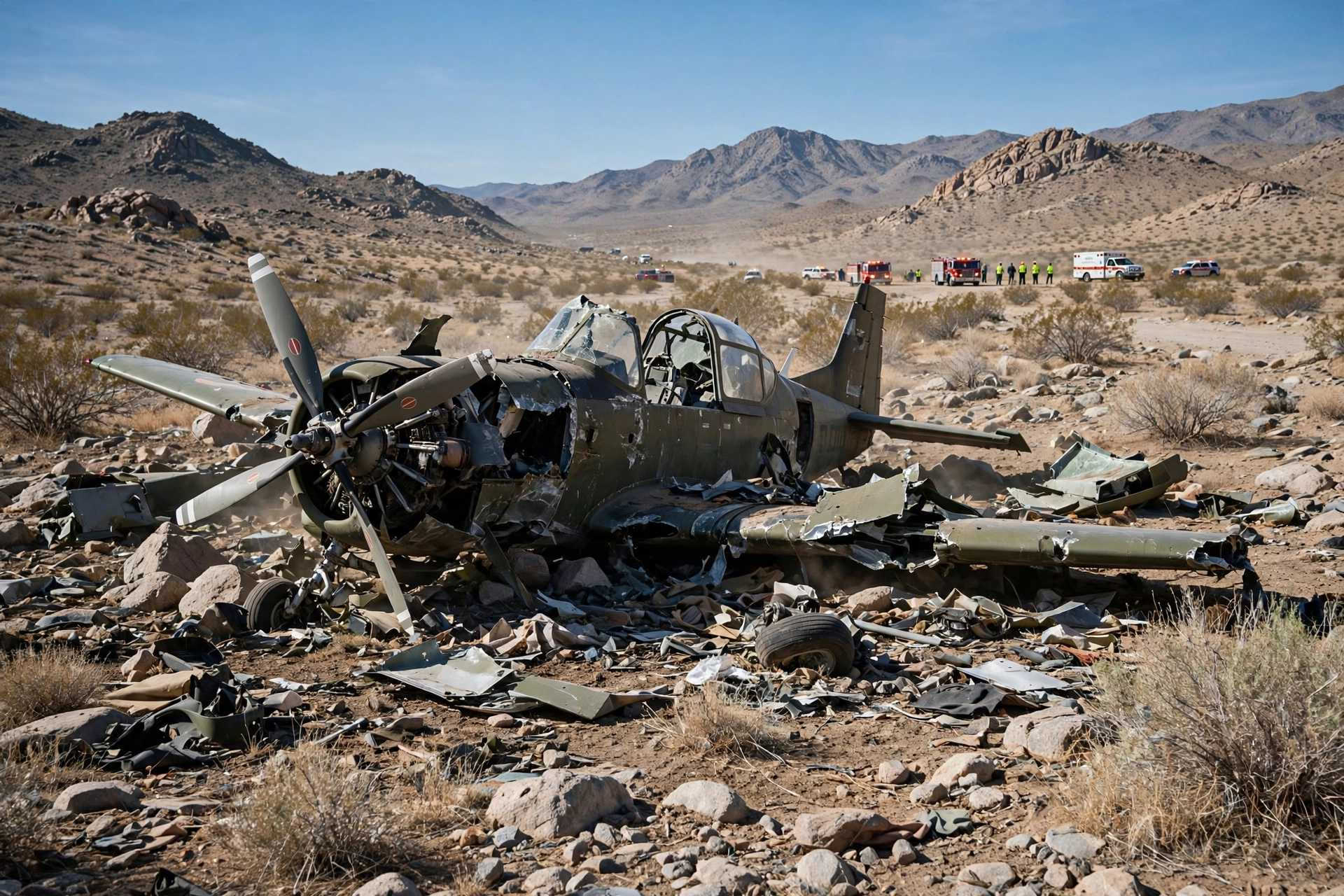
Two officers of Pakistan Army Aviation lost their lives on Monday when their training aircraft went down near Quetta. The military’s media wing confirmed that a Mushshak trainer aircraft crashed near Nawan Killi on the outskirts of the Balochistan capital at midday on October 12, 2026, and attributed the accident to a technical fault.
Both men on board — instructor pilot Major Husnain Shehzad Humayun and student pilot Captain Abdul Samad — embraced martyrdom in the crash, according to the Inter-Services Public Relations (ISPR) statement. A Board of Inquiry has been ordered to determine the exact cause of the accident.
Key Takeaways
- A Pakistan Army Aviation Mushshak training aircraft crashed near Nawan Killi, Quetta at midday on October 12, 2026.
- Both pilots — instructor Major Husnain Shehzad Humayun and student Captain Abdul Samad — embraced martyrdom; ISPR blames a technical fault.
- A Board of Inquiry has been ordered; national leadership paid tribute to the martyred officers.
What Happened
The aircraft was on a routine training sortie when it developed a technical malfunction near Nawan Killi, an area on the edge of Quetta. According to the ISPR statement, the crash occurred around midday, and both pilots were killed instantly.
Security personnel and rescue teams rushed to the crash site shortly after the incident and cordoned off the area, local media reported. The wreckage was recovered by military teams, and emergency responders secured the zone while initial assessments began.
The ISPR statement read: “At midday on 12 October 2026, a Mushshak training aircraft of Pakistan Army Aviation crashed near Nawan Killi, Quetta due to a technical fault.” The military identified both officers by name in its official communication.
The Two Martyred Pilots
- Major Husnain Shehzad Humayun — serving as the instructor pilot, responsible for supervising the training sortie.
- Captain Abdul Samad — the student pilot, undergoing flight training with Pakistan Army Aviation.
The military’s media wing expressed deep grief over the loss of both officers and extended condolences to their bereaved families. Funeral prayers for the martyred pilots are expected to be offered at their native towns with full military honours, as is customary for officers martyred in the line of duty.
About the Mushshak Trainer
The Mushshak is a propeller-driven primary training aircraft manufactured by the Pakistan Aeronautical Complex (PAC) at Kamra. It is the backbone of basic flight training for Pakistan’s military aviators, flown by the Army, Navy, and Air Force.
Key features of the aircraft include dual controls, which allow an instructor to take over from a student pilot at any moment, and a simple, rugged design intended specifically for initial pilot instruction. The platform has been in service with Pakistan Army Aviation for decades and is also exported to several friendly countries for their training needs.
A String of Recent Aviation Accidents
The Quetta crash is the latest in a series of military aviation accidents that have raised concern about flight safety in training and operational missions this year.
| Incident | Date | Outcome |
|---|---|---|
| Mi-17 helicopter, Pakistan Army Aviation | June 2026 | Crashed near Muzaffarabad during take-off; all personnel on board killed |
| Pakistan Air Force aircraft | June 2026 | Crashed in Mardan during a routine training sortie; both pilots killed |
| Pakistan Army helicopter | September 2025 | Crashed in Diamer, Gilgit-Baltistan; five crew members killed |
| KP government helicopter | August 2025 | Crashed in Mohmand district while carrying flood relief supplies; all five on board killed |
Each of these incidents was attributed to technical faults, and inquiries were ordered in each case. The recurrence of such accidents has renewed public discussion about maintenance standards, ageing fleets, and the inherent risks of military aviation training.
National Leadership Pays Tribute
President Asif Ali Zardari expressed deep grief over the martyrdom of the two pilots and extended his condolences to their families. In his statement, he paid rich tribute to the officers’ service and sacrifice.
Prime Minister Shehbaz Sharif also issued a statement expressing sorrow over the crash. He offered condolences to the bereaved families, prayed for the elevation of the martyrs’ ranks, and said the entire nation holds the sacrifices of its martyrs in high esteem. The prime minister added that the country stands in solidarity with the families in this hour of grief.
Interior Minister Mohsin Naqvi also conveyed condolences, according to media reports.
Why Training Flights Carry Risk
Military training flights are among the most demanding operations in aviation. They combine inexperienced student pilots, instruction manoeuvres, and the technical performance of aircraft — often at lower altitudes and speeds where a mechanical failure leaves little room or time to recover.
Trainer aircraft like the Mushshak are designed to be forgiving, but no aircraft is immune to a sudden technical fault. When a problem develops during a routine sortie, pilots may have only seconds to respond, especially close to the ground.
Boards of Inquiry are standard procedure after military aviation accidents in Pakistan. They examine maintenance records, flight data, pilot actions, and environmental factors to establish what went wrong and to recommend changes that might prevent a repeat.
Conclusion
The deaths of Major Husnain Shehzad Humayun and Captain Abdul Samad are a stark reminder of the risks that military aviators accept every time they take to the air — even on an ordinary training day. As the Board of Inquiry begins its work, the immediate focus remains on honouring the two officers and supporting their families.
For Pakistan Army Aviation, the crash is also a prompt to examine whether enough is being done to keep ageing trainer fleets safe. The nation mourns its martyrs; the institution must ensure their sacrifice leads to safer skies for those who follow them.