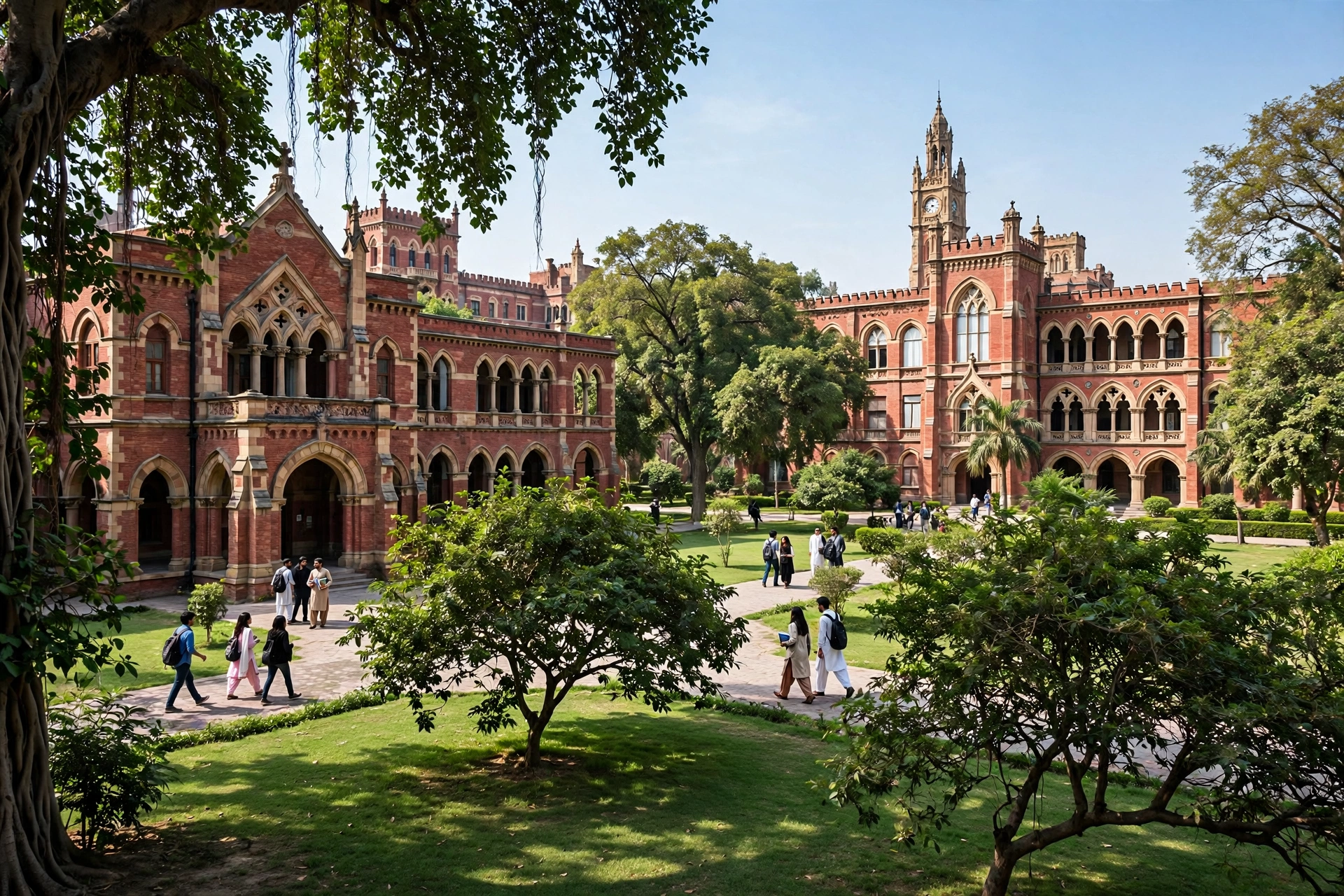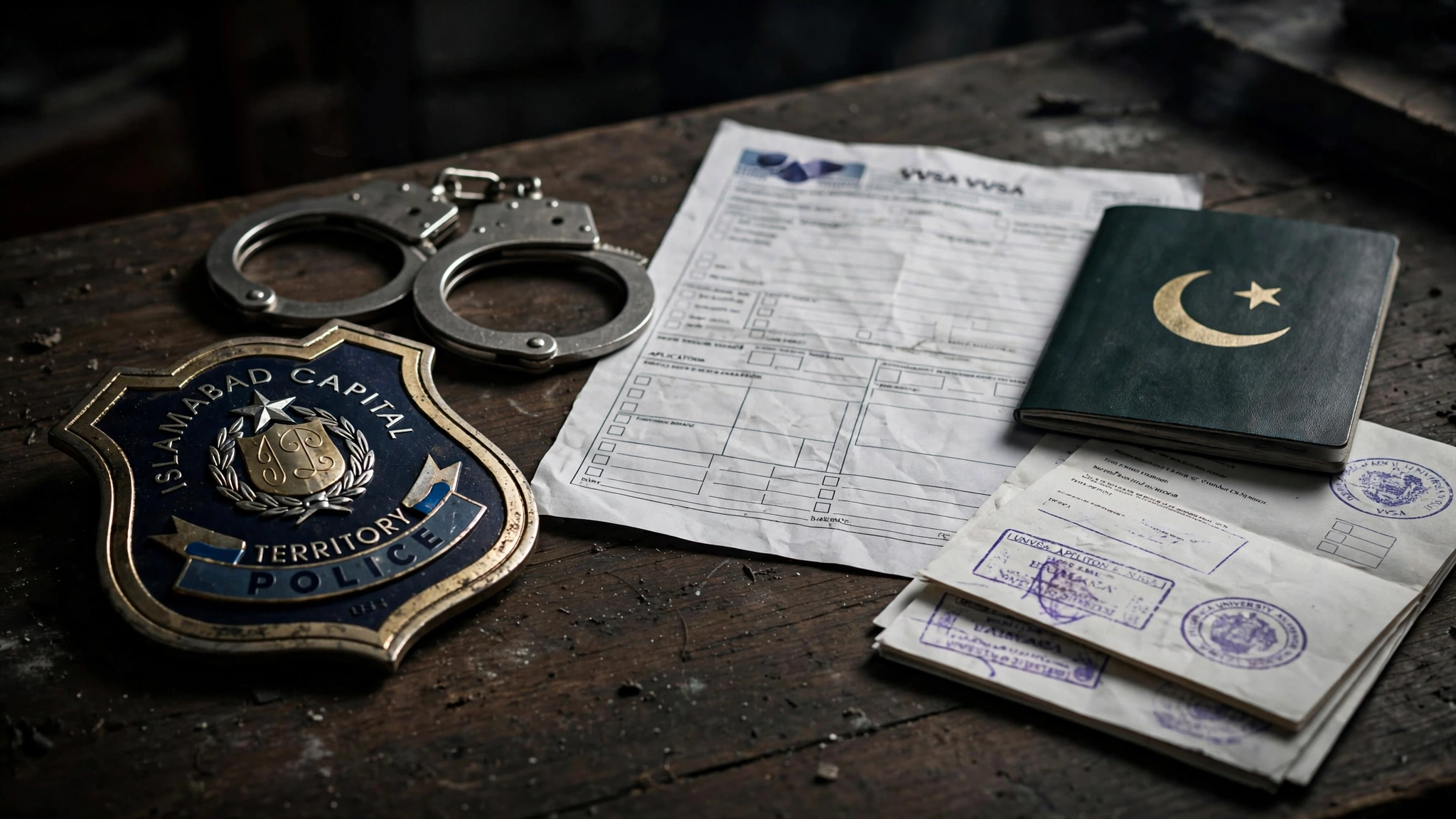
Islamabad Police have arrested the main suspect behind an alleged fake US student visa and scholarship racket, and the Federal Investigation Agency (FIA) has registered a separate criminal case against him and a second suspect over fraud worth a reported Rs9.3 million. The case centres on Laiba Ijaz, a 22-year-old gold-medal graduate of the International Islamic University Islamabad (IIUI), who was found dead in the capital’s G-10 sector on October 9, 2026, days after she reportedly discovered the admission documents she had been given were fake.
The principal accused, Muhammad Nauman, was arrested in Islamabad’s H-13 sector, where he was allegedly hiding in a rented room. A judicial magistrate on Monday (October 12) granted police five days of physical remand to investigate the case, according to Abb Takk News. All allegations against the suspects remain under investigation and have not been established in court.
Key Takeaways
- Islamabad Police arrested main suspect Muhammad Nauman from H-13; a court granted five days’ physical remand.
- FIA booked Nauman and Fatima Sarwar over an alleged Rs9.3 million fake US admission and scholarship fraud.
- Police allege the suspect used ChatGPT to impersonate a woman and her brother to win the victim’s trust.
How the alleged scam worked
According to preliminary findings cited by police sources, Nauman first met Laiba in March 2023, when she applied for an internship at an insurance company where he worked. She did not take the position, but he later hired Laiba, her sister and her mother to promote a tuck shop. Investigators allege he then told her he could secure her a US student visa through a woman named Aiza — who managed the shop and whose brother reportedly lived in the United States.
Police sources say Nauman then created an online account posing as Aiza and allegedly used ChatGPT to impersonate both the woman and her brother in messages to Laiba, building her trust over time. The suspect allegedly sent admission letters, scholarship documents and fee receipts that appeared authentic. Suspicion only set in when her US visa interview date was repeatedly postponed — from September 1 to September 17 and then to September 26. When she finally checked the paperwork, she reportedly realised it was fraudulent.
The money trail
Investigators’ accounts of the financial losses differ across reports, and the figures cited so far are preliminary. The FIA’s initial probe, as reported by Super News, alleges that Nauman and the second suspect, Fatima Sarwar, collected Rs9.3 million from Laiba and her family on the promise of a US study visa and university scholarship — with Rs2.9 million allegedly transferred through Laiba’s bank account and the remainder paid in cash. Police sources separately told Abb Takk that Laiba had handed Nauman Rs2.1 million, including money her father raised by selling a plot and jewellery belonging to her stepmother. When she asked for the jewellery back first and said they could discuss the rest later, Nauman allegedly cut off all contact.
Investigators also allege that Nauman deleted data from his mobile phone before his arrest. Police plan a forensic examination of the device to recover information and to identify any other people who may have been targeted. Bloom Pakistan reported that material allegedly linked to online fraud and the blackmailing of women was recovered from the phone — a claim that, like the rest, is part of the ongoing investigation.
Government takes notice
The case has drawn attention at the highest level. Prime Minister Shehbaz Sharif took notice of the incident and directed Islamabad’s police chief and chief commissioner to act against those allegedly responsible, while Minister of State for Interior Talal Chaudhry said the interior ministry had directed the FIA to act. Interior Minister Mohsin Naqvi visited the bereaved family, expressed condolences and assured them the investigation would be pursued.
The FIA’s Anti-Human Trafficking Circle has registered the case against Nauman and Fatima Sarwar under relevant provisions of the Pakistan Penal Code and the Emigration Ordinance, 1979. Investigators are examining whether additional individuals were involved in what they describe as a suspected organised operation.
A wider pattern of study-abroad fraud
Laiba Ijaz’s case is the most high-profile recent example, but it is not isolated. The FIA’s Anti-Human Trafficking Circle has reported a string of visa-fraud arrests in recent months:
- In September 2026, the FIA arrested the CEO of IEIS Consultants from Bahria Town over an alleged UK student visa fraud and recovered the complainant’s full Rs1.6 million.
- In July 2026, the agency arrested the operator of a Sialkot agency, “Broadway Consultancy,” accused of collecting USD 10,000 per victim with fake HEC scholarships and fabricated admission documents for the University of Nevada, Reno.
- The FIA has also dismantled visa-fraud rings acting on intelligence shared directly by the US Embassy, and arrested four alleged swindlers in Islamabad’s F-7 area accused of operating fake migration firms.
How students and families can protect themselves
Officials and education experts consistently advise the following checks before paying any consultant:
- Verify admission offers directly with the university’s own admissions office, using contact details from the institution’s official website — never numbers provided by the agent.
- Never transfer money to personal accounts; insist on official receipts and institutional payment channels.
- Be sceptical of “guaranteed visas” — no consultant can guarantee a visa, since the decision rests solely with the embassy.
- Report suspicious consultants to the FIA’s Anti-Human Trafficking Circle or local police before paying.
Conclusion
The arrest of Muhammad Nauman and the FIA case against him and Fatima Sarwar mark a significant step in a case that has shaken Pakistan’s student community. With five days of police remand and a forensic examination of the suspect’s phone underway, investigators say more victims may still come to light. But the deeper lesson is one for every family dreaming of foreign education: ambition is no defence against fraud. Until the investigation concludes and the courts decide, the central allegation — that a young graduate’s future was sold to her for millions through forged documents and AI-generated impersonation — remains before the law. For now, students can do what the authorities themselves recommend: verify everything, pay nothing without proof, and report anyone who promises what only an embassy can give.