Pakistan is finally doing what governments have talked about for decades: selling its loss-making state companies. But the price tags are raising eyebrows. The headline numbers look impressive — until you look at how little cash actually reaches the national treasury.
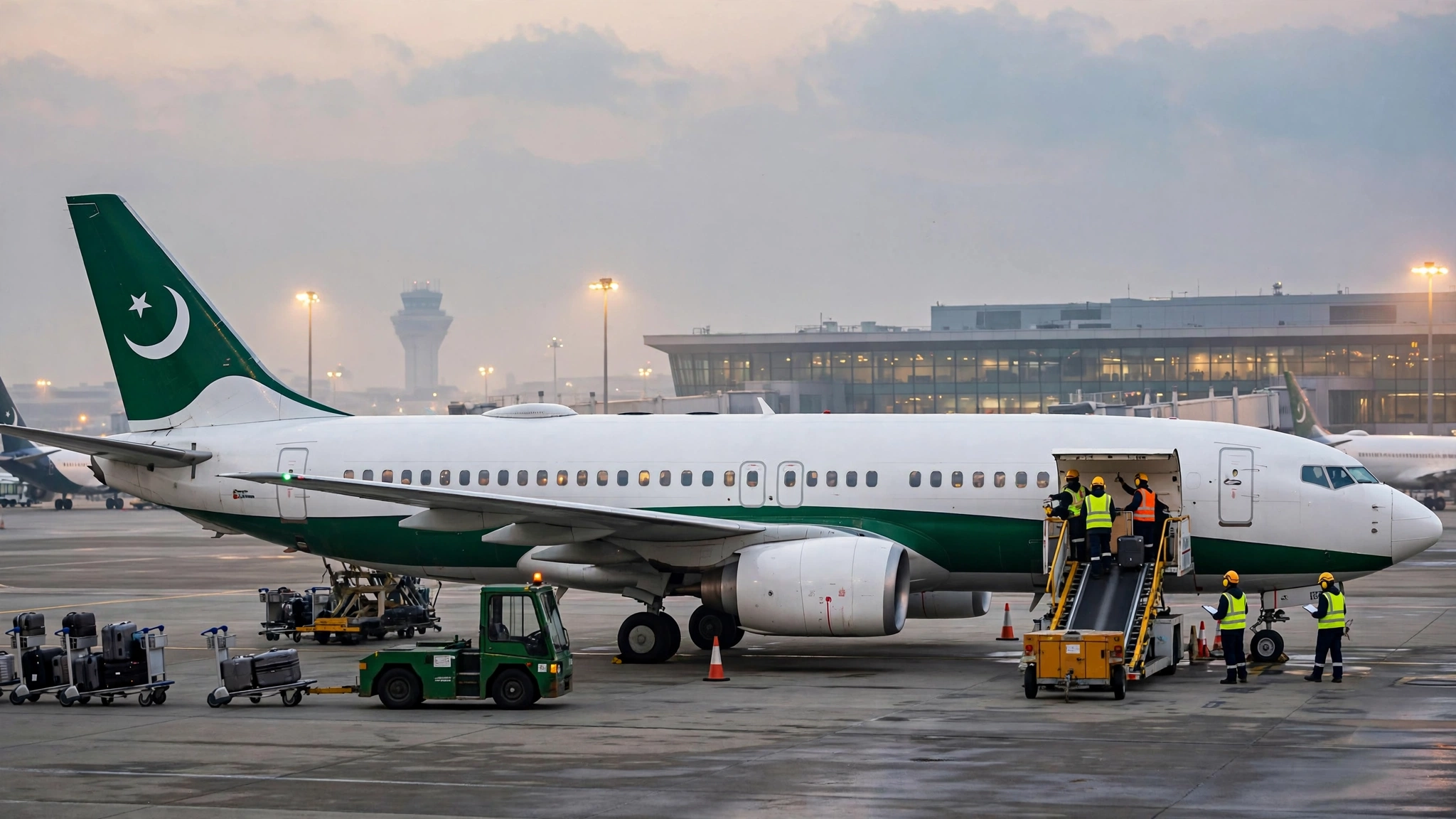
The flagship case is Pakistan International Airlines. The government announced a Rs135 billion sale. In real terms, only about Rs10 billion flowed into the state’s coffers. Critics call it a fire sale. The government calls it necessary reform. Here’s the full picture.
Key Takeaways
- PIA’s celebrated Rs135 billion sale actually delivered only about Rs10 billion in cash to the treasury.
- Critics say taxpayers absorbed up to Rs670 billion of PIA’s legacy debt before the sale.
- Finance Minister Aurangzeb expects 5-6 more privatizations this fiscal year, raising over $1 billion.
The PIA Deal: What Rs135 Billion Really Meant
In the final bidding round, three contenders took part: a consortium led by Arif Habib, Lucky Cement, and Airblue. The Arif Habib-led consortium won with a bid of Rs135 billion — roughly $482 million — for a 75% stake in the national carrier, giving it management control. The government kept 25%.
But the structure of the deal told a different story than the headline:
- Only about 7.5% of the winning bid went to the government in cash. That works out to roughly Rs10 billion.
- The remaining 92.5% stays inside PIA as contractually required reinvestment — fleet upgrades, operations, and financial cleanup.
- Airblue’s bid of Rs26.5 billion was all cash, yet it was rejected for being lower than the winning bid’s headline value.
- Lucky Cement bid Rs115 billion, the runner-up.
Do the arithmetic, as critics have: the rejected all-cash bid would have paid the treasury more actual money than the winning bid did. In fiscal terms, the smaller number was the bigger one.
Why the State Paid the Bill Before Selling
The airline could not be sold in its original form. Public disclosures placed PIA’s total liabilities at around Rs800 billion — far beyond its assets. Before any buyer would touch it, the government absorbed or restructured the bulk of that debt, an estimated Rs600 billion to Rs670 billion, shifting it onto a holding company backed by taxpayers.
Those liabilities did not disappear. They simply moved from the airline’s balance sheet to the public’s. In the words of a widely circulated analysis in The News International, once the state has already paid the bill, the sale price should not be mistaken for profit.
To put the Rs10 billion actual inflow in context: Pakistan’s annual interest payments now exceed several trillion rupees. The cash received from the PIA transaction would not cover even a few days of debt servicing. As that same analysis put it, the headline was a rounding error disguised as reform.
The Fire-Sale Pipeline: More Sales Are Coming
PIA is not a one-off. Finance Minister Muhammad Aurangzeb told Reuters in an interview on October 12, 2026 — held on the sidelines of the IMF and World Bank annual meetings in Bangkok — that the government has roughly a dozen state entities in the privatization pipeline.
His targets for the current fiscal year:
- 5 to 6 privatizations expected to conclude
- Over $1 billion in expected proceeds
- Power distribution companies (DISCOs) among the top candidates, alongside the outsourcing of airport operations
The National Assembly’s Standing Committee on Privatization reviewed the DISCO program in September 2026. Due diligence is complete, and the approved plan proposes divesting 51% to 100% of each distribution company’s shares along with management control. Several parties have been pre-qualified for FESCO, with evaluations underway for GEPCO.
According to reports, the government has shared a detailed timeline with the IMF: FESCO targeted for January 2027, GEPCO for February, and IESCO for March, with further DISCOs to follow through December 2027. The IMF has linked the program to power-sector reforms, including tackling circular debt that reached Rs1.675 trillion by June 2026.
The Government’s Defence: It’s Not About the Cash
Officials argue that critics are missing the point. The goal, they say, was never to maximize cash to the treasury — it was to stop the bleeding and recapitalize the airline.
That argument has some backing. The government’s adviser to the finance minister, Khurram Schehzad, recently claimed that state-owned enterprises generated an aggregate profit of Rs35 billion for the country in the first half of 2026 — with profit-making SOEs earning Rs423.3 billion against Rs342.8 billion in collective losses, after Rs804 billion in government support. “Reform is not just being diagnosed; it is being executed,” he said.
The broader principle, in his words: the government should not remain in businesses where the private sector can operate more efficiently.
There is also historical context. A 2024 attempt to privatize PIA collapsed when the sole bid came in at Rs10 billion against a reserve price of Rs85 billion. The current deal — whatever its flaws — emerged after years of failure and was widely seen as the least bad exit available.
What Buyers Get vs. What Taxpayers Give Up
The pattern emerging from the PIA deal is worth watching as the DISCO sales approach:
| Side of the deal | What happened |
|---|---|
| Buyer gets | A debt-free operating airline, management control, and a government-backed clean balance sheet |
| Taxpayer absorbs | Rs600–670 billion in legacy liabilities through a state holding company |
| Treasury receives | ~Rs10 billion in actual cash (7.5% of the headline bid) |
| Rejected alternative | An all-cash Rs26.5 billion bid that would have paid the state more |
Whether that amounts to “dirt cheap” depends on how you value a company drowning in debt. But one thing is clear: the gap between the celebrated number and the cash that actually arrived is a transparency problem, whatever you think of the economics.
What This Means for the Remaining Sales
With five or six more privatizations expected this fiscal year and the DISCO program moving toward early-2027 deadlines, the PIA template will likely be repeated. That means Pakistani taxpayers should watch for the same structure: headline bids, mandatory reinvestment clauses, and debt parked off the books before the sale.
The government’s broader position — echoed by Prime Minister Shehbaz Sharif, who has said all state enterprises except strategic ones should eventually be privatized — means this is not ending with PIA. The question is no longer whether state companies will be sold cheaply. It is whether the country gets honest numbers when they are.