Pakistan’s wheat policy has failed again. Months after Punjab handed its wheat procurement system to private companies, flour prices are soaring, the state is scrambling to import up to 1 million tonnes of wheat, and consumers are paying nearly 60 percent more for flour than a year ago. Farmers got squeezed, traders cashed in, and ordinary families are footing the bill.
Key Takeaways
- Flour prices are nearly 60% higher than last year, with a 20kg bag averaging Rs2,851 in October 2026.
- The USDA’s FAS blames the crisis on a ‘fundamental change’ in government wheat policy that pushed procurement to private firms.
- Pakistan is importing up to 1 million tonnes of wheat — the first significant imports since 2024.
What Just Happened
On 10 October 2026, Punjab Chief Minister Maryam Nawaz approved a Rs10 billion subsidy to hold down flour prices and ordered more government wheat released to flour mills — just three days after her own food department had insisted supply across the province was normal.
Between those two statements, the market moved. Wheat in Punjab’s open market touched about Rs5,200 per 40 kilograms after climbing Rs400 in four days, according to market reports cited in local press. The Pakistan Bureau of Statistics recorded a 5.69 percent jump in flour prices in a single week — the steepest weekly rise of any item it tracks. A 20kg bag of flour averaged Rs2,851.04 across 17 cities, compared with Rs2,150.09 a year earlier.
Two weeks of delay in releasing government wheat stocks, millers say, was enough to set off the scramble. On 7 October alone, mills in Punjab supplied the equivalent of 470,845 ten-kilogram bags of flour — nearly half milled from government wheat sold at the official rate of Rs1,100 per 10kg bag. Supply existed. What failed was its management.
The Policy That Broke the Market
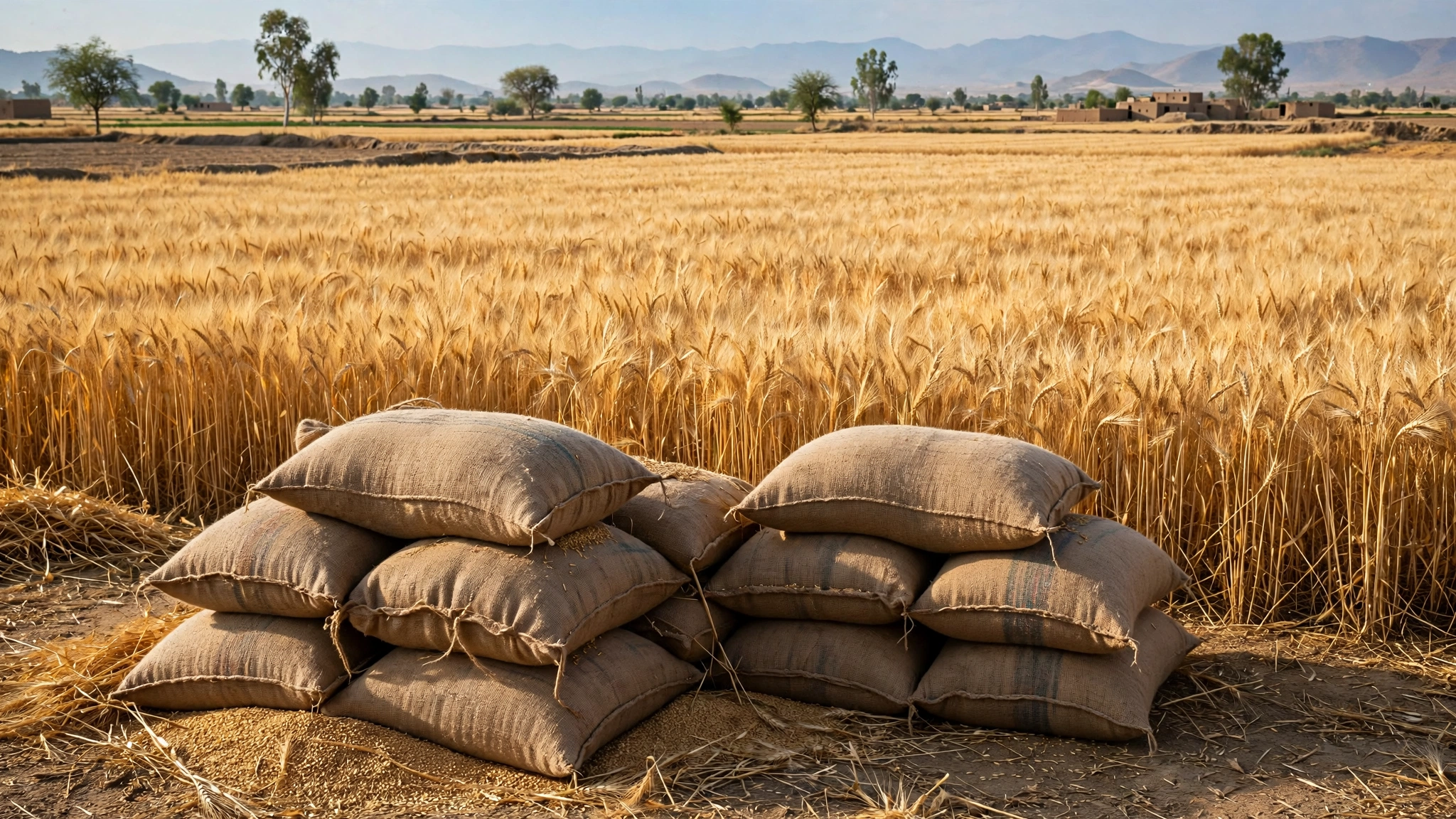
The current crisis traces directly to Punjab’s Wheat Policy 2026, introduced in January. The policy ended direct state purchase of wheat from farmers and transferred reserve-building to selected private firms. The benchmark price was set at Rs3,500 per 40kg (one maund), with the government covering 70 percent of the participating companies’ borrowing costs and lending them public warehouse space. By May, the scheme had effectively stalled, with the open market paying around Rs3,700 per maund — above the official benchmark — while participating firms struggled with bank financing disputes tied to KIBOR rates. Only a fraction of the planned procurement materialised. Pakistan Kisan Ittehad president Khalid Khokhar said at the time that many farmers in southern Punjab had already sold their crop at around Rs3,100 per maund, well below the benchmark.
The United States Department of Agriculture’s Foreign Agricultural Service identified the cause directly: a “fundamental change in the government’s wheat marketing policy” was the main reason for the price volatility. With the state buying less, farmers sold quickly to private traders after harvest. The smaller state footprint, the FAS said, allowed private buyers, middlemen and hoarders to monopolise wheat reserves with limited transparency or regulation, driving up prices through unchecked speculation.
Farmers sold cheap, consumers bought dear
This is the cruellest detail. Farmers did not benefit from high prices — they sold their harvest cheap at Rs3,100–3,500 per maund. The gains went to those holding stocks. Opposition figures claim prices were later driven up as high as Rs6,000 per maund by some counts. Neither growers nor consumers gained — only the traders in between.
The Numbers Behind the Crisis
- Flour prices: Up 13 percent in four months and nearly 60 percent higher in August 2026 than August 2025, per the USDA’s FAS. In Lahore, the Pakistan Bureau of Statistics recorded flour prices 51 percent above last year.
- Weekly shock: A 20kg flour bag averaged Rs2,851 in the week to 8 October 2026, up 5.69 percent in one week. A year earlier it was Rs2,150.
- City divide: The same bag costs about Rs2,200 in Lahore and Faisalabad — where government flour is widely available — but nearly Rs3,000 in Rawalpindi and around Rs3,400 in Karachi, Islamabad and Peshawar. In Peshawar, a 50-gram roti rose from Rs20 to Rs30.
- Production shortfall: The 2026 harvest is estimated at roughly 27.5 million tonnes against a target of 29.7 million, while annual consumption runs at about 30 million tonnes — a structural gap of around 2.5 million tonnes before accounting for pipeline stocks and quality losses.
Emergency Imports: The Admission of Failure
On 24 July, Food Security Minister Rana Tanveer Hussain announced the government would immediately import one million tonnes of wheat — the first significant imports since 2024 — while the state-run Pakistan Agricultural Storage and Services Corporation released its stored wheat. For a country that only recently claimed it could feed itself, that alone is a verdict on the policy.
The import programme has been messy. The Trading Corporation of Pakistan’s tender for 750,000 tonnes drew nine suppliers offering a combined 656,000 tonnes — the full volume was not covered, at roughly $349 to $370 per tonne. Punjab and Sindh then backtracked on an agreement to buy the imported grain, delaying the process while recalculating their needs.
The FAS estimates Pakistan may actually need around 1.5 million tonnes this marketing year. A FEWS NET analysis expects the first 750,000 tonnes to arrive by November 2026, but warns relief will likely last only one to three months, with prices staying above average through January — especially in the wheat-deficit provinces of KP, Balochistan and Sindh.
Why “Again”?
This is not the first time wheat policy has lurched between state withdrawal and emergency intervention. Previous seasons saw the same cycle: procurement targets missed, support prices abandoned, then panic buying on international markets when domestic prices spiked. The government paid private firms to do what the state used to do — subsidised their borrowing, lent them warehouses — and still ended up with thin reserves, farmers who sold at a loss, and consumers paying record prices.
Former finance minister Asad Umar put the human cost in stark terms in a recent post on X: flour is up 21 percent in a year and 81 percent over the current government’s tenure, with the poorest households cutting their food intake by 16 percent, citing the World Bank.
Conclusion
The numbers tell the story: a 20kg bag of flour at Rs2,851, up Rs701 in a year; emergency imports after private procurement collapsed; a Rs10 billion subsidy approved days after officials said nothing was wrong. The USDA’s FAS identified the root cause precisely — a policy change that removed the state from the wheat market without anything accountable to replace it. Pakistan will get through this winter’s shortage with imports. But if the lesson of 2026 is ignored, as the lessons of previous years were, we will be back here again — same roti, higher price.