Saudi Arabia’s airport crisis widened on Sunday as authorities confirmed that King Fahd International Airport in Dammam was targeted in a fresh attack — just as a second strike in two days hit Riyadh’s international airport, killing a Pakistani resident and wounding eleven others. The twin assaults mark the most serious disruption to Saudi civil aviation in years, with Riyadh’s main airport shut down and hundreds of flights cancelled.
Key Takeaways
- Saudi Arabia’s civil aviation authority confirmed King Fahd International Airport in Dammam was targeted on October 11, alongside a second strike on Riyadh’s airport.
- The back-to-back attacks follow Saturday’s strike on Riyadh’s King Khalid International Airport that killed 13 people and wounded more than 300.
- Riyadh airport remains closed with mass flight cancellations; airlines including Lufthansa and Air France-KLM have suspended services, and a Pakistani resident was killed in Sunday’s blast.
What happened on October 11
Sunday’s attacks unfolded in two locations, hours apart. Here is the confirmed picture:
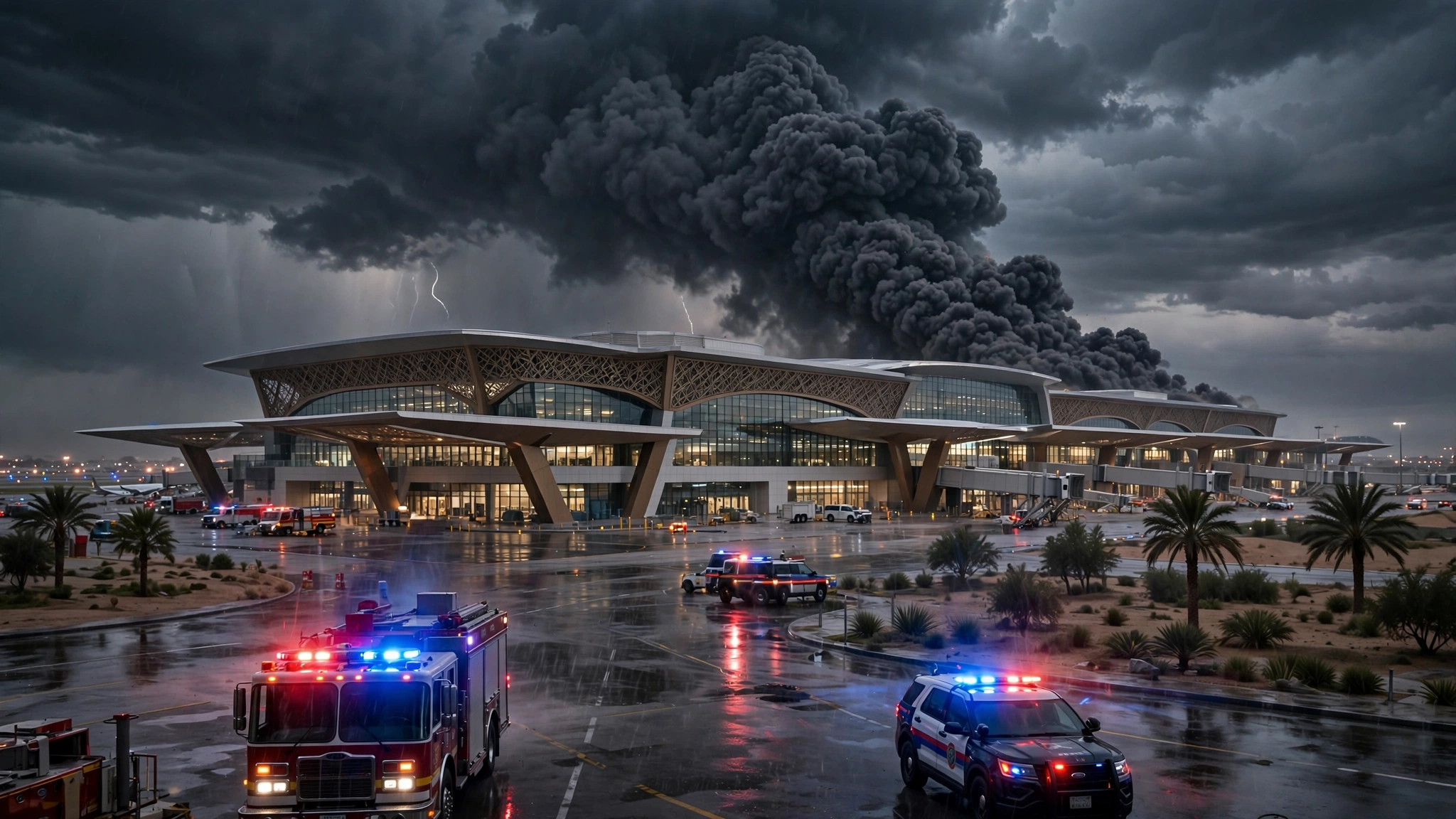
- Riyadh — second strike: An unidentified projectile hit Terminal 4 of King Khalid International Airport, sparking a fire. Saudi air defences also intercepted a cruise missile in the vicinity of the airport, according to the Saudi-led coalition.
- Dammam — new target: Saudi Arabia’s General Authority of Civil Aviation (GACA) confirmed that King Fahd International Airport in the kingdom’s Eastern Province was attacked on Sunday evening. Damage assessments and safety inspections were underway.
- Casualties: GACA said Sunday’s Riyadh attack killed one person — a Pakistani resident — and injured eleven others, who were taken to hospital. No casualty figures were immediately given for Dammam.
The Houthis’ military spokesperson, Yahya Saree, claimed responsibility in a televised speech, saying the group had struck the Dammam airport and two Saudi Aramco facilities, alongside the renewed attack on Riyadh. Saudi authorities confirmed the airport attacks; the claims about Aramco sites drew no immediate confirmation from the company or the government.
The deadly Saturday strike that started it
The weekend assaults followed a devastating attack on Riyadh’s King Khalid International Airport on Saturday, October 10 — the deadliest strike on Saudi soil in more than a decade. According to Saudi authorities, the attack killed 13 people and wounded more than 300.
The victims included four Saudis, two Bangladeshis, and nationals of the United States, Jordan, Palestine, Syria, Sudan and Egypt. India’s embassy in Riyadh said one of its injured citizens later died, raising the death toll from 12 to 13. Among the wounded were foreign nationals, including at least one French woman.
The airport — Saudi Arabia’s second-busiest after Jeddah — has been closed since Saturday’s attack.
A fast-moving timeline of escalation
| Date | Event |
|---|---|
| —— | ——- |
| Oct 5 | Saudi-led coalition announces “Operation Dawn of Yemen,” air support for a Yemeni government ground offensive against the Houthis |
| Oct 8–9 | Daily missile and drone attacks reported on airports in Abha, Najran and Jizan; Saudi authorities report deaths |
| Oct 10 | Deadly Houthi-claimed strike on Riyadh’s King Khalid International Airport — 13 killed, 300+ wounded |
| Oct 11 | Second strike on Riyadh airport (Terminal 4) kills a Pakistani resident, injures 11; Dammam’s King Fahd International Airport attacked; cruise missile intercepted |
| Oct 12 | Riyadh airport still closed; skies over the capital largely empty; schools in Riyadh shifted to remote learning |
Why Dammam matters
Dammam is no random target: the Eastern Province capital and heartland of Saudi Arabia’s oil and gas industry, roughly 410 kilometres northeast of Riyadh. King Fahd International Airport is the main gateway to that industrial region.
Striking Dammam carries a message: the Houthis can now reach deep into the east of the kingdom, near its most valuable energy infrastructure.
The Houthi leadership has made the strategy explicit. The group has declared Saudi airports legitimate targets, warning travellers and airlines to stay away, and saying: “We urge everyone to take our warnings seriously, and Saudi Arabia bears responsibility for any failed interceptions.”
Their stated logic is reciprocity — if no aircraft can land at Sanaa airport, they argue, the same should apply to Saudi airports. Since the coalition’s October 5 offensive, Houthi strikes on Saudi airports have come almost daily.
Aviation in chaos: the wider fallout
The immediate impact has been dramatic:
- Aviation analytics firm Cirium recorded a 99.7% flight cancellation rate at Riyadh airport on Sunday, with roughly 60% of scheduled flights cancelled on Monday.
- Lufthansa Group cancelled all flights to Riyadh until October 16.
- Air France-KLM extended its suspension of services to and from Riyadh until the end of October.
- Abu Dhabi’s Etihad Airways cancelled around 20 flights to Riyadh, Jeddah and Dammam.
- The US Federal Aviation Administration advised American carriers to exercise caution flying to or over Saudi Arabia, while European aviation authorities widened airspace warnings.
The disruption has spilled into business life: the World Petroleum Congress energy conference still opened in Riyadh on Sunday, but several top oil executives withdrew, and airlines across Europe and Asia reshuffled schedules.
What this means for Pakistan
For Pakistan, the crisis has immediate and personal stakes:
- A Pakistani life lost: Saudi authorities confirmed that the person killed in Sunday’s Riyadh airport strike was a Pakistani resident — the first reported Pakistani fatality in this wave of attacks.
- A massive diaspora: Hundreds of thousands of Pakistani workers live in Saudi Arabia, concentrated in Riyadh, Jeddah and the Eastern Province cities of Dammam and Khobar. Their travel home — and their families’ travel to visit — runs through exactly these airports.
- Flight disruption: Pakistani travellers connecting through or flying to Riyadh and Dammam face cancellations and rerouting, with Gulf hubs like Dubai, Abu Dhabi and Doha absorbing diverted traffic.
- Umrah season exposure: Saudi Arabia is the destination for millions of Pakistani pilgrims each year. Continued attacks on Saudi airports raise questions about travel safety and insurance for pilgrims already holding tickets.
- Energy prices: Escalation between the Houthis and Saudi Arabia pushes oil prices higher — and Pakistan, a net fuel importer, feels every spike at the petrol pump.
What happens next
Saudi Energy Minister Prince Abdulaziz bin Salman vowed retaliation after the strikes, calling the situation serious and promising an equally serious response. The United States is weighing joining Saudi strikes on the Houthis, and the United Nations has condemned the attacks as a grave escalation.
For now, Riyadh’s airport stays closed, Dammam’s damage is still being assessed, and the Houthis warn that worse could follow. What began as a border war has arrived at the doors of the kingdom’s biggest cities — and its busiest runways.
—
Verification note: This article is based on reporting by Reuters, USA Today, AFP, Le Monde and Saudi Arabia’s General Authority of Civil Aviation statements published October 11–12, 2026. Houthi claims about Aramco strikes were not confirmed by the company or Saudi authorities at the time of writing.