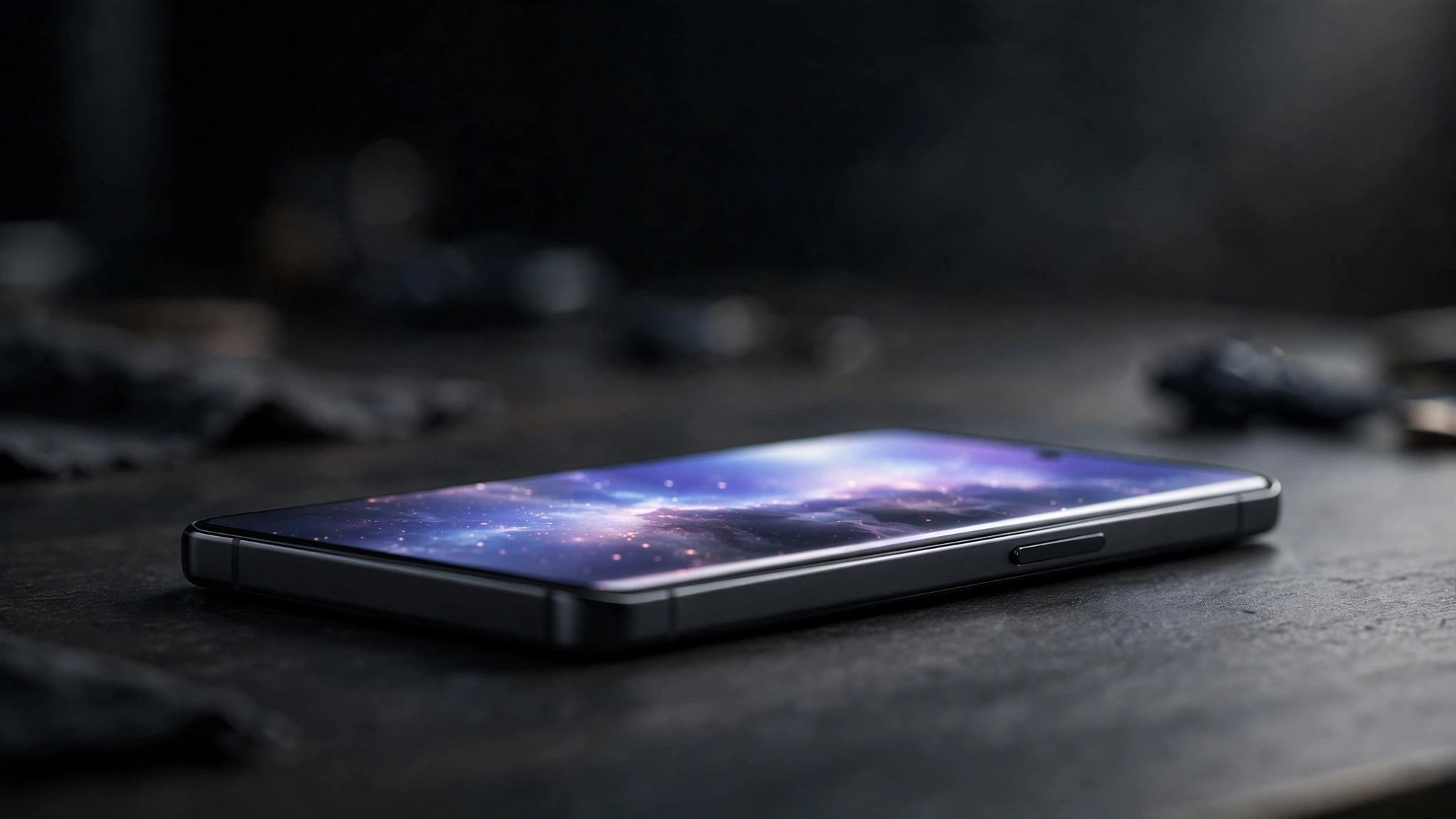
Vivo has officially launched the V80, the newest entry in its camera-focused V-series, and the phone brings two headline upgrades: the largest battery the company has ever fitted to a V-series phone, and the latest software Vivo has to offer. The phone was unveiled at Vivo’s NEXT 2026 event in India, with sales starting October 13.
The V80 replaces the V70 as Vivo’s mid-range flagship, and it arrives with a mix of meaningful improvements — and a few controversial trade-offs. Here is everything you need to know.
Key Takeaways
- The Vivo V80 packs the largest battery in the V-series at 7,200mAh with 90W fast charging.
- It is among the first Vivo phones to ship with OriginOS 7 based on Android 17, with four OS upgrades promised.
- The phone has launched in India; it is not yet available in Pakistan, where pricing is expected around Rs 180,000.
Battery: the biggest change
The standout feature is the 7,200mAh silicon-carbon battery, the largest capacity in the V-series to date. That is a notable jump from the 6,500mAh cell in the V70, and it addresses the single most common complaint about slim mid-range phones: battery anxiety.
Vivo backs the battery with 90W wired FlashCharge, the same charging speed as its predecessor, and the company claims the phone can reach 50 percent charge in about 30 minutes. The V80 also supports bypass charging, a useful feature for mobile gamers that lets the phone draw power directly from the charger during long sessions instead of heating up the battery.
For context, Vivo says the battery can deliver up to 14 hours of navigation and around 39.5 hours of local video playback in controlled tests — though real-world figures will vary with usage.
Despite the larger battery, Vivo has kept the phone relatively slim at 7.69mm, weighing 203 grams — only slightly heavier than the V70.
Software: Android 17 and OriginOS 7 out of the box
The V80 is among the first Vivo phones to ship with OriginOS 7, based on Android 17, making it one of the earliest devices anywhere to run the new Android version at launch.
Vivo is also making a strong software commitment: four major OS upgrades and six years of security updates. That is flagship-level support for a mid-range device and means the V80 should stay secure well into the next decade.
New software features include the Origin Smooth Engine for performance optimization, Snap Note for converting photographed text into editable notes, and Vivo Office Kit for multi-device workflows.
Display and design
The V80 carries a 6.59-inch flat AMOLED display with a 1.5K resolution (2750 x 1260 pixels) and a 144Hz refresh rate — an upgrade from the V70’s 120Hz panel. The screen supports HDR10+, reaches up to 5,000 nits of local peak brightness, and uses 4320Hz high-frequency PWM dimming, which should make it easier on the eyes in dim lighting.
Build quality has stepped up too: the phone carries both IP68 and IP69 ratings for dust and water resistance, and includes a 3D ultrasonic in-display fingerprint sensor — a feature usually reserved for flagships.
It will be sold in three colours: Stellar Black, Horizon Blue and Sunrise Anthem.
Cameras: Zeiss partnership continues
Cameras remain the V-series’ signature, and the V80 keeps the Zeiss co-engineered triple setup:
- 50MP main camera with a Sony LYTIA-700V sensor, f/1.75 aperture and optical image stabilization
- 50MP periscope telephoto with a Sony IMX882 sensor, 3x optical zoom and up to 100x digital zoom
- 8MP ultra-wide with a 110-degree field of view
- 50MP front camera with autofocus and a 92-degree field of view for group selfies
The phone supports 4K video recording at up to 60fps, offers portrait focal lengths from 23mm to 100mm, and adds over 30 AI-powered creative features, including cinematic colour profiles and background expansion tools.
Performance: familiar chip, but some compromises
Under the hood, the V80 uses the same 4nm Snapdragon 7 Gen 4 chipset found in the V70 — a capable mid-range processor, but not a performance leap. Where things get controversial is the memory configuration.
The V80 ships with 8GB of LPDDR4X RAM and UFS 3.1 storage — both a step back from the V70’s LPDDR5X RAM and UFS 4.1 storage. Vivo has not explained the change, but analysts point to rising memory prices: memory manufacturers have been shifting production toward the high-bandwidth memory that AI data centres demand, leaving less supply — and higher prices — for phones.
The practical impact is that apps may load slightly slower than on the V70, though most everyday users are unlikely to notice the difference.
Price and Pakistan availability
The V80 starts at INR 62,999 (roughly $654) for the 8GB + 128GB model in India, with 8GB + 256GB at INR 69,999 and 8GB + 512GB at INR 79,999. That is a significant jump from the V70’s launch price, partly driven by the memory-cost pressures affecting the whole industry.
The standard V80 has not yet been officially launched in Pakistan. Based on the Indian pricing, Pakistani price trackers estimate it could arrive at around Rs 180,000 — though this is an estimate, not an official figure, and taxes and import duties could shift it.
Pakistani buyers do have a related option already: the Vivo V80 Lite 5G launched in Pakistan earlier with a 120Hz display, a MediaTek Dimensity 7360-Turbo chip and a 7,050mAh battery, priced at Rs 124,999 for 8GB + 128GB.
Should you wait for it?
The Vivo V80 is a targeted upgrade, not a revolution. If battery life, the latest Android software and Zeiss cameras matter most to you, it is a strong package. But if you already own a V70, the same processor and similar cameras mean the upgrade case is weaker — and the older memory hardware is a genuine step backward.
For Pakistani buyers, the sensible move is to wait for an official Pakistan launch and local pricing before deciding. Keep an eye on Vivo Pakistan’s official channels for launch announcements in the coming weeks.