At least 139 people, including children, have died after a boat packed with 305 migrants capsized off the coast of Djibouti in East Africa on the night of October 8, the International Organization for Migration (IOM) confirmed on October 11. Another 84 people remain missing, making it one of the deadliest shipwrecks ever recorded on the perilous migration route between the Horn of Africa and the Arabian Peninsula.
The vessel sank just hours after leaving shore, overwhelmed by far more passengers than it could carry. Rescue teams are still searching the waters, and officials warn the death toll may rise further.
Key Takeaways
- At least 139 people, including children, died when a boat carrying 305 migrants capsized off Djibouti on the night of October 8. Another 84 remain missing.
- The vessel sank shortly after departure near Obock while travelling toward Yemen. Overcrowding was the main cause, and the death toll could still rise.
- It is one of the deadliest shipwrecks recorded on the Horn of Africa–Arabian Peninsula migration route, where over 900 people died or went missing in 2025.
What Happened That Night
According to survivors, the migrants boarded the boat on the evening of October 8 near Guhere, just north of the port town of Obock in Djibouti. The vessel was heading for Yemen across the narrow strait separating Africa from the Arabian Peninsula. It sank very soon after departure, still close to the shoreline.
The IOM’s chief of mission in Djibouti, Alexandre Coissac, said overcrowding was the primary cause. The ship was simply carrying too many people. Local authorities rushed to respond but were quickly overwhelmed as bodies began washing ashore in large numbers.
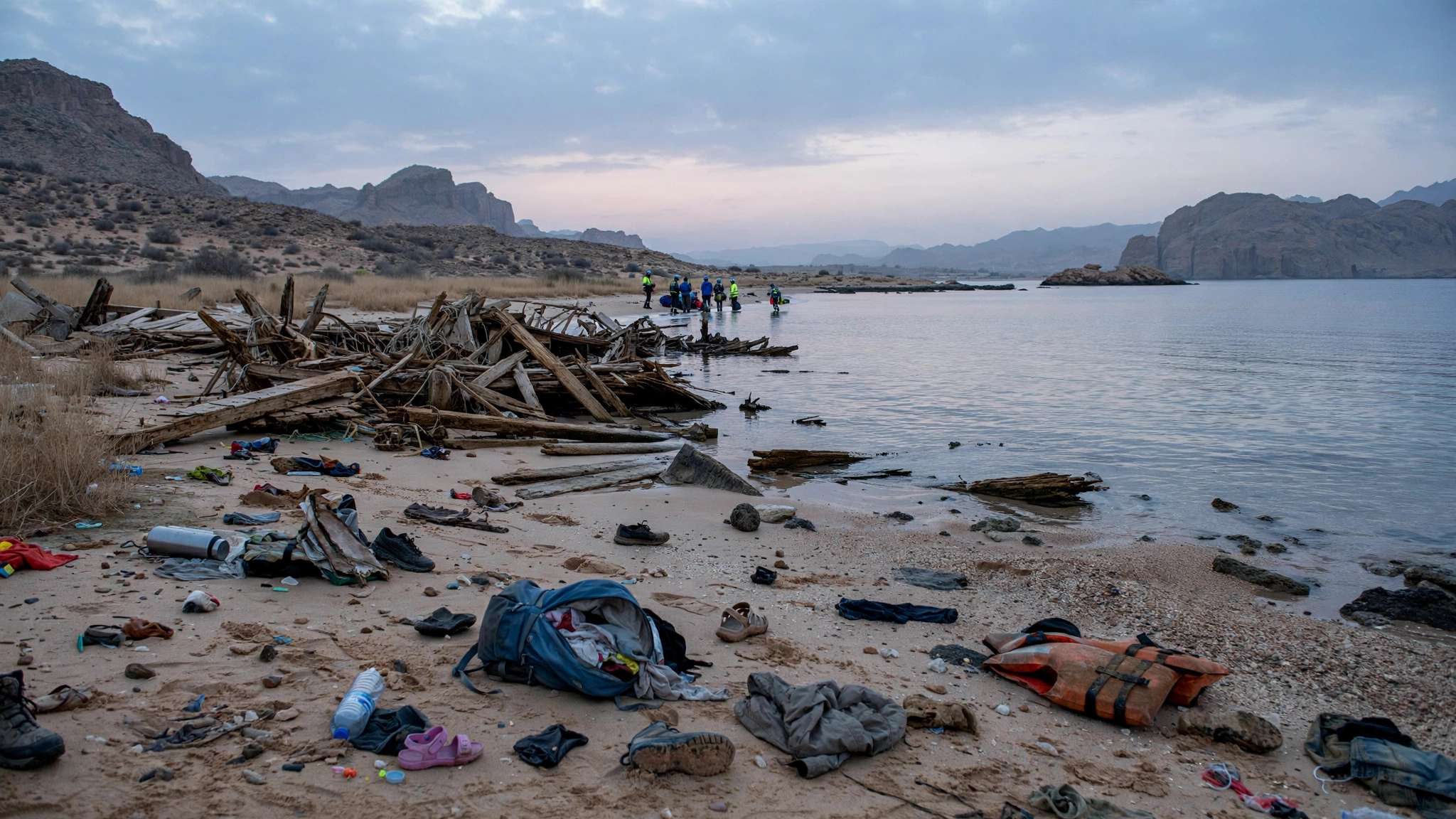
Search and rescue operations are continuing. The overturned hull of the vessel was later found partially submerged, and personal items belonging to the passengers — including shoes — were scattered along the beach.
Key Facts at a Glance
| Detail | What Is Known |
|---|---|
| Date of sinking | Night of October 8–9, 2026 |
| Location | Near Guhere, north of Obock, Djibouti |
| People on board | 305 |
| Confirmed dead | At least 139, including children |
| Missing | At least 84 |
| Survivors | More than 80, all Ethiopian nationals |
| Route | Djibouti → Yemen |
| Stated cause | Overcrowding |
The Victims and the Toll That Could Rise
The confirmed death toll of 139 covers only those buried by Djiboutian authorities. Other bodies were buried by the migrants themselves in unmarked common graves, and those will not enter the official count until authorities can verify them.
The dead included at least 15 children, according to early reports. Coissac described the scene with grave words: the victims were buried with no names, in a common grave, like in a war situation — and their families may never learn what happened.
The survivors, all Ethiopian nationals, were brought to the IOM’s migrant response centre in Obock, where they are receiving treatment for swallowed seawater as well as psychological support. Many are in shock; some already know their relatives died, while others were given phones to call loved ones back home with the news that they are alive.
One of the Deadliest Shipwrecks on the Eastern Route
The Horn of Africa–Arabian Peninsula corridor — known as the eastern route — is one of the busiest and most dangerous migration corridors in the world. Tens of thousands of people, mainly Ethiopians and Somalis, travel through Djibouti and across the Bab el-Mandeb Strait toward Yemen every year, hoping eventually to reach Gulf countries such as Saudi Arabia in search of work and safety.
They are driven by poverty, insecurity, and the growing effects of climate change. The crossing itself is run by smugglers using overloaded, unseaworthy boats, and disasters are frequent. In March 2026, another shipwreck off Djibouti’s coast left nine migrants dead and 45 missing. Last year, more than 900 migrants died or went missing along this route, according to the IOM’s Missing Migrants Project.
What makes the October 8 disaster especially striking is that it happened despite escalating fighting in Yemen on the other side of the strait. The danger at the destination has not deterred people — if anything, the pressure to leave home has kept the boats coming.
Why This Story Matters for Pakistan
Pakistan is itself a major source country for irregular migration, and this tragedy carries a painful echo for Pakistani readers. In June 2023, a migrant boat sank off the coast of Greece with around 350 Pakistanis on board — a disaster so large that Pakistan declared a national day of mourning. Since then, other boats carrying Pakistani migrants have gone down in the Mediterranean and the Atlantic.
The pattern is the same everywhere: young men paying human smugglers for a promise of jobs abroad, squeezed into boats that were never built to hold them, with no legal and safe route available. The victims off Djibouti were mostly Ethiopians seeking work in the Gulf, but the mechanics of the tragedy — overcrowding, smuggling networks, desperation — are identical to the ones that have cost Pakistani lives.
Pakistani authorities have repeatedly cracked down on human-smuggling networks after each disaster, but the demand for a way out continues. The lesson of Djibouti is a global one: as long as safe, legal pathways to work abroad are out of reach for the poor, people will risk deadly ones.
“We Cannot Keep Treating These Deaths as Normal”
IOM Director General Amy Pope called on governments and donors to act before the next boat goes down, saying no one boards such a boat unless they believe there is no other safe way.
The IOM is providing medical care, food, and psychosocial support to the survivors in Obock, while Djiboutian authorities continue the search for the missing and arrange burials for the dead.
The official toll of 139 is already one of the highest recorded on this route — and because some victims were buried before they could be counted, the final number may never be fully known. For the families waiting in Ethiopia and beyond, the wait for news continues.
What to Watch Next
Search and rescue efforts remain active off Obock, and the IOM has warned that the confirmed death toll could rise as more bodies are recovered and verified. Attention will also turn to the smugglers behind the crossing — and to whether this disaster finally pushes governments toward the safe and legal migration pathways the IOM is demanding.