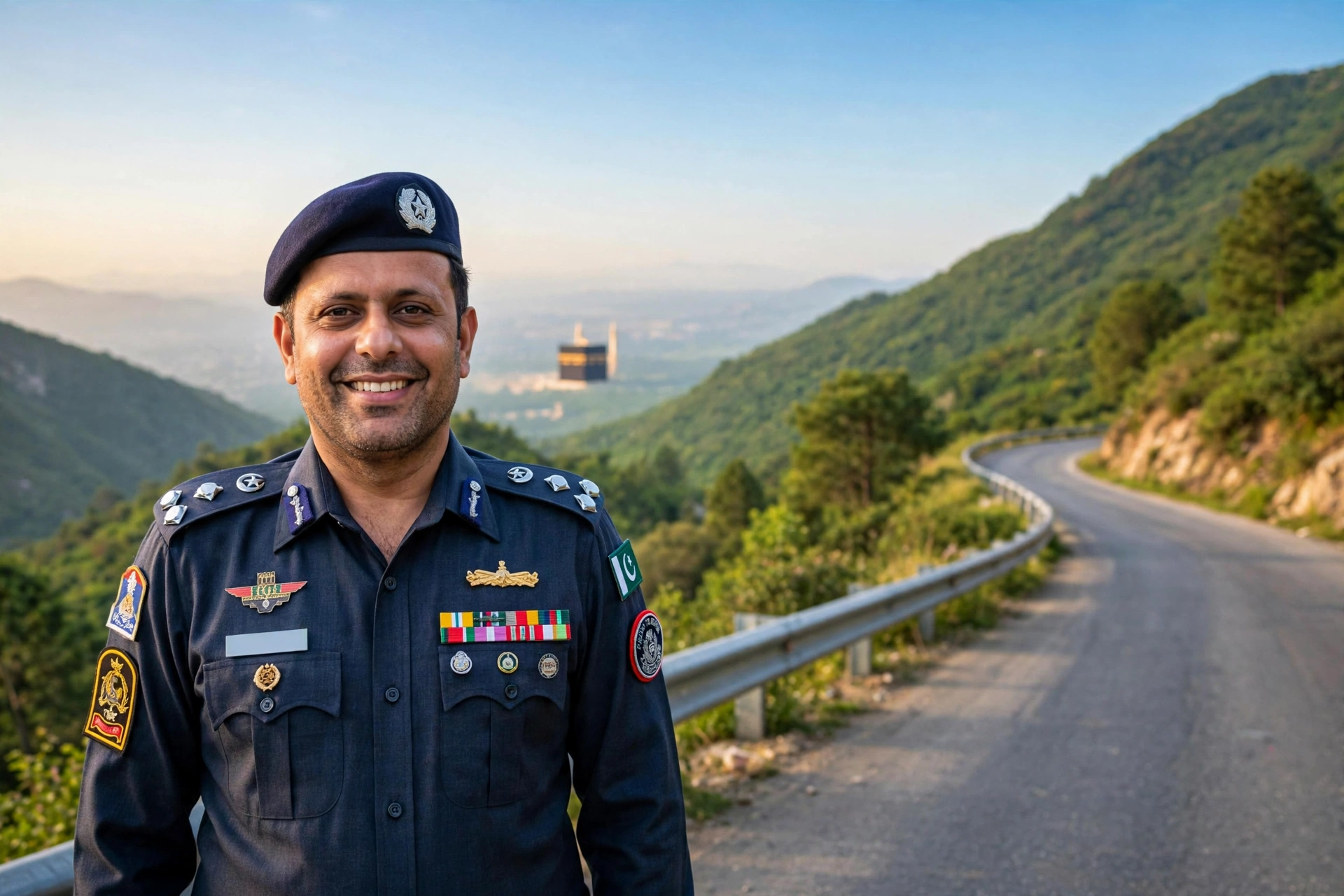
Islamabad Capital Territory (ICT) Police has rolled out a new Hajj and Umrah Welfare Scheme for 2026, offering its personnel the chance to perform the holy pilgrimages at the department’s expense. Under the initiative, three officers will be sent for Hajj every year, and one officer will be selected for Umrah every three months — with all costs covered by ICT Police.
The scheme was announced by Inspector General of Police (IGP) Islamabad Muhammad Sohail Chaudhry during a meeting with officers of the Logistics Division, where he reviewed ongoing welfare measures for the force. It marks one of the most significant religious welfare benefits introduced for capital police personnel in recent years.
Key Takeaways
- IGP Muhammad Sohail Chaudhry announced the scheme on Oct 8, 2026, during a Logistics Division meeting.
- Three officers will be sent for Hajj every year and one officer for Umrah every three months, all expenses paid by ICT Police.
- Hajj eligibility covers ranks from Constable to DSP; winners in both categories will be picked through a lucky draw.
What the scheme offers
The welfare initiative has two components, both fully funded by the department:
- Annual Hajj: Three police officers will be sent for Hajj every year, selected through a lucky draw.
- Quarterly Umrah: One police officer will be selected every three months for Umrah, again through a lucky draw.
For the Hajj draw, personnel from the rank of Constable up to Deputy Superintendent of Police (DSP) will be eligible to apply. The Umrah selection will also be made by lucky draw, giving officers at different levels a realistic chance of being picked regardless of their rank or pay scale.
The use of a draw rather than nominations is a deliberate design choice. It puts every eligible officer on an equal footing and removes any perception of favoritism — something that matters a great deal in a disciplined force where fairness in benefits is closely watched.
Why the IGP says it matters
Announcing the decision, the IGP noted that police officers work around the clock, often in harsh weather, to protect the lives and property of citizens. Their dedication, he said, deserves recognition in practical terms — not just words.
He described police welfare as a major institutional priority and said it would remain one going forward, so that officers could perform their duties with greater dedication and peace of mind. The IGP also directed the Logistics Division to take the steps needed for effective implementation of the scheme and other welfare initiatives.
A morale question, not just a religious one
Police welfare in Pakistan has long been debated as a driver of morale and performance. Officers in the capital deal with long hours, high-pressure duties, and public scrutiny on a daily basis. Benefits that acknowledge the human side of the job — health care, children’s education, and now religious pilgrimage — are seen by leadership as investments in a more motivated, focused force.
Religious welfare measures carry particular weight in Pakistan, where performing Hajj or Umrah is one of the deepest personal aspirations for many Muslims. By making it a departmental benefit, ICT Police has linked institutional recognition directly to something officers and their families value profoundly.
Why this is a big deal financially
To understand the scale of this benefit, consider what a pilgrimage costs today. Under the Government Hajj Scheme for Hajj 2026, packages have been reported in the range of Rs. 1.15 million to Rs. 1.25 million per pilgrim — a sum far beyond the reach of most junior police personnel on a single household income.
For a constable, the lowest rank in the force, saving that amount from salary alone would take years. The ICT Police scheme effectively removes the financial barrier entirely for the selected officers, since the department is bearing the full expense of the journey.
That also places the scheme in a wider national context. The federal government has been working to make pilgrimage more accessible — from announcing an interest-free Hajj savings plan that lets citizens build funds gradually, to digitalising the Hajj application process through a new Hajj app for Hajj 2027. Pakistan’s overall Hajj quota stands at 179,210 pilgrims, with around 119,210 travelling under the government scheme for 2026. The ICT Police initiative complements these national efforts at a departmental level.
How officers can apply
As of now, the department has announced the structure of the scheme but not its operational fine print. What is confirmed:
- Applications for the annual Hajj will be open to personnel from Constable to DSP.
- Three winners will be drawn for Hajj each year; one winner for Umrah every quarter.
- All expenses for the selected pilgrims will be paid by ICT Police.
The Logistics Division has been tasked with working out the implementation details — which likely means the application window, the draw procedure, and the exact coverage of expenses will be communicated through official departmental channels in due course. Officers interested in applying should watch for internal notifications from their division.
What to watch next
The real test of the scheme will be in its execution. A few things worth keeping an eye on:
- Transparency of the draws: Publishing draw results openly will build trust that the selection is genuinely fair.
- Continuity: Whether the scheme continues year after year, or remains a one-time initiative, will determine its long-term impact on morale.
- Coverage of expenses: Clarity on what “all expenses” includes — travel, accommodation, meals, allowances — will help officers plan.
- Other forces: If ICT Police runs this successfully, other provincial police departments may face calls to introduce similar welfare benefits for their personnel.
The bottom line
The Hajj and Umrah Welfare Scheme 2026 is a straightforward but meaningful gesture: recognising police service with one of the most valued gifts in Pakistani Muslim life. Three officers a year for Hajj, one a quarter for Umrah, chosen by draw, funded by the department — that is the scheme in a sentence.
Whether it becomes a lasting institution or a short-lived announcement will depend on implementation. But the intent is clear, and for the officers who win the first draws, it will be the journey of a lifetime — paid for by the force they serve.