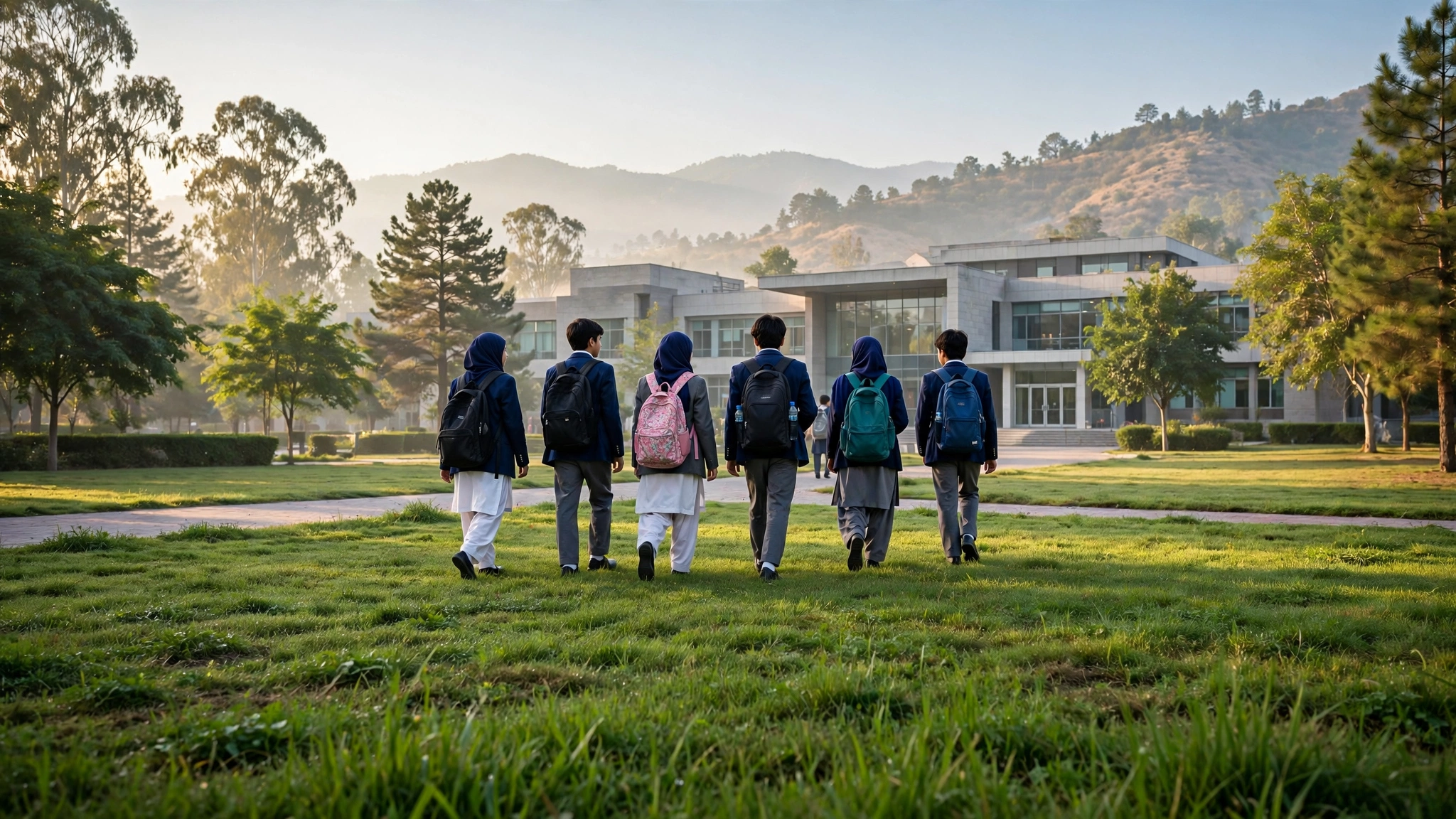
Classes have resumed at most government schools and colleges in Islamabad after nearly three weeks of forced closure, ending a disruption that kept thousands of students out of classrooms across the federal capital. The reopening, ordered late Sunday night by education authorities, covers most of the 38 institutions that had been handed over as accommodation for police personnel deployed ahead of a PTI protest march. However, the return to normal is incomplete: roughly 10 schools and colleges will remain shut for now because police contingents are still occupying their buildings.
For parents and students, the immediate message is straightforward. Check with your own school or college before assuming classes have restarted, since the staggered reopening means some institutions are welcoming students back while others are not.
Key Takeaways
- Government schools and colleges in Islamabad are reopening after nearly three weeks of closure that began on September 24.
- Around 10 of the 38 affected institutions will stay closed because police personnel are still occupying their premises.
- Parents should confirm reopening directly with their school, as the late Sunday night announcement caused uneven communication.
Why the Schools Were Closed in the First Place
The disruption began on September 24, when the Islamabad administration took over dozens of government educational institutions to house police personnel deployed ahead of the Pakistan Tehreek-e-Insaf’s scheduled protest rally. Schools and colleges across the capital were turned into temporary barracks, and academic activity at those campuses came to a standstill.
The decision was never presented as a routine holiday. There was no fixed reopening date attached, and as the days stretched into weeks, what started as a security arrangement became an extended academic shutdown. Parents, teachers and students were left waiting for word on when normal teaching would resume, while classrooms sat filled with uniformed personnel instead of pupils.
How the Reopening Is Unfolding
According to an official of the Federal Directorate of Education, the instructions to reopen were issued late on Sunday night, leaving school administrations, teachers and parents scrambling. Because the notice arrived with so little lead time, many families learned about the resumption of classes only through hurried phone calls, WhatsApp groups and word of mouth.
What to expect this week
- Most of the 38 affected institutions have been told to reopen immediately.
- About 10 schools and colleges stay closed, since police are still billeted in their premises.
- Attendance will build gradually. School heads expect thin turnout on the first days, with numbers improving as students settle back into routine, likely by mid-week.
- Catch-up plans are still being worked out. With close to three weeks of teaching lost, schools face pressure to adjust schedules, and some may extend teaching hours or revise term plans.
The uneven nature of the rollout is the main practical complication. Two students living a few streets apart may be in very different situations — one back in class, the other still waiting for an announcement. That is why families should rely on direct communication from their own institution rather than general news.
The Academic Cost of the Closure
Three weeks is a significant chunk of a school term in Pakistan, particularly for students preparing for board examinations. The closure hit at a point in the academic calendar when syllabus completion and revision are already tight, and educators worry that lost classroom time cannot simply be recovered by rushing through material later.
One institution feeling the pressure is H-9 College, which was among the campuses caught in the shutdown. The college recently secured a position in the Federal Board examinations for the first time in its history — a milestone its faculty had worked toward for years. Staff now fear the interruption could blunt the momentum behind that achievement and make it harder to sustain the improved results.
This is the part of the story that parents and teachers have been most vocal about. Losing valuable classroom time in the middle of a term does not just delay the syllabus; it breaks the rhythm of learning, especially for younger children and for students in examination years. Criticism of the decision to repurpose schools for security duties has been steady throughout the closure, and it has not faded with the reopening announcement.
Should Schools Be Used as Barracks? The Larger Question
Beyond the immediate logistics, the episode has revived an uncomfortable question in Pakistan’s capital: how easily should educational institutions be converted for security purposes?
Using schools as accommodation for police or paramilitary forces is not without precedent in Pakistan, but each instance tends to restart the same debate. Classrooms are designed for learning, not for housing large contingents, and every conversion carries a risk — damaged furniture, disrupted sanitation, and weeks of lost instruction. Teachers and education advocates argue that schools should be the absolute last resort for such arrangements, not a convenient first option, because the cost is borne by students who have no say in the matter.
The fact that around 10 institutions remain occupied even after the official reopening order underscores how open-ended these arrangements can become. What begins as a temporary measure can quietly become indefinite when there is no clear exit plan.
What Parents Should Do Now
If your child’s school or college was among the affected institutions, a few practical steps will help this week:
- Confirm directly with the school — call the administration or check the official WhatsApp group before sending your child, since about 10 institutions are still closed.
- Expect adjusted schedules — schools may revise timetables or add extra periods to recover lost syllabus time.
- Watch for revised exam dates — if your child is in a board-examination year, ask whether internal test schedules have shifted.
- Be patient with low attendance — thin classrooms in the first days are normal; turnout should stabilise within the week.
A Cautious Return to Routine
The reopening of most of Islamabad’s affected schools and colleges is welcome news for thousands of families, but it is not a clean reset. Around 10 campuses remain under police occupation, teaching time has been lost that cannot be recovered overnight, and the short-notice announcement has left the first days of the return feeling disorganised.
For now, the most important thing is that students are back in classrooms at all. But the three-week shutdown will be remembered — not just for the disruption it caused, but as another reminder that when schools are treated as interchangeable government property, it is students who pay the highest price.