Pakistan is aiming high on artificial intelligence. The government has unveiled a $1 billion National AI Ecosystem Development Program running from 2026 to 2031, a National AI Policy, and plans for local-language AI systems serving health, agriculture, and legal sectors. Yet according to the World Bank, the country’s AI ambitions could stumble on two stubbornly basic problems: patchy broadband and unreliable electricity.
Key Takeaways
- The World Bank says Pakistan’s mobile broadband penetration and electricity access lag behind what AI adoption requires.
- Pakistan plans a $1 billion National AI Ecosystem program through 2031, alongside a Rs70 billion connectivity plan.
- Fixing tower power, fiber cuts, and coverage gaps must come before AI tools can reach most Pakistanis.
What the World Bank Found
In its October 2026 Middle East, North Africa, Afghanistan and Pakistan (MENAAP) Economic Update, the World Bank described a contrast at the heart of Pakistan’s AI readiness. On one side, genuine talent: the country produces around 75,000 IT graduates every year and recorded $4.6 billion in ICT services exports during fiscal year 2025-26. On the other side, infrastructure that cannot carry those ambitions to the wider population.
The report’s key point is subtle but important. The challenge, it says, is not simply whether people have internet access — it is the quality and depth of connectivity, plus reliable electricity to use it. Pakistan is among eight MENAAP economies where mobile broadband subscriptions are lower than expected relative to income levels. And on power, electricity access stands at 95.7 percent of the population — making Pakistan one of only five economies in the comparison where access remains below 99.5 percent.
AI tools are unforgiving about infrastructure. A chatbot that answers crop questions is useless to a farmer during load shedding; a diagnostic assistant in a clinic is a dead screen if the tower feeding it has lost power.
The Broadband Numbers Tell Two Stories
Pakistan’s connectivity statistics depend entirely on who is counting — and how. Official PTA figures show mobile broadband subscriptions at roughly 153 million as of early 2026, a figure the government regularly celebrates. But those are subscriptions, not people. Millions of Pakistanis carry dual SIMs, and a large share of connections belong to basic 2G feature phones with no internet capability at all.
Independent measurements paint a far less flattering picture. The Kepios Digital 2026 report puts Pakistan’s actual internet penetration at just 45.6 percent — meaning roughly 139 million Pakistanis remain completely offline. The minister-level claim earlier this year that 97 percent of citizens use broadband was, by the official numbers, mathematically impossible: total teledensity for May 2026 peaked at 82.85 percent, and that counts SIMs, not users.
Why the Internet Is Slow and Unreliable
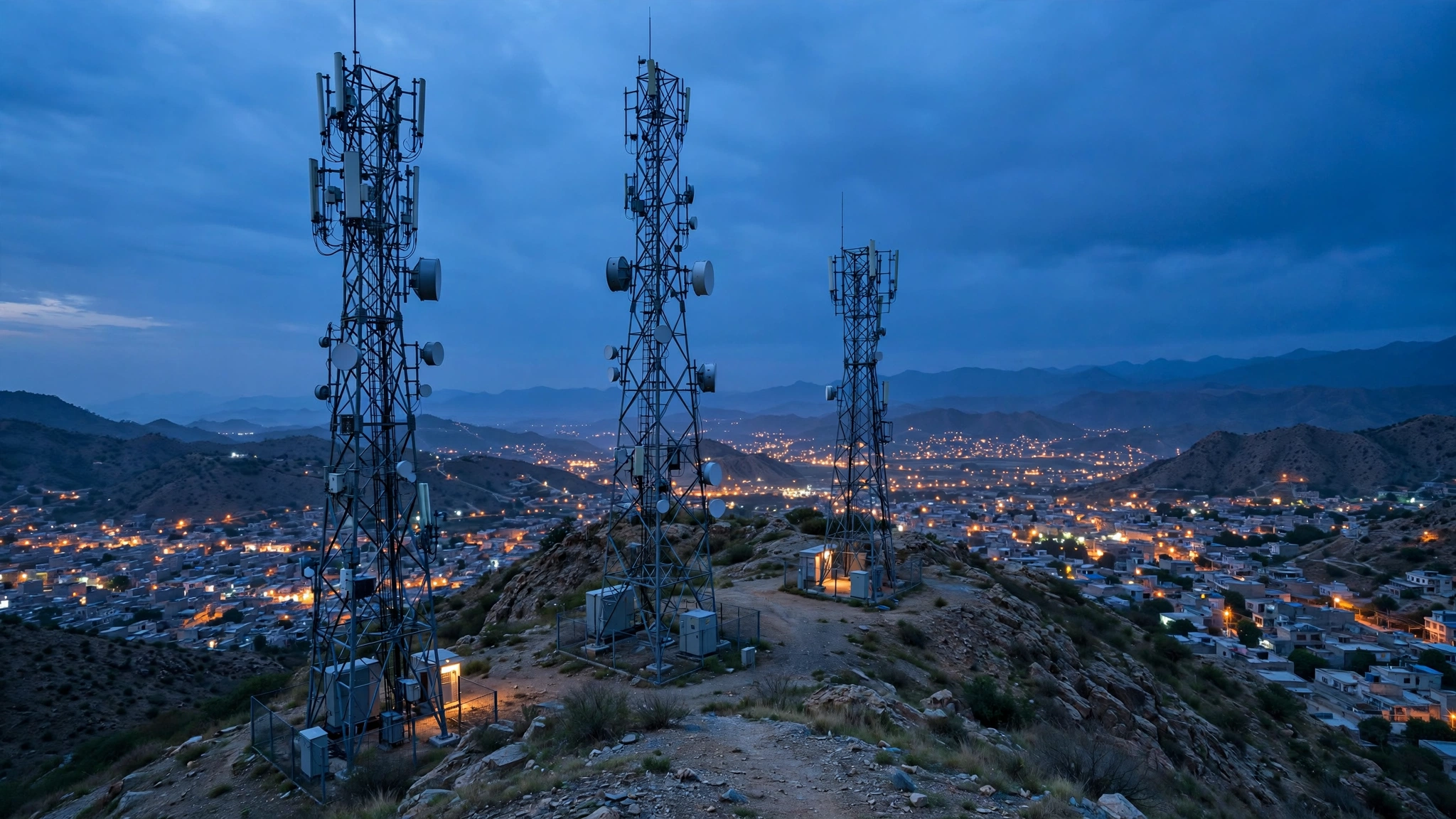
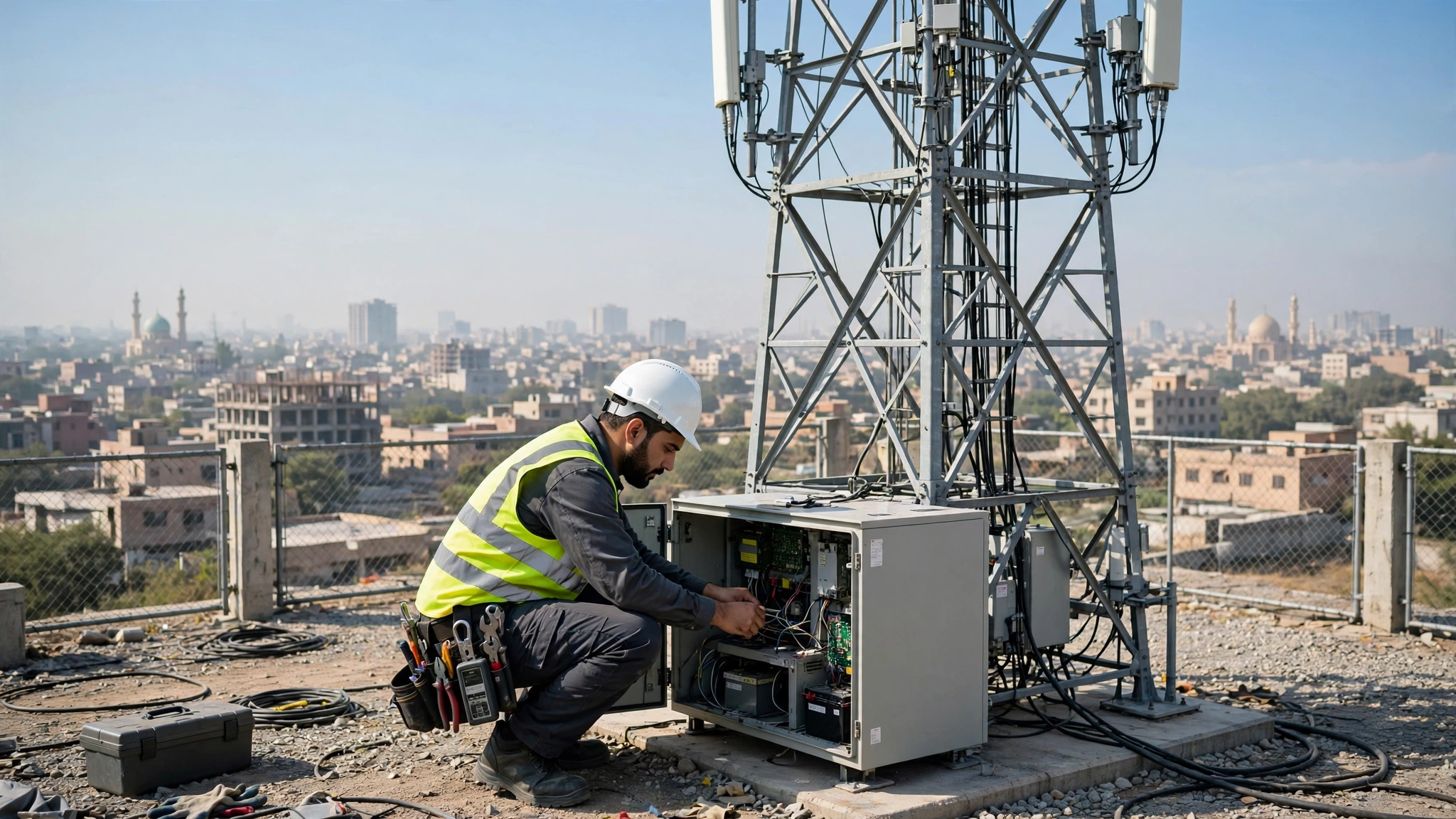
The causes are no mystery. According to official statements collected this year, slow internet in Pakistan is driven by load shedding at cell towers, fiber cuts, cable theft, delays in right-of-way permissions, disruption from the Ufone–Telenor merger, and the ongoing 5G rollout. An undersea cable fault in July 2026 added to the disruption. PTA’s own quality survey for the second quarter of 2026 found operators collectively achieving just 85 percent compliance for mobile broadband, and the regulator’s survey threshold for acceptable mobile internet is a modest 4 Mbps download.
Even where connections work, speeds are middling. PTA’s Opensignal-backed benchmarking for Q2 2026 recorded average national 4G download speeds of 18.55 Mbps on Zong, 17.61 Mbps on Jazz, 12.82 Mbps on Ufone, and 7.50 Mbps on Telenor. That is adequate for scrolling social media; it is not the foundation for cloud-heavy AI workloads, video-based telemedicine, or real-time AI translation in classrooms.
The Power Problem Nobody Talks About
Electricity is the quieter half of the AI equation, but it may be the harder one. Data centers — the physical backbone of any national AI program — need stable, high-quality power around the clock. Pakistan’s plan calls for advanced data centers in major cities to serve startups, universities, and research institutions, but power interruptions remain a fact of life for much of the country.
The World Bank puts electricity access at 95.7 percent, which sounds high until you consider what “access” hides: access does not mean 24-hour supply. Load shedding at cell towers is itself cited as an official cause of poor internet quality. If the grid cannot reliably keep the existing towers lit, keeping AI data centers running will require expensive redundancy — generators, battery banks, and dedicated feeders — that pushes up the cost of every AI service built on top.
What the Government Is Doing
To be fair, Islamabad is not ignoring the problem. Alongside the $1 billion AI program, the Public Sector Development Program for 2026-27 includes a Rs70 billion Pakistan Digital Infrastructure Connectivity Plan covering mobile broadband, fiberization, and regional corridors. IT Minister Shaza Fatima Khawaja has pointed to two new submarine cables landing in Pakistan, fiber house passes nearly doubling, and a major 480 MHz spectrum auction as evidence of progress. A National Data Governance Policy arrived in 2026, and Pakistan formally adopted the Islamabad AI Declaration on sovereign, responsible AI in February.
The ambition is real. The question is sequencing. A billion-dollar AI program that runs from 2026 to 2031 will need functioning towers, fiber, and power under it from day one — not as parallel projects that may or may not arrive on time.
What Has to Happen First
The World Bank’s message is less a criticism than a checklist. Reliable electricity and quality broadband are not luxuries that come after AI adoption; they are prerequisites. That means faster resolution of fiber-cut and right-of-way disputes, genuine power backup for towers, transparent quality enforcement by PTA, and honest metrics that count users rather than SIMs.
Pakistan has the talent — 75,000 IT graduates a year is an enormous asset — and it has the export momentum to prove that talent can compete. But until the grid and the network catch up, the country’s AI future will remain a city-center, office-hours phenomenon. The farmers, students, and small-business owners the National AI Policy wants to reach will be waiting for the lights to stay on.